


The effect of chiral end groups on the assembly of supramolecular polyurethanes
Literature Information
Publication Date
2021-07-21
DOI
10.1039/D1PY00714A
Impact Factor
5.582
Authors
Daniel Hermida-Merino, Lewis R. Hart, Peter J. Harris, Andrew T. Slark, Ian W. Hamley, Wayne Hayes
View Original
Abstract
The ability to influence the physical properties of supramolecular polymers has been the subject of numerous synthetic studies in recent years. Tuning properties by adjustment of the polymer composition to modify the degree of phase separation of polar (hard) and apolar (soft) segments in addition to variation of the capability of the polar end groups to self-assemble efficiently via non-covalent interactions (such as hydrogen bonding, aromatic π–π stacking or metal–ligand binding) has yielded materials with attractive thermo-reversible characteristics. Previously, we have studied supramolecular polyurethanes (SPUs) to understand in more detail the interplay and importance of phase separation and the binding affinity of the polar end group on the physical properties of these interesting thermo-responsive materials. In this paper, we report the positive effect that chirality has upon the self-assembly and physical properties of SPUs. The synthesis of a series of novel SPUs that feature chiral polar end-groups is described in addition to how these chiral moieties improve the order of the relatively weak hydrogen bonding units in this type of supramolecular polymer. The introduction of chiral moieties in the polymer end group induces cooperative arrangements of the components of the hard segments (urethane, urea and aromatic units), leading to SPUs with increased ordered and stronger supramolecular hard segments. The supramolecular interactions of the chiral hard segments were first evaluated by CD and FTIR spectroscopies. In addition, the thermo-responsive nano-segregated structure formed by the columnar aggregates of the SPUs generated was probed by variable temperature CD and FTIR spectroscopies in addition to simultaneous SAXS/WAXS analysis. These studies confirmed the microphase separation morphology also revealed by AFM analysis. Additionally, rheological analysis of the chiral SPUs highlighted the enhancement of the rubbery plateau of chiral SPUs derivatives in comparison to analogous racemic SPUs as a result of the chiral self-assembly motifs. Finally, to explore the mechanical properties of the afforded polymers, electrospinning experiments were undertaken which revealed that defined microfibers were formed at lower concentrations in the case of the homochiral SPUs (ca. 15%) when compared to the racemic analogue, thus confirming the improvement in the supramolecular interactions afforded by the chiral groups.
Recommended Journals

Chinese Journal of Chemistry

NDT & E International

Herald of the Russian Academy of Sciences

Acta Metallurgica Sinica-English Letters

Journal of Chemical Sciences

Critical Reviews in Solid State and Materials Sciences

Biocatalysis and Biotransformation

Topics in Catalysis

Colloid Journal

Bioorganic & Medicinal Chemistry Letters
Related Literature
Fabrication of chiral silver nanoparticles and chiral nanoparticulate film via organogel
Yuangang Li, Minghua Liu
2008-09-24
Communication
DOI: 10.1039/B812567H
4-(Pyridin-2-yl)thiazol-2-yl thioglycosides as bidentate ligands for oligosaccharide synthesisvia temporary deactivation
Papapida Pornsuriyasak, Nigam P. Rath, Alexei V. Demchenko
2008-10-01
Communication
DOI: 10.1039/B810569C
(κ2-P,S)Pt(benzyl) complexes derived from 1/3-PiPr2-2-StBu-indene: facile synthesis of carbanion- and borate-containing zwitterions
Kevin D. Hesp, Robert McDonald, Michael J. Ferguson, Gabriele Schatte, Mark Stradiotto
2008-10-06
Communication
DOI: 10.1039/B813421A
Quantifying the fraction of glycine and alanine in β-sheet and helical conformations in spider dragline silk using solid-state NMR
Gregory P. Holland, Janelle E. Jenkins, Melinda S. Creager, Randolph V. Lewis, Jeffery L. Yarger
2008-09-29
Communication
DOI: 10.1039/B812928B
Stabilization of CeO2nanoparticles in a CO2 rich solvent
Martin J. Hollamby, Kieran Trickett, Ana Vesperinas, Carl Rivett, David C. Steytler, Zoe Schnepp, Jon Jones, Richard K. Heenan, Robert M. Richardson, Otto Glatter, Julian Eastoe
2008-09-29
Communication
DOI: 10.1039/B811563J
Coordination networks derived from germanium(ii) thioether macrocyclic complexes—the first authenticated chalcogenoether complexes of Ge(ii)
Fei Cheng, Andrew L. Hector, William Levason, Gillian Reid, Michael Webster, Wenjian Zhang
2008-09-22
Communication
DOI: 10.1039/B809444F
Interaction of lithium hydride and ammonia borane in THF
Yong Shen Chua, Guotao Wu, Weiliang Xu, Wendy Shaw, Abhi Karkamkar, John Linehan, Tricia Smurthwaite, Thomas Autrey
2008-09-29
Communication
DOI: 10.1039/B812576G
Self-assembly of amphiphilic poly(phenylene ethynylene)s in water–potassium dodecanoate–decanol lyotropic liquid crystals
Jean Bouffard, Timothy M. Swager
2008-10-01
Communication
DOI: 10.1039/B814598A
Sonication treatment of CdTe/CdS semiconductor nanocrystals and their bio-application
Kyung Nam Kim, Pan Kee Bae, Hyun Ju Chang, Yong-Rok Kim, Joung Kyu Park
2008-09-24
Communication
DOI: 10.1039/B812317A
You might also like
Compound Q&A
What are the main uses of 1H-Indazole-6-carbonitrile (CAS: 141290-59-7)?
1H-Indazole-6-carbonitrile finds applications in pharmaceuticals, where it serve...
141290-59-71H-Indazole-6-carbon...
Compound Q&A
How should waste containing Dioctyl (2E)-2-butenedioate (CAS: 2997-85-5) be handled?
Waste containing Dioctyl (2E)-2-butenedioate (CAS: 2997-85-5) should be collecte...
2997-85-5Dioctyl (2E)-2-buten...
Compound Q&A
What industries use Sodium [(1,2-benzoxazol-3-ylmethyl)sulfonyl]azanide (CAS: 68291-98-5)?
Sodium [(1,2-benzoxazol-3-ylmethyl)sulfonyl]azanide is primarily used in pharmac...
68291-98-5Sodium [(1,2-benzoxa...
Compound Q&A
Are there alternatives to Dimethyl 4-(4,4,5,5-tetramethyl-1,3,2-dioxaborolan-2-yl)-2,6-pyridinedicarboxylate (CAS: 741709-66-0) in synthesis?
Dimethyl 4-(4,4,5,5-tetramethyl-1,3,2-dioxaborolan-2-yl)-2,6-pyridinedicarboxyla...
741709-66-0Dimethyl 4-(4,4,5,5-...
Compound Q&A
How should waste containing 2-Fluoro-6-hydrazinopyridine (CAS: 80714-39-2) be handled?
Waste containing 2-Fluoro-6-hydrazinopyridine (CAS: 80714-39-2) should be manage...
80714-39-22-Fluoro-6-hydrazino...
Compound Q&A
What is 6-Formyl-2-pyridinecarboxylic acid (CAS: 499214-11-8)?
6-Formyl-2-pyridinecarboxylic acid is an organic compound with the molecular for...
499214-11-86-Formyl-2-pyridinec...
Compound Q&A
What is the market or research trend for 3-(3,4-dimethoxyphenyl)-2,5-dimethyl-N-(2-morpholin-4-ylethyl)pyrazolo[1,5-a]pyrimidin-7-amine (CAS: 900874-91-1)?
Research trends for this compound indicate a focus on its potential applications...
900874-91-13-(3,4-dimethoxyphen...
Compound Q&A
How is 9H-Tribenzo[b,d,f]azepine (CAS: 29875-73-8) typically synthesized?
9H-Tribenzo[b,d,f]azepine is typically synthesized via a multi-step process invo...
29875-73-89H-Tribenzo[b,d,f]az...
Compound Q&A
How is 1-Cyclopropyl-7-ethoxy-6-fluoro-8-methoxy-4-oxo-1,4-dihydro-3-quinolinecarboxylic acid (CAS: 1797982-51-4) typically synthesized?
1-Cyclopropyl-7-ethoxy-6-fluoro-8-methoxy-4-oxo-1,4-dihydro-3-quinolinecarboxyli...
1797982-51-41-Cyclopropyl-7-etho...
Compound Q&A
How should waste containing Methyl 3-oxo-1,2,3,4-tetrahydro-6-quinoxalinecarboxylate (CAS: 671820-52-3) be handled?
Waste containing Methyl 3-oxo-1,2,3,4-tetrahydro-6-quinoxalinecarboxylate (CAS: ...
671820-52-3Methyl 3-oxo-1,2,3,4...
Source Journal
Polymer Chemistry

CiteScore:
8.6
Self-citation Rate:
7.3%
Articles per Year:
457
Polymer Chemistry welcomes submissions in all areas of polymer science that have a strong focus on macromolecular chemistry. Manuscripts may cover a broad range of fields, yet no direct application focus is required.
Recommended Compounds
![9H-Fluoren-9-ylmethyl {15-[(2,5-dioxo-1-pyrrolidinyl)oxy]-15-oxo-3,6,9,12-tetraoxapentadec-1-yl}carbamate structure](https://static.chemtradehub.com/structs/131/1314378-14-7-4316.webp "9H-Fluoren-9-ylmethyl {15-[(2,5-dioxo-1-pyrrolidinyl)oxy]-15-oxo-3,6,9,12-tetraoxapentadec-1-yl}carbamate structure")
9H-Fluoren-9-ylmethyl {15-[(2,5-dioxo-1-pyrrolidinyl)oxy]-15-oxo-3,6,9,12-tetraoxapentadec-1-yl}carbamate
CAS Number:
1314378-14-7
Molecular Formula:
C30H36N2O10
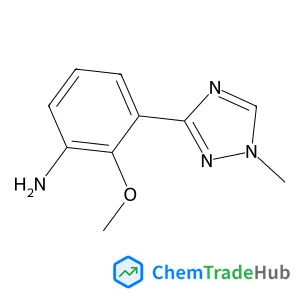
2-Methoxy-3-(1-methyl-1H-1,2,4-triazol-3-yl)aniline
CAS Number:
1609394-10-6
Molecular Formula:
C10H12N4O
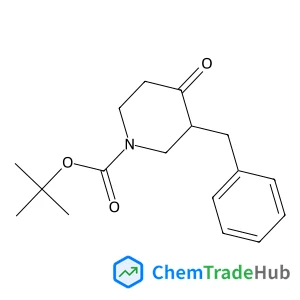
2-Methyl-2-propanyl 3-benzyl-4-oxo-1-piperidinecarboxylate
CAS Number:
193274-82-7
Molecular Formula:
C17H23NO3
Recommended Suppliers








Disclaimer
This page provides academic journal information for reference and research purposes only. We are not affiliated with any journal publishers and do not handle publication submissions. For publication-related inquiries, please contact the respective journal publishers directly.
If you notice any inaccuracies in the information displayed, please contact us at support@chemtradehub.com. We will promptly review and address your concerns.