












![N-[2-(2-Pyridinyl)ethyl]-1-propanamine structure](https://static.chemtradehub.com/structs/554/55496-57-6-22b4.webp "N-[2-(2-Pyridinyl)ethyl]-1-propanamine structure")
Toughened PLA-b-PCL-b-PLA triblock copolymer based biomaterials: effect of self-assembled nanostructure and stereocomplexation on the mechanical properties
Literature Information
Publication Date
2021-06-18
DOI
10.1039/D1PY00429H
Impact Factor
5.582
Authors
Neha Mulchandani, Kazunari Masutani, Sachin Kumar, Hideki Yamane, Yoshiharu Kimura, Vimal Katiyar
View Original
Abstract
The current research unfolds the effect of block lengths, microdomain morphology and stereocomplexation on the mechanical properties of PLA-b-PCL-b-PLA triblock copolymers where PCL is involved to improve the poor extensibility of PLA. The linear triblock copolymers PLLA-b-PCL-b-PLLA and PDLA-b-PCL-b-PDLA (PLLA:poly (L-lactic acid) and PDLA:poly (D-lactic acid)) are made by two step ring opening polymerization and blended in a 1 : 1 ratio to achieve stereocomplex blends where the molecular weight of the terminal and the mid segment is tailored. The mechanical strength and elongation at break range from 13 MPa to 36 MPa and 540 to 950%, respectively, for the triblock copolymers with varied block lengths. Such wide-ranged mechanical properties are ascribed to the morphology of the self-assembled nanostructure of triblock copolymers as corroborated with the small angle X-ray scattering (SAXS) results. To render it industrially viable, the process of triblock copolymer synthesis is scaled up to ∼500 g batch followed by its processing using a twin-screw extruder to make a filament which is used for 3D printing of a mesh-type scaffold. The synthesized materials are tested for their biocompatibility by performing MTT assay using rat bone osteosarcoma (UMR-106) cells which renders them as potential biomaterials.
Recommended Journals
Related Literature
Solvent effects on the NMR shieldings of stacked DNA base pairs
2022-07-13
Paper
DOI: 10.1039/D2CP00398H
A long-lived fluorenyl cation: efficiency booster for uncaging and photobase properties
Chahinez Abdellaoui, Volker Hermanns, Maximilian Scheurer, Andreas Dreuw, Alexander Heckel, Josef Wachtveitl
2022-02-08
Paper
DOI: 10.1039/D1CP05292F
Fundamental studies of vibrational resonance phenomena by multivalued resummation of the divergent Rayleigh–Schrödinger perturbation theory series: deciphering polyad structures of three H216O isotopologues
Xuanhao Chang, Egor O. Dobrolyubov, Sergey V. Krasnoshchekov
2022-02-15
Paper
DOI: 10.1039/D1CP04279C
Template-free synthesis of Bi2O2CO3 hierarchical nanotubes self-assembled from ordered nanoplates for promising photocatalytic applications
Liexiao Li, Xiaofeng Sun, Tao Xian, Huajing Gao, Shifa Wang, Zao Yi, Xianwen Wu, Hua Yang
2022-03-08
Paper
DOI: 10.1039/D1CP05952A
First principles assessment of the phase stability and transition mechanisms of designated crystal structures of pristine and Janus transition metal dichalcogenides
Öznur Demirkol, İlker Demiroğlu
2022-02-23
Paper
DOI: 10.1039/D1CP05642E
Exploring the permeability of covid-19 drugs within the cellular membrane: a molecular dynamics simulation study
Tahereh Ghaed-Sharaf, Akbar Omidvar
2022-02-08
Paper
DOI: 10.1039/D1CP05550J
Dissociative ionization and electron beam induced deposition of tetrakis(dimethylamino)silane, a precursor for silicon nitride deposition
Reza Tafrishi, Maicol Cipriani, Christian Felix Hermanns, Jens Oster, Armin Gölzhäuser, Klaus Edinger, Oddur Ingólfsson
2022-03-30
Paper
DOI: 10.1039/D2CP00257D
Structure, hydrogen bond dynamics and phase transition in a model ionic liquid electrolyte
Peter Stange, Alexander G. Stepanov
2022-02-11
Paper
DOI: 10.1039/D2CP00452F
Nucleobase-containing polymer architectures controlled by supramolecular interactions: the key to achieve biomimetic platforms with various morphologies
Laura Vasilica Arsenie, Vincent Ladmiral, Patrick Lacroix-Desmazes, Sylvain Catrouillet
2022-10-03
Review Article
DOI: 10.1039/D2PY00920J
Improving the performance of silicon monoxide anodes via tuning a multiple pre-doping system: a first-principles study
Wei Xie, Chunlei Pang, Peng He, Chengmao Xiao, Michihisa Koyama, Jiantao Wang, Xiaopeng Qi, Jianguo Ren, Xueqin He
2022-02-25
Paper
DOI: 10.1039/D2CP00498D
You might also like
Compound Q&A
What precautions should be taken when handling lithium chloride hydrate (1:1:1) (CAS: 16712-20-2)?
When handling lithium chloride hydrate (1:1:1) (CAS: 16712-20-2), it is importan...
16712-20-2Lithium chloride hyd...
Compound Q&A
Is 4-(4H-1,2,4-Triazol-4-yl)piperidine (CAS: 690261-92-8) safe?
4-(4H-1,2,4-Triazol-4-yl)piperidine is generally considered safe for use in phar...
690261-92-84-(4H-1,2,4-Triazol-...
Compound Q&A
How should waste containing 1,3-Thiazole-2-carboxamide (CAS: 16733-85-0) be handled?
Waste containing 1,3-Thiazole-2-carboxamide (CAS: 16733-85-0) should be collecte...
16733-85-01,3-Thiazole-2-carbo...
Compound Q&A
What regulatory guidelines apply to 5-(Difluoromethyl)-2-fluorobenzonitrile (CAS: 934175-58-3)?
5-(Difluoromethyl)-2-fluorobenzonitrile (CAS: 934175-58-3) is subject to regulat...
934175-58-35-(Difluoromethyl)-2...
Compound Q&A
How is Methyl 3-acetamido-2-thiophenecarboxylate (CAS: 22288-79-5) typically synthesized?
Methyl 3-acetamido-2-thiophenecarboxylate can be synthesized by the reaction of ...
22288-79-5Methyl 3-acetamido-2...
Compound Q&A
What is 4-Isoquinolinecarbonitrile (CAS: 34846-65-6)?
4-Isoquinolinecarbonitrile is a chemical compound with the CAS number 34846-65-6...
34846-65-64-Isoquinolinecarbon...
Compound Q&A
How should Methyl 1H-1,2,3-triazole-4-carboxylate (CAS: 877309-59-6) be stored?
Store Methyl 1H-1,2,3-triazole-4-carboxylate (CAS: 877309-59-6) in a cool, dry p...
877309-59-6Methyl 1H-1,2,3-tria...
Compound Q&A
What regulatory guidelines apply to 6-Bromo[1,3]thiazolo[5,4-b]pyridin-2-amine (CAS: 1160791-13-8)?
6-Bromo[1,3]thiazolo[5,4-b]pyridin-2-amine (CAS: 1160791-13-8) is subject to the...
1160791-13-86-Bromo[1,3]thiazolo...
Compound Q&A
Is (2S,3S)-2-Ammonio-3-(3,4-dihydroxyphenyl)-3-hydroxypropanoate (CAS: 23651-95-8) safe?
(2S,3S)-2-Ammonio-3-(3,4-dihydroxyphenyl)-3-hydroxypropanoate (CAS: 23651-95-8) ...
23651-95-8(2S,3S)-2-Ammonio-3-...
Compound Q&A
What are the physical and chemical properties of 7-bromo-3-methyl-3,4-dihydroquinazolin-4-one (CAS: 1293987-84-4)?
7-Bromo-3-methyl-3,4-dihydroquinazolin-4-one is a solid with a crystalline form....
1293987-84-47-bromo-3-methyl-3,4...
Source Journal
Polymer Chemistry

CiteScore:
8.6
Self-citation Rate:
7.3%
Articles per Year:
457
Polymer Chemistry welcomes submissions in all areas of polymer science that have a strong focus on macromolecular chemistry. Manuscripts may cover a broad range of fields, yet no direct application focus is required.
Recommended Compounds
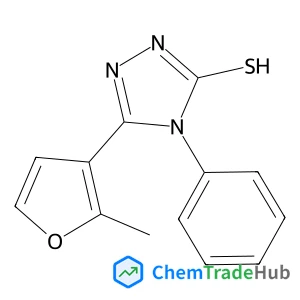
5-(2-Methyl-3-furyl)-4-phenyl-2,4-dihydro-3H-1,2,4-triazole-3-thione
CAS Number:
346464-59-3
Molecular Formula:
C13H11N3OS
![Benzeneacetic acid, 2-bromo-α-[[(1,1-dimethylethoxy)carbonyl]amino]-, (αS)- structure](https://static.chemtradehub.com/structs/122/1228547-87-2-f296.webp "Benzeneacetic acid, 2-bromo-α-[[(1,1-dimethylethoxy)carbonyl]amino]-, (αS)- structure")
Benzeneacetic acid, 2-bromo-α-[[(1,1-dimethylethoxy)carbonyl]amino]-, (αS)-
CAS Number:
1228547-87-2
Molecular Formula:
C13H16BrNO4
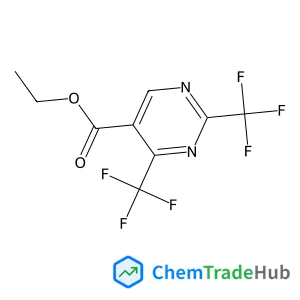
Ethyl 2,4-bis(trifluoromethyl)-5-pyrimidinecarboxylate
CAS Number:
188781-15-9
Molecular Formula:
C9H6F6N2O2
Recommended Suppliers





Disclaimer
This page provides academic journal information for reference and research purposes only. We are not affiliated with any journal publishers and do not handle publication submissions. For publication-related inquiries, please contact the respective journal publishers directly.
If you notice any inaccuracies in the information displayed, please contact us at support@chemtradehub.com. We will promptly review and address your concerns.