


Dissociative ionization and electron beam induced deposition of tetrakis(dimethylamino)silane, a precursor for silicon nitride deposition
Literature Information
Publication Date
2022-03-30
DOI
10.1039/D2CP00257D
Impact Factor
3.676
Authors
Reza Tafrishi, Maicol Cipriani, Christian Felix Hermanns, Jens Oster, Armin Gölzhäuser, Klaus Edinger, Oddur Ingólfsson
View Original
Abstract
Motivated by the use of tetrakis(dimethylamino)silane (TKDMAS) to produce silicon nitride-based deposits and its potential as a precursor for Focused Electron Beam Induced Deposition (FEBID), we have studied its reactivity towards low energy electrons in the gas phase and the composition of its deposits created by FEBID. While no negative ion formation was observed through dissociative electron attachment (DEA), significant fragmentation was observed in dissociative ionization (DI). Appearance energies (AEs) of fragments formed in DI were measured and are compared to the respective threshold energies calculated at the DFT and coupled cluster (CC) levels of theory. The average carbon and nitrogen loss per DI incident is calculated and compared to its deposit composition in FEBID. We find that hydrogen transfer reactions and new bond formations play a significant role in the DI of TKDMAS. Surprisingly, a significantly lower nitrogen content is observed in the deposits than is to be expected from the DI experiments. Furthermore, a post treatment protocol using water vapour during electron exposure was developed to remove the unwanted carbon content of FEBIDs created from TKDMAS. For comparison, these were also applied to FEBID deposits formed with tetraethyl orthosilicate (TEOS). In contrast, effective carbon removal was achieved in post treatment of TKDMAS, while his approach only marginally affected the composition of deposits made with TEOS.
Recommended Journals

Russian Journal of Applied Chemistry

Organic Process Research & Development

New Journal of Chemistry

Chemistry Education Research and Practice

Russian Journal of Organic Chemistry

Current Opinion in Colloid & Interface Science

Nature Medicine

Russian Journal of General Chemistry

Journal of Saudi Chemical Society

Russian Journal of Coordination Chemistry
Related Literature
Thiol–ene “click” reactions and recent applications in polymer and materials synthesis: a first update
Andrew B. Lowe
2014-05-01
Review Article
DOI: 10.1039/C4PY00339J
Further improvement of the macroscopic NLO coefficient and optical transparency of hyperbranched polymers by enhancing the degree of branching
Wenbo Wu, Zhen Li
2014-04-14
Paper
DOI: 10.1039/C4PY00419A
SARA ATRP or SET-LRP. End of controversy?
Dominik Konkolewicz, Yu Wang, Pawel Krys, Mingjiang Zhong, Abdirisak A. Isse, Armando Gennaro, Krzysztof Matyjaszewski
2014-05-15
Minireview
DOI: 10.1039/C4PY00149D
A supramolecular approach for fabrication of photo-responsive block-controllable supramolecular polymers
Lichao Liu, Leilei Rui, Yun Gao, Weian Zhang
2014-06-27
Paper
DOI: 10.1039/C4PY00645C
Synthesis and properties of heterografted toothbrush-like copolymers with alternating PEG and PCL grafts and tunable RAFT-generated segments
Dandan Tang, Xiao Jiang, Huanhuan Liu, Cangxia Li, Youliang Zhao
2014-05-27
Paper
DOI: 10.1039/C4PY00332B
Synthesis and phase behavior of a new 2-vinylbiphenyl-based mesogen-jacketed liquid crystalline polymer with a high glass transition temperature and low threshold molecular weight
Qi-Kai Zhang, Hai-Jian Tian, Yu-Feng Zhu, Yongri Liang, Zhihao Shen, Xing-He Fan
2014-03-11
Paper
DOI: 10.1039/C3PY01755A
Diels–Alder crosslinked HA/PEG hydrogels with high elasticity and fatigue resistance for cell encapsulation and articular cartilage tissue repair
2014-05-13
Paper
DOI: 10.1039/C4PY00473F
Facile fabrication of reduction-responsive nanocarriers for controlled drug release
Rui Sun, Qiaojie Luo, Chen Gao, Ying Wang, Lilong Gao, Hong Du, Ying Huang, Xiaodong Li, Zhiquan Shen, Weipu Zhu
2014-06-03
Communication
DOI: 10.1039/C4PY00577E
You might also like
Compound Q&A
What precautions should be taken when handling lithium chloride hydrate (1:1:1) (CAS: 16712-20-2)?
When handling lithium chloride hydrate (1:1:1) (CAS: 16712-20-2), it is importan...
16712-20-2Lithium chloride hyd...
Compound Q&A
Is 4-(4H-1,2,4-Triazol-4-yl)piperidine (CAS: 690261-92-8) safe?
4-(4H-1,2,4-Triazol-4-yl)piperidine is generally considered safe for use in phar...
690261-92-84-(4H-1,2,4-Triazol-...
Compound Q&A
How should waste containing 1,3-Thiazole-2-carboxamide (CAS: 16733-85-0) be handled?
Waste containing 1,3-Thiazole-2-carboxamide (CAS: 16733-85-0) should be collecte...
16733-85-01,3-Thiazole-2-carbo...
Compound Q&A
What regulatory guidelines apply to 5-(Difluoromethyl)-2-fluorobenzonitrile (CAS: 934175-58-3)?
5-(Difluoromethyl)-2-fluorobenzonitrile (CAS: 934175-58-3) is subject to regulat...
934175-58-35-(Difluoromethyl)-2...
Compound Q&A
How is Methyl 3-acetamido-2-thiophenecarboxylate (CAS: 22288-79-5) typically synthesized?
Methyl 3-acetamido-2-thiophenecarboxylate can be synthesized by the reaction of ...
22288-79-5Methyl 3-acetamido-2...
Compound Q&A
What is 4-Isoquinolinecarbonitrile (CAS: 34846-65-6)?
4-Isoquinolinecarbonitrile is a chemical compound with the CAS number 34846-65-6...
34846-65-64-Isoquinolinecarbon...
Compound Q&A
How should Methyl 1H-1,2,3-triazole-4-carboxylate (CAS: 877309-59-6) be stored?
Store Methyl 1H-1,2,3-triazole-4-carboxylate (CAS: 877309-59-6) in a cool, dry p...
877309-59-6Methyl 1H-1,2,3-tria...
Compound Q&A
What regulatory guidelines apply to 6-Bromo[1,3]thiazolo[5,4-b]pyridin-2-amine (CAS: 1160791-13-8)?
6-Bromo[1,3]thiazolo[5,4-b]pyridin-2-amine (CAS: 1160791-13-8) is subject to the...
1160791-13-86-Bromo[1,3]thiazolo...
Compound Q&A
Is (2S,3S)-2-Ammonio-3-(3,4-dihydroxyphenyl)-3-hydroxypropanoate (CAS: 23651-95-8) safe?
(2S,3S)-2-Ammonio-3-(3,4-dihydroxyphenyl)-3-hydroxypropanoate (CAS: 23651-95-8) ...
23651-95-8(2S,3S)-2-Ammonio-3-...
Compound Q&A
What are the physical and chemical properties of 7-bromo-3-methyl-3,4-dihydroquinazolin-4-one (CAS: 1293987-84-4)?
7-Bromo-3-methyl-3,4-dihydroquinazolin-4-one is a solid with a crystalline form....
1293987-84-47-bromo-3-methyl-3,4...
Source Journal
Physical Chemistry Chemical Physics

CiteScore:
5.5
Self-citation Rate:
10.3%
Articles per Year:
3036
Physical Chemistry Chemical Physics (PCCP) is an international journal co-owned by 19 physical chemistry and physics societies from around the world. This journal publishes original, cutting-edge research in physical chemistry, chemical physics and biophysical chemistry. To be suitable for publication in PCCP, articles must include significant innovation and/or insight into physical chemistry; this is the most important criterion that reviewers and Editors will judge against when evaluating submissions. The journal has a broad scope and welcomes contributions spanning experiment, theory, computation and data science. Topical coverage includes spectroscopy, dynamics, kinetics, statistical mechanics, thermodynamics, electrochemistry, catalysis, surface science, quantum mechanics, quantum computing and machine learning. Interdisciplinary research areas such as polymers and soft matter, materials, nanoscience, energy, surfaces/interfaces, and biophysical chemistry are welcomed if they demonstrate significant innovation and/or insight into physical chemistry. Joined experimental/theoretical studies are particularly appreciated when complementary and based on up-to-date approaches.
Recommended Compounds
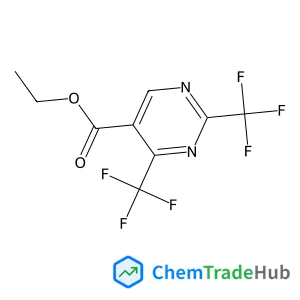
Ethyl 2,4-bis(trifluoromethyl)-5-pyrimidinecarboxylate
CAS Number:
188781-15-9
Molecular Formula:
C9H6F6N2O2
Recommended Suppliers






Disclaimer
This page provides academic journal information for reference and research purposes only. We are not affiliated with any journal publishers and do not handle publication submissions. For publication-related inquiries, please contact the respective journal publishers directly.
If you notice any inaccuracies in the information displayed, please contact us at support@chemtradehub.com. We will promptly review and address your concerns.