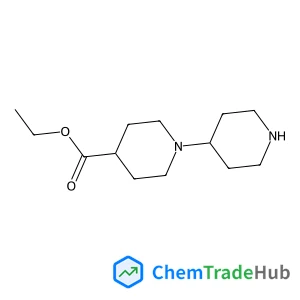
![tert-butyl 8-benzyl-2,8-diazaspiro[4.5]decane-2-carboxylate structure](https://static.chemtradehub.com/structs/336/336191-16-3-bb55.webp "tert-butyl 8-benzyl-2,8-diazaspiro[4.5]decane-2-carboxylate structure")
tert-butyl 8-benzyl-2,8-diazaspiro[4.5]decane-2-carboxylate
CAS Number:
336191-16-3
Molecular Formula:
C20H30N2O2
Sandra Beauvarlet, Etienne Bloch, Debobrata Rajak, Dominique Descamps, Baptiste Fabre, Stéphane Petit, Bernard Pons, Yann Mairesse, Valérie Blanchet
The resonance-enhanced multiphoton ionization of chiral molecules by elliptically polarized laser pulses produces photoelectron angular distributions that are forward/backward asymmetric with respect to the light propagation axis. We investigate this photoelectron elliptical dichroism in the (2 + 1)-photon ionization of fenchone molecules, using wavelength tunable femtosecond UV pulses. We show that the photoelectron elliptical asymmetry is extremely sensitive to the intermediate resonant states involved in the ionization process, and enables electronic couplings to be revealed that do not show up so clearly when using circularly polarized light.

Saudi Pharmaceutical Journal

Russian Journal of Organic Chemistry

Journal of Natural Medicines

Drug Discovery Today

Current Opinion in Solid State & Materials Science

Chemistry Education Research and Practice

Journal of Peptide Science

Russian Journal of Applied Chemistry

Russian Journal of General Chemistry

Organic Process Research & Development
Chi Zhang, Milan Maric
DOI: 10.1039/C4PY00300D
Morgane Le Neindre, Renaud Nicolaÿ
DOI: 10.1039/C4PY00293H
Mingming Zhang, Qingqing Xiong, Yinsong Wang, Zhibao Zhang, Wei Shen, Lingrong Liu, Quanyao Wang
DOI: 10.1039/C4PY00311J
Zhigang Xie, Xuesi Chen, Xiabin Jing, Yubin Huang
DOI: 10.1039/C4PY00227J
Marcela Castano, Matthew L. Becker
DOI: 10.1039/C4PY00569D
Ke Wang, Yan Yan, Guilan Zhao, Wei Xu, Kai Dong, Cuiyu You, Lu Zhang, Jianfeng Xing
DOI: 10.1039/C4PY00286E
Tingting Liu, Wei Tian, Yunqing Zhu, Yang Bai, Hongxia Yan, Jianzhong Du
DOI: 10.1039/C4PY00501E
Hai-Jian Tian, Wei Qu, Yu-Feng Zhu, Zhihao Shen, Xing-He Fan
DOI: 10.1039/C4PY00033A
Mahdi Abbasi, Kamran Riazi, Nico Dingenouts, Manfred Wilhelm
DOI: 10.1039/C4PY00484A
When handling lithium chloride hydrate (1:1:1) (CAS: 16712-20-2), it is importan...
4-(4H-1,2,4-Triazol-4-yl)piperidine is generally considered safe for use in phar...
Waste containing 1,3-Thiazole-2-carboxamide (CAS: 16733-85-0) should be collecte...
5-(Difluoromethyl)-2-fluorobenzonitrile (CAS: 934175-58-3) is subject to regulat...
Methyl 3-acetamido-2-thiophenecarboxylate can be synthesized by the reaction of ...
4-Isoquinolinecarbonitrile is a chemical compound with the CAS number 34846-65-6...
Store Methyl 1H-1,2,3-triazole-4-carboxylate (CAS: 877309-59-6) in a cool, dry p...
6-Bromo[1,3]thiazolo[5,4-b]pyridin-2-amine (CAS: 1160791-13-8) is subject to the...
(2S,3S)-2-Ammonio-3-(3,4-dihydroxyphenyl)-3-hydroxypropanoate (CAS: 23651-95-8) ...
7-Bromo-3-methyl-3,4-dihydroquinazolin-4-one is a solid with a crystalline form....

Physical Chemistry Chemical Physics (PCCP) is an international journal co-owned by 19 physical chemistry and physics societies from around the world. This journal publishes original, cutting-edge research in physical chemistry, chemical physics and biophysical chemistry. To be suitable for publication in PCCP, articles must include significant innovation and/or insight into physical chemistry; this is the most important criterion that reviewers and Editors will judge against when evaluating submissions. The journal has a broad scope and welcomes contributions spanning experiment, theory, computation and data science. Topical coverage includes spectroscopy, dynamics, kinetics, statistical mechanics, thermodynamics, electrochemistry, catalysis, surface science, quantum mechanics, quantum computing and machine learning. Interdisciplinary research areas such as polymers and soft matter, materials, nanoscience, energy, surfaces/interfaces, and biophysical chemistry are welcomed if they demonstrate significant innovation and/or insight into physical chemistry. Joined experimental/theoretical studies are particularly appreciated when complementary and based on up-to-date approaches.
![6,6-Dimethylbicyclo[3.1.1]hept-2-ene-2-carbaldehyde structure](https://static.chemtradehub.com/structs/564/564-94-3-e746.webp "6,6-Dimethylbicyclo[3.1.1]hept-2-ene-2-carbaldehyde structure")
![8-Bromo-6-fluoro[1,2,4]triazolo[1,5-a]pyridin-2-amine structure](https://static.chemtradehub.com/structs/125/1257705-51-3-9f4a.webp "8-Bromo-6-fluoro[1,2,4]triazolo[1,5-a]pyridin-2-amine structure")