



Underlying mechanisms of the synergistic role of Li2MnO3 and LiNi1/3Co1/3Mn1/3O2 in high-Mn, Li-rich oxides
Literature Information
Publication Date
2016-03-18
DOI
10.1039/C6CP00088F
Impact Factor
3.676
Authors
Jin-Myoung Lim, Duho Kim, Maenghyo Cho
View Original
Abstract
For large-scale energy storage applications requiring high energy density, the development of Li-rich oxides with enhanced cyclic stabilities during high-voltage operations and large specific capacities is required. In this regard, high-Mn, Li-rich oxides (HMLOs; xLi2MnO3 (1 − x)LiNi1/3Co1/3Mn1/3O2 at x > 0.5) warrant an in-depth study because of their good cyclic performance at high operating voltages and potentially large specific capacities. Here, to understand the synergistic effects and enhanced cyclic stability of HMLOs, mechanically blended HMLO (m-HMLO) and chemically bonded HMLO (c-HMLO) were prepared and investigated. c-HMLO exhibits relatively high reaction voltages, large specific capacities, and enhanced cyclic stabilities (∼99%) at a high operating voltage (∼4.8 V vs. Li/Li+) compared with m-HMLO. First-principles calculations with electronic structure analysis were performed using an atomic model developed by Rietveld refinement using as-synthesised c-HMLO. The redox mechanisms of Ni, Co, and Mn ions were determined via the partial density of states of the ground states predicted using the cluster expansion method, which elucidates that LiNi1/3Co1/3Mn1/3O2 stabilises the transition metal (TM) layer of Li2MnO3 and separates Li delithiation potentials in Li2MnO3 in the HMLO. Kinetic analyses including electronic structures revealed that the interlayer migration of TMs from the TM layer to the Li layer depends on the crystal field stabilisation. Thus, TMs with reduced character in the tetrahedral sites than the octahedral sites owing to the effects of crystal field stabilisation, such as Ni ions, in HMLOs would face a higher interlayer migration barrier, impeding phase transformation into spinel phases. Furthermore, Cu ions could constitute a doping source for HMLOs to improve the material’s cyclic stability through this mechanism. These characteristics may be widely applied to explain experimental phenomena and improve the properties of cathode materials for Li-ion batteries.
Recommended Journals

Environmental Toxicology and Pharmacology

Advanced Engineering Materials

Foundations of Chemistry

Green Chemistry

Journal of Enzyme inhibition and Medicinal Chemistry

Coloration Technology

Lab on a Chip

Photochemical & Photobiological Sciences

Journal of Medical Biochemistry

Current Pharmaceutical Biotechnology
Related Literature
Highly atom-efficient and chemoselective reduction of ketones in the presence of aldehydes using heterogeneous catalysts
Yusuke Takahashi, Takato Mitsudome, Tomoo Mizugaki, Koichiro Jitsukawa
2013-08-01
Communication
DOI: 10.1039/C3GC41322E
Asymmetric anti-Mannich reactions in continuous flow
Rafael Martín-Rapún, Sonia Sayalero
2013-09-20
Communication
DOI: 10.1039/C3GC41444B
N-Chlorosuccinimide-promoted synthesis of thiophosphates from thiols and phosphonates under mild conditions
Yi-Chen Liu, Chin-Fa Lee
2013-10-28
Paper
DOI: 10.1039/C3GC41839A
Direct oxidation of secondary alcohol to ester by performic acid
Xiao-Hong Li, Xiang-Guang Meng, Ying Liu, Xiao Peng
2013-09-25
Paper
DOI: 10.1039/C3GC41198B
Supported protic acid-catalyzed synthesis of 2,3-disubstituted thiazolidin-4-ones: enhancement of the catalytic potential of protic acid by adsorption on solid supports
Dinesh Kumar, Mukesh Sonawane, Brahmam Pujala, Varun K. Jain, Srikant Bhagat, Asit K. Chakraborti
2013-07-23
Paper
DOI: 10.1039/C3GC41218K
An efficient palladium catalyst on bentonite for Suzuki–Miyaura reaction at room temperature
Guodong Ding, Weitao Wang, Tao Jiang, Buxing Han
2013-09-10
Paper
DOI: 10.1039/C3GC41469H
THF co-solvent enhances hydrocarbon fuel precursor yields from lignocellulosic biomass
Rajeev Kumar
2013-08-14
Communication
DOI: 10.1039/C3GC41214H
Revisiting the Brønsted acid catalysed hydrolysis kinetics of polymeric carbohydrates in ionic liquids by in situ ATR-FTIR spectroscopy
Andreas J. Kunov-Kruse, Anders Riisager, Shunmugavel Saravanamurugan, Rolf W. Berg, Steffen B. Kristensen, Rasmus Fehrmann
2013-07-22
Paper
DOI: 10.1039/C3GC41174E
You might also like
Compound Q&A
What are the main uses of 1-(3-Aminophenyl)-3-[(3R)-1-(3,3-dimethyl-2-oxobutyl)-2-oxo-5-(2-pyridinyl)-2,3-dihydro-1H-1,4-benzodiazepin-3-yl]urea (CAS: 155412-88-7)?
This compound is mainly used as an intermediate in the synthesis of antipsychoti...
155412-88-71-(3-Aminophenyl)-3-...
Compound Q&A
How should waste containing 1-(D-Ribofuranosyl)-1,4-dihydro-3-pyridinecarboxamide (CAS: 19132-12-8) be handled?
Waste containing 1-(D-Ribofuranosyl)-1,4-dihydro-3-pyridinecarboxamide (CAS: 191...
19132-12-81-(D-Ribofuranosyl)-...
Compound Q&A
What regulatory guidelines apply to 2-Methyl-2-propanyl 3-bromo-3-(hydroxymethyl)-1-azetidinecarboxylate (CAS: 2007919-81-3)?
2-Methyl-2-propanyl 3-bromo-3-(hydroxymethyl)-1-azetidinecarboxylate (CAS: 20079...
2007919-81-32-Methyl-2-propanyl ...
Compound Q&A
What is N-(4-Chloro-2-pyridinyl)acetamide (CAS: 245056-66-0)?
N-(4-Chloro-2-pyridinyl)acetamide (CAS: 245056-66-0) is a chemical compound with...
245056-66-0N-(4-Chloro-2-pyridi...
Compound Q&A
What is 5-Chloro-2-hydroxybenzoic acid (CAS: 321-14-2)?
5-Chloro-2-hydroxybenzoic acid, also known as 5-chlorosalicylic acid, is an arom...
321-14-25-Chloro-2-hydroxybe...
Compound Q&A
What precautions should be taken when handling 1,1-Dichloro-1-fluoroethane (CAS: 1717-00-6)?
When handling 1,1-Dichloro-1-fluoroethane (CAS: 1717-00-6), it is important to u...
1717-00-61,1-Dichloro-1-fluor...
Compound Q&A
What are the physical and chemical properties of Fmoc-(2S,3R)-3-phenylpyrrolidine-2-carboxylic acid (CAS: 281655-32-1)?
Fmoc-(2S,3R)-3-phenylpyrrolidine-2-carboxylic acid is a white crystalline solid ...
281655-32-1Fmoc-(2S,3R)-3-pheny...
Compound Q&A
What are the main uses of 4-Amino-5-bromo-2-pyridinecarboxylic acid (CAS: 1363381-01-4)?
4-Amino-5-bromo-2-pyridinecarboxylic acid is primarily used as a precursor in th...
1363381-01-44-Amino-5-bromo-2-py...
Compound Q&A
What precautions should be taken when handling (S)-tert-butyl 2-((2-(4-bromophenyl)-2-oxoethyl)carbamoyl)pyrrolidine-1-carboxylate (CAS: 1007881-98-2)?
Handling this compound should be done with personal protective equipment (PPE) i...
1007881-98-2(S)-tert-butyl 2-((2...
Compound Q&A
What precautions should be taken when handling 8-bromo-2,2-dimethyl-3,4-dihydro-2H-1,4-benzoxazin-3-one (CAS: 688363-73-7)?
When handling 8-bromo-2,2-dimethyl-3,4-dihydro-2H-1,4-benzoxazin-3-one, use prop...
688363-73-78-bromo-2,2-dimethyl...
Source Journal
Physical Chemistry Chemical Physics

CiteScore:
5.5
Self-citation Rate:
10.3%
Articles per Year:
3036
Physical Chemistry Chemical Physics (PCCP) is an international journal co-owned by 19 physical chemistry and physics societies from around the world. This journal publishes original, cutting-edge research in physical chemistry, chemical physics and biophysical chemistry. To be suitable for publication in PCCP, articles must include significant innovation and/or insight into physical chemistry; this is the most important criterion that reviewers and Editors will judge against when evaluating submissions. The journal has a broad scope and welcomes contributions spanning experiment, theory, computation and data science. Topical coverage includes spectroscopy, dynamics, kinetics, statistical mechanics, thermodynamics, electrochemistry, catalysis, surface science, quantum mechanics, quantum computing and machine learning. Interdisciplinary research areas such as polymers and soft matter, materials, nanoscience, energy, surfaces/interfaces, and biophysical chemistry are welcomed if they demonstrate significant innovation and/or insight into physical chemistry. Joined experimental/theoretical studies are particularly appreciated when complementary and based on up-to-date approaches.
Recommended Compounds
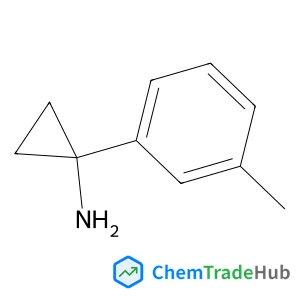

![Methyl 4-({[(2-methyl-2-propanyl)oxy]carbonyl}amino)bicyclo[2.2.2]octane-1-carboxylate structure](https://static.chemtradehub.com/structs/943/943845-74-7-b7e5.webp "Methyl 4-({[(2-methyl-2-propanyl)oxy]carbonyl}amino)bicyclo[2.2.2]octane-1-carboxylate structure")
Methyl 4-({[(2-methyl-2-propanyl)oxy]carbonyl}amino)bicyclo[2.2.2]octane-1-carboxylate
CAS Number:
943845-74-7
Molecular Formula:
C15H25NO4
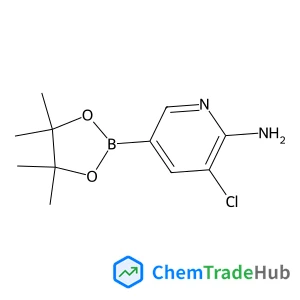
3-Chloro-5-(4,4,5,5-tetramethyl-1,3,2-dioxaborolan-2-yl)-2-pyridinamine
CAS Number:
1032758-99-8
Molecular Formula:
C11H16BClN2O2
Recommended Suppliers



Disclaimer
This page provides academic journal information for reference and research purposes only. We are not affiliated with any journal publishers and do not handle publication submissions. For publication-related inquiries, please contact the respective journal publishers directly.
If you notice any inaccuracies in the information displayed, please contact us at support@chemtradehub.com. We will promptly review and address your concerns.