












![(1S,4aR,5R,7S,7aS)-1-(beta-D-Glucopyranosyloxy)-5-hydroxy-7-methyl-1,4a,5,6,7,7a-hexahydrocyclopenta[c]pyran-7-yl alpha-D-galactopyranoside structure](https://static.chemtradehub.com/structs/817/81720-07-2-4ffd.webp "(1S,4aR,5R,7S,7aS)-1-(beta-D-Glucopyranosyloxy)-5-hydroxy-7-methyl-1,4a,5,6,7,7a-hexahydrocyclopenta[c]pyran-7-yl alpha-D-galactopyranoside structure")
(1S,4aR,5R,7S,7aS)-1-(beta-D-Glucopyranosyloxy)-5-hydroxy-7-methyl-1,4a,5,6,7,7a-hexahydrocyclopenta[c]pyran-7-yl alpha-D-galactopyranoside
CAS Number:
81720-07-2
Molecular Formula:
C21H34O14
Ruaridh Forbes, Paul Hockett, Ivan Powis, John D. Bozek, Stephen T. Pratt, David M. P. Holland
Linearly polarized synchrotron radiation has been used to record polarization dependent, non-resonant Auger electron spectra of XeF2, encompassing the bands due to the xenon M45N1N45, M45N23N45, M45N45N45 and M45N45V and fluorine KVV transitions. Resonantly excited Auger spectra have been measured at photon energies coinciding with the Xe 3d5/2 → σ* and the overlapped Xe 3d3/2/F 1s → σ* excitations in XeF2. The non-resonant and resonantly excited spectra have enabled the Auger electron angular distributions, as characterized by the βA parameter, to be determined for the M45N45N45 transitions. In the photon energy range over which the Auger electron angular distributions were measured, theoretical results indicate that transitions into the εf continuum channel dominate the Xe 3d photoionization in XeF2. In this limit, the theoretical value of the atomic alignment parameter (A20) characterizing the core ionized state becomes constant. This theoretical value has been used to obtain the Auger electron intrinsic anisotropy parameters (α2) from the βA parameters extracted from our non-resonant Auger spectra. For a particular Auger transition, the electron kinetic energy measured in the resonantly excited spectrum is higher than that in the directly ionized spectrum, due to the screening provided by the electron promoted into the σ* orbital. The interpretation of the F KVV Auger band in XeF2 has been discussed in relation to previously published one-site populations of the doubly charged ions (XeF22+). The experimental results show that the ionization energies of the doubly charged states predominantly populated in the decay of a vacancy in the F 1s orbital in XeF2 tend to be higher than those populated in the decay of a vacancy in the Xe 4d level in XeF2.
Feng-Teng Gao, Zheng Fang, Rui-Rui Su, Pei-Xin Rui
DOI: 10.1039/C8OB02721H
Hiroto Hori
DOI: 10.1039/C9OB00637K
Bu-Quan Zheng, Ling-Yan Chen, Jian-Bo Zhao, Jian Ji, Zi-Bin Qiu, Xinfeng Ren, Ya Li
DOI: 10.1039/C8OB01786G
Qianqian Zhen, Yinlin Shao, Tianxing Cheng, Jiuxi Chen
DOI: 10.1039/C8OB02680G
Yoshiaki Masaki, Keishi Yamamoto, Keita Yoshida, Atsuya Maruyama, Takahito Tomori, Yusuke Iriyama, Hiroyuki Nakajima, Tatsuro Kanaki, Kohji Seio
DOI: 10.1039/C9OB00668K
Won Jun Jang, Byung-Nam Kang, Ji Hun Lee, Yoon Mi Choi, Chong-Hyeak Kim, Jaesook Yun
DOI: 10.1039/C9OB00839J
Hou-Ze Gui, Yin Wei
DOI: 10.1039/C8OB02748J
Ramdas S. Pathare, Antim K. Maurya, Akriti Kumari, Vijai K. Agnihotri, Ved Prakash Verma, Devesh M. Sawant
DOI: 10.1039/C8OB02627K
Rahul Panwar, Shally, Ranjay Shaw, Amr Elagamy, Ramendra Pratap
DOI: 10.1039/C8OB02370K
Sevan D. Houston, Benjamin A. Chalmers, G. Paul Savage, Craig M. Williams
DOI: 10.1039/C8OB02959H
3-Fluoro-2-methylbenzylamine is an organic compound with the CAS number 771573-3...
Tert-butyl 2-(oxetan-3-ylidene)acetate is considered safe for its intended uses ...
Proper personal protective equipment (PPE) such as gloves, goggles, and a lab co...
2-Ethyl-4-methyl-1,3-thiazole is commonly synthesized via the reaction of thiour...
This compound should be stored in a cool, dry place away from direct sunlight an...
L-Lysine Acetate Salt (CAS: 52315-92-1) is subject to various regulatory guideli...
6-Fluoro-3-hydroxy-2-pyrazinecarboxamide (CAS: 259793-96-9) is generally conside...
1,1'-Sulfonylbis(1H-imidazole) is a crystalline solid with a molecular weight of...
4-Methyl-7-nitro-1H-indole-3-carbonitrile (CAS: 289483-82-5) is primarily used i...
Waste containing 5-Bromo-3-indolyl-beta-galactoside (CAS: 97753-82-7) should be ...

Physical Chemistry Chemical Physics (PCCP) is an international journal co-owned by 19 physical chemistry and physics societies from around the world. This journal publishes original, cutting-edge research in physical chemistry, chemical physics and biophysical chemistry. To be suitable for publication in PCCP, articles must include significant innovation and/or insight into physical chemistry; this is the most important criterion that reviewers and Editors will judge against when evaluating submissions. The journal has a broad scope and welcomes contributions spanning experiment, theory, computation and data science. Topical coverage includes spectroscopy, dynamics, kinetics, statistical mechanics, thermodynamics, electrochemistry, catalysis, surface science, quantum mechanics, quantum computing and machine learning. Interdisciplinary research areas such as polymers and soft matter, materials, nanoscience, energy, surfaces/interfaces, and biophysical chemistry are welcomed if they demonstrate significant innovation and/or insight into physical chemistry. Joined experimental/theoretical studies are particularly appreciated when complementary and based on up-to-date approaches.
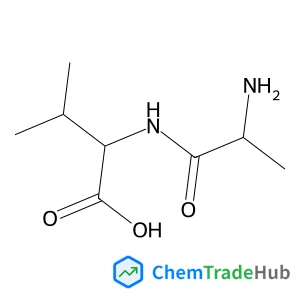
![(1R,3S,5R)-2-{[(2-Methyl-2-propanyl)oxy]carbonyl}-2-azabicyclo[3.1.0]hexane-3-carboxylic acid structure](https://static.chemtradehub.com/structs/197/197142-34-0-6a44.webp "(1R,3S,5R)-2-{[(2-Methyl-2-propanyl)oxy]carbonyl}-2-azabicyclo[3.1.0]hexane-3-carboxylic acid structure")
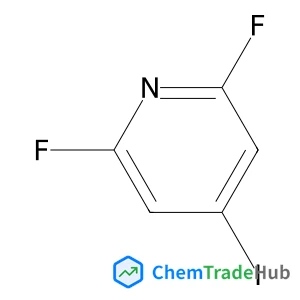
![5-Methoxy-1H-pyrrolo[3,2-b]pyridine structure](https://static.chemtradehub.com/structs/172/17288-40-3-a8d1.webp "5-Methoxy-1H-pyrrolo[3,2-b]pyridine structure")



