












Surface potentials of acceptor- and donor-doped CeO2 thin films and their relation to oxygen surface exchange
Literature Information
Publication Date
2021-12-10
DOI
10.1039/D1CP03776E
Impact Factor
3.676
Authors
Hans F. Wardenga, Katharina N. S. Schuldt, Stephan Waldow, Roger A. De Souza, Andreas Klein
View Original
Abstract
Surface Fermi level positions, ionisation potentials, and work functions of acceptor-, donor-, and nominally undoped CeO2 have been determined by means of in situ photoelectron spectroscopy on films grown with different surface orientation and preparation conditions. The Fermi energy varies in accordance with the doping and oxygen activity. The ionisation potentials are largely unaffected by the preparation conditions and surface orientation. They are comparable for nominally undoped, 1% donor-doped, and 1% acceptor-doped films. The majority of the 10% Gd-doped films exhibit a 0.5 eV lower ionisation potential, which might be related to the presence of a surface space-charge region. The lower ionisation potential of the 10% Gd-doped films compensates for their lower Fermi energies and eventually results in work functions being largely independent on doping. Oxygen surface exchange coefficients determined using secondary ion mass spectrometry and conductivity relaxation experiments reveal similar magnitudes and are not strongly affected by doping type, concentration, and surface orientation. The results indicate that surface space-charge regions are crucial for oxygen surface exchange but do not allow to finally identify the rate determining step for oxygen incorporation into CeO2-based materials.
Related Literature
Mechanisms ruling the partition of solutes in ionic-liquid-based aqueous biphasic systems – the multiple effects of ionic liquids
Helena Passos, Teresa B. V. Dinis, Emanuel V. Capela, Maria V. Quental, Joana Gomes, Judite Resende, Pedro P. Madeira, Mara G. Freire, João A. P. Coutinho
2018-02-22
Perspective
DOI: 10.1039/C8CP00383A
Quantifying structure dependent responses in Li-ion cells with excess Li spinel cathodes: matching voltage and entropy profiles through mean field models
Steffen Schlueter, Ronny Genieser, Daniel Richards
2018-07-25
Paper
DOI: 10.1039/C8CP02989J
DMPC vesicle structure and dynamics in the presence of low amounts of the saponin aescin
Ramsia Sreij, Carina Dargel, Philippe Geisler, Yvonne Hertle, Aurel Radulescu, Stefano Pasini, Javier Perez, Lara H. Moleiro, Thomas Hellweg
2018-02-28
Paper
DOI: 10.1039/C7CP08027A
Assignment of photoelectron spectra of intramolecular silicon complexes: 1-vinyl- and 1-phenylsilatranes
Elena F. Belogolova, Evgeniya P. Doronina, Valery F. Sidorkin
2018-09-28
Paper
DOI: 10.1039/C8CP04582H
Thermal, electrochemical and radiolytic stabilities of ionic liquids
Li Qin, Jingyun Jiang, Tiancheng Mu, Guohua Gao
2018-02-12
Perspective
DOI: 10.1039/C7CP07483B
Piezoelectric and polarized enhancement by hydrofluorination of penta-graphene
Hui-Min Mu, Jin-Peng Li, Xiao-Chun Wang
2018-10-03
Paper
DOI: 10.1039/C8CP04010A
Designing a porous-crystalline structure of β-Ga2O3: a potential approach to tune its opto-electronic properties
Swastika Banerjee, Xiangwei Jiang, Lin-Wang Wang
2018-03-06
Paper
DOI: 10.1039/C7CP08565F
You might also like
Compound Q&A
What are the main uses of 1-(3-Aminophenyl)-3-[(3R)-1-(3,3-dimethyl-2-oxobutyl)-2-oxo-5-(2-pyridinyl)-2,3-dihydro-1H-1,4-benzodiazepin-3-yl]urea (CAS: 155412-88-7)?
This compound is mainly used as an intermediate in the synthesis of antipsychoti...
155412-88-71-(3-Aminophenyl)-3-...
Compound Q&A
How should waste containing 1-(D-Ribofuranosyl)-1,4-dihydro-3-pyridinecarboxamide (CAS: 19132-12-8) be handled?
Waste containing 1-(D-Ribofuranosyl)-1,4-dihydro-3-pyridinecarboxamide (CAS: 191...
19132-12-81-(D-Ribofuranosyl)-...
Compound Q&A
What regulatory guidelines apply to 2-Methyl-2-propanyl 3-bromo-3-(hydroxymethyl)-1-azetidinecarboxylate (CAS: 2007919-81-3)?
2-Methyl-2-propanyl 3-bromo-3-(hydroxymethyl)-1-azetidinecarboxylate (CAS: 20079...
2007919-81-32-Methyl-2-propanyl ...
Compound Q&A
What is N-(4-Chloro-2-pyridinyl)acetamide (CAS: 245056-66-0)?
N-(4-Chloro-2-pyridinyl)acetamide (CAS: 245056-66-0) is a chemical compound with...
245056-66-0N-(4-Chloro-2-pyridi...
Compound Q&A
What is 5-Chloro-2-hydroxybenzoic acid (CAS: 321-14-2)?
5-Chloro-2-hydroxybenzoic acid, also known as 5-chlorosalicylic acid, is an arom...
321-14-25-Chloro-2-hydroxybe...
Compound Q&A
What precautions should be taken when handling 1,1-Dichloro-1-fluoroethane (CAS: 1717-00-6)?
When handling 1,1-Dichloro-1-fluoroethane (CAS: 1717-00-6), it is important to u...
1717-00-61,1-Dichloro-1-fluor...
Compound Q&A
What are the physical and chemical properties of Fmoc-(2S,3R)-3-phenylpyrrolidine-2-carboxylic acid (CAS: 281655-32-1)?
Fmoc-(2S,3R)-3-phenylpyrrolidine-2-carboxylic acid is a white crystalline solid ...
281655-32-1Fmoc-(2S,3R)-3-pheny...
Compound Q&A
What are the main uses of 4-Amino-5-bromo-2-pyridinecarboxylic acid (CAS: 1363381-01-4)?
4-Amino-5-bromo-2-pyridinecarboxylic acid is primarily used as a precursor in th...
1363381-01-44-Amino-5-bromo-2-py...
Compound Q&A
What precautions should be taken when handling (S)-tert-butyl 2-((2-(4-bromophenyl)-2-oxoethyl)carbamoyl)pyrrolidine-1-carboxylate (CAS: 1007881-98-2)?
Handling this compound should be done with personal protective equipment (PPE) i...
1007881-98-2(S)-tert-butyl 2-((2...
Compound Q&A
What precautions should be taken when handling 8-bromo-2,2-dimethyl-3,4-dihydro-2H-1,4-benzoxazin-3-one (CAS: 688363-73-7)?
When handling 8-bromo-2,2-dimethyl-3,4-dihydro-2H-1,4-benzoxazin-3-one, use prop...
688363-73-78-bromo-2,2-dimethyl...
Source Journal
Physical Chemistry Chemical Physics

CiteScore:
5.5
Self-citation Rate:
10.3%
Articles per Year:
3036
Physical Chemistry Chemical Physics (PCCP) is an international journal co-owned by 19 physical chemistry and physics societies from around the world. This journal publishes original, cutting-edge research in physical chemistry, chemical physics and biophysical chemistry. To be suitable for publication in PCCP, articles must include significant innovation and/or insight into physical chemistry; this is the most important criterion that reviewers and Editors will judge against when evaluating submissions. The journal has a broad scope and welcomes contributions spanning experiment, theory, computation and data science. Topical coverage includes spectroscopy, dynamics, kinetics, statistical mechanics, thermodynamics, electrochemistry, catalysis, surface science, quantum mechanics, quantum computing and machine learning. Interdisciplinary research areas such as polymers and soft matter, materials, nanoscience, energy, surfaces/interfaces, and biophysical chemistry are welcomed if they demonstrate significant innovation and/or insight into physical chemistry. Joined experimental/theoretical studies are particularly appreciated when complementary and based on up-to-date approaches.
Recommended Compounds
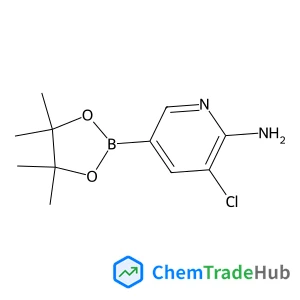
3-Chloro-5-(4,4,5,5-tetramethyl-1,3,2-dioxaborolan-2-yl)-2-pyridinamine
CAS Number:
1032758-99-8
Molecular Formula:
C11H16BClN2O2
Recommended Suppliers







Disclaimer
This page provides academic journal information for reference and research purposes only. We are not affiliated with any journal publishers and do not handle publication submissions. For publication-related inquiries, please contact the respective journal publishers directly.
If you notice any inaccuracies in the information displayed, please contact us at support@chemtradehub.com. We will promptly review and address your concerns.