













DMPC vesicle structure and dynamics in the presence of low amounts of the saponin aescin
Literature Information
Publication Date
2018-02-28
DOI
10.1039/C7CP08027A
Impact Factor
3.676
Authors
Ramsia Sreij, Carina Dargel, Philippe Geisler, Yvonne Hertle, Aurel Radulescu, Stefano Pasini, Javier Perez, Lara H. Moleiro, Thomas Hellweg
View Original
Abstract
Vesicle shape and bilayer parameters are studied by small-angle X-ray (SAXS) and small-angle neutron (SANS) scattering in the presence of the saponin aescin. We confirm successful incorporation of aescin molecules by analysis of the radii of gyration RG and study furthermore the impact of aescin incorporation on bilayer thickness parameters from the neutron and X-ray perspective. Additionally, the bending elasticity (κ) of these 1,2-dimyristoyl-sn-glycero-3-phosphocholine vesicle bilayers is studied in the presence of aescin. Neutron spin-echo spectroscopy (NSE) allows to detect subtle changes in the dynamics and κ of lipid membranes. Changes of κ are detectable at temperatures below and above the main phase transition temperature Tm of the lipid. The impact of aescin is much more significant below Tm. It has been found that below Tm the addition of aescin to the vesicles decreases the value of κ and softens the bilayer. Above Tm the value of κ increases with increasing aescin content and the bilayer becomes more rigid. Altogether, we demonstrate by analysis of the structure and dynamics of the vesicles that the impact of aescin strongly depends on the lipid state. Below Tm the membrane becomes fluidized and softer, above Tm solidified and stiffer compared to a DMPC membrane without additive at similar conditions.
Related Literature
Plutonium and transplutonium element trioxides: molecular structures, chemical bonding, and isomers
2015-08-21
Paper
DOI: 10.1039/C5CP02190A
A wavelength dependent investigation of the indole photophysics via ionization and fragmentation pump–probe spectroscopies
T. J. Godfrey, Hui Yu, Michael S. Biddle, Susanne Ullrich
2015-09-01
Paper
DOI: 10.1039/C5CP02975A
An insight to the role of Cr in the process of intrinsic point defects in α-Al2O3
Xin Xiang, Guikai Zhang, Feilong Yang, Xuexing Peng, Tao Tang, Yan Shi, Xiaolin Wang
2016-02-09
Paper
DOI: 10.1039/C5CP07626A
Electron transport mechanism of bathocuproine exciton blocking layer in organic photovoltaics
Jeihyun Lee, Soohyung Park, Younjoo Lee, Hyein Kim, Dongguen Shin, Junkyeong Jeong, Kwangho Jeong, Sang Wan Cho, Hyunbok Lee, Yeonjin Yi
2016-01-19
Paper
DOI: 10.1039/C5CP07099F
A theoretical study on charge transport of dithiolene nickel complexes
Vu Thi Thu Huong, Truong Ba Tai, Minh Tho Nguyen
2016-01-27
Paper
DOI: 10.1039/C5CP07277H
Pulsed EPR characterization of HIV-1 protease conformational sampling and inhibitor-induced population shifts
Zhanglong Liu, Thomas M. Casey, Mandy E. Blackburn, Xi Huang, Linh Pham, Ian Mitchelle S. de Vera, Jeffrey D. Carter, Jamie L. Kear-Scott, Angelo M. Veloro, Luis Galiano, Gail E. Fanucci
2015-10-09
Paper
DOI: 10.1039/C5CP04556H
Hierarchical mesoporous NiCo2O4 hollow nanocubes for supercapacitors
Chuanbao Cao, Jianhua Hou, Huazhang Zhai
2016-01-28
Paper
DOI: 10.1039/C5CP07997G
The O, OH and OOH-assisted selective coupling of methanol on Au–Ag(111)
Wenhui Zhong, Jinxia Liang, Wei Hu, Xinrui Cao, Chuanyi Jia, Jun Jiang
2016-02-26
Paper
DOI: 10.1039/C6CP00336B
Bayesian inference of protein ensembles from SAXS data
L. D. Antonov, W. Boomsma, T. Hamelryck
2015-10-28
Paper
DOI: 10.1039/C5CP04886A
You might also like
Compound Q&A
What are the main uses of 1-(3-Aminophenyl)-3-[(3R)-1-(3,3-dimethyl-2-oxobutyl)-2-oxo-5-(2-pyridinyl)-2,3-dihydro-1H-1,4-benzodiazepin-3-yl]urea (CAS: 155412-88-7)?
This compound is mainly used as an intermediate in the synthesis of antipsychoti...
155412-88-71-(3-Aminophenyl)-3-...
Compound Q&A
How should waste containing 1-(D-Ribofuranosyl)-1,4-dihydro-3-pyridinecarboxamide (CAS: 19132-12-8) be handled?
Waste containing 1-(D-Ribofuranosyl)-1,4-dihydro-3-pyridinecarboxamide (CAS: 191...
19132-12-81-(D-Ribofuranosyl)-...
Compound Q&A
What regulatory guidelines apply to 2-Methyl-2-propanyl 3-bromo-3-(hydroxymethyl)-1-azetidinecarboxylate (CAS: 2007919-81-3)?
2-Methyl-2-propanyl 3-bromo-3-(hydroxymethyl)-1-azetidinecarboxylate (CAS: 20079...
2007919-81-32-Methyl-2-propanyl ...
Compound Q&A
What is N-(4-Chloro-2-pyridinyl)acetamide (CAS: 245056-66-0)?
N-(4-Chloro-2-pyridinyl)acetamide (CAS: 245056-66-0) is a chemical compound with...
245056-66-0N-(4-Chloro-2-pyridi...
Compound Q&A
What is 5-Chloro-2-hydroxybenzoic acid (CAS: 321-14-2)?
5-Chloro-2-hydroxybenzoic acid, also known as 5-chlorosalicylic acid, is an arom...
321-14-25-Chloro-2-hydroxybe...
Compound Q&A
What precautions should be taken when handling 1,1-Dichloro-1-fluoroethane (CAS: 1717-00-6)?
When handling 1,1-Dichloro-1-fluoroethane (CAS: 1717-00-6), it is important to u...
1717-00-61,1-Dichloro-1-fluor...
Compound Q&A
What are the physical and chemical properties of Fmoc-(2S,3R)-3-phenylpyrrolidine-2-carboxylic acid (CAS: 281655-32-1)?
Fmoc-(2S,3R)-3-phenylpyrrolidine-2-carboxylic acid is a white crystalline solid ...
281655-32-1Fmoc-(2S,3R)-3-pheny...
Compound Q&A
What are the main uses of 4-Amino-5-bromo-2-pyridinecarboxylic acid (CAS: 1363381-01-4)?
4-Amino-5-bromo-2-pyridinecarboxylic acid is primarily used as a precursor in th...
1363381-01-44-Amino-5-bromo-2-py...
Compound Q&A
What precautions should be taken when handling (S)-tert-butyl 2-((2-(4-bromophenyl)-2-oxoethyl)carbamoyl)pyrrolidine-1-carboxylate (CAS: 1007881-98-2)?
Handling this compound should be done with personal protective equipment (PPE) i...
1007881-98-2(S)-tert-butyl 2-((2...
Compound Q&A
What precautions should be taken when handling 8-bromo-2,2-dimethyl-3,4-dihydro-2H-1,4-benzoxazin-3-one (CAS: 688363-73-7)?
When handling 8-bromo-2,2-dimethyl-3,4-dihydro-2H-1,4-benzoxazin-3-one, use prop...
688363-73-78-bromo-2,2-dimethyl...
Source Journal
Physical Chemistry Chemical Physics

CiteScore:
5.5
Self-citation Rate:
10.3%
Articles per Year:
3036
Physical Chemistry Chemical Physics (PCCP) is an international journal co-owned by 19 physical chemistry and physics societies from around the world. This journal publishes original, cutting-edge research in physical chemistry, chemical physics and biophysical chemistry. To be suitable for publication in PCCP, articles must include significant innovation and/or insight into physical chemistry; this is the most important criterion that reviewers and Editors will judge against when evaluating submissions. The journal has a broad scope and welcomes contributions spanning experiment, theory, computation and data science. Topical coverage includes spectroscopy, dynamics, kinetics, statistical mechanics, thermodynamics, electrochemistry, catalysis, surface science, quantum mechanics, quantum computing and machine learning. Interdisciplinary research areas such as polymers and soft matter, materials, nanoscience, energy, surfaces/interfaces, and biophysical chemistry are welcomed if they demonstrate significant innovation and/or insight into physical chemistry. Joined experimental/theoretical studies are particularly appreciated when complementary and based on up-to-date approaches.
Recommended Compounds
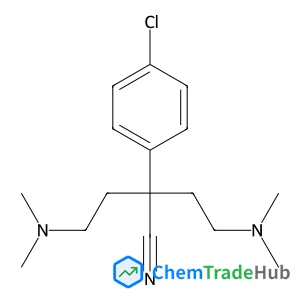
2-(4-Chlorophenyl)-4-(dimethylamino)-2-(2-(dimethylamino)ethyl)butanenitrile
CAS Number:
1246816-57-8
Molecular Formula:
C16H24ClN3
![6-Benzyl-4,5,6,7-tetrahydro-1H-pyrazolo[3,4-c]pyridin-3(2H)-one structure](https://static.chemtradehub.com/structs/909/909187-64-0-f54f.webp "6-Benzyl-4,5,6,7-tetrahydro-1H-pyrazolo[3,4-c]pyridin-3(2H)-one structure")
6-Benzyl-4,5,6,7-tetrahydro-1H-pyrazolo[3,4-c]pyridin-3(2H)-one
CAS Number:
909187-64-0
Molecular Formula:
C13H15N3O

Recommended Suppliers





Disclaimer
This page provides academic journal information for reference and research purposes only. We are not affiliated with any journal publishers and do not handle publication submissions. For publication-related inquiries, please contact the respective journal publishers directly.
If you notice any inaccuracies in the information displayed, please contact us at support@chemtradehub.com. We will promptly review and address your concerns.