












Mechanisms ruling the partition of solutes in ionic-liquid-based aqueous biphasic systems – the multiple effects of ionic liquids
Literature Information
Publication Date
2018-02-22
DOI
10.1039/C8CP00383A
Impact Factor
3.676
Authors
Helena Passos, Teresa B. V. Dinis, Emanuel V. Capela, Maria V. Quental, Joana Gomes, Judite Resende, Pedro P. Madeira, Mara G. Freire, João A. P. Coutinho
View Original
Abstract
In the past decade, the remarkable potential of ionic-liquid-based aqueous biphasic systems (IL-based ABSs) to extract and purify a large range of valued-added biocompounds has been demonstrated. However, the translation of lab-scale experiments to an industrial scale has been precluded by a poor understanding of the molecular-level mechanisms ruling the separation or partition of target compounds between the coexisting phases. To overcome this limitation, we carried out a systematic evaluation of specific interactions, induced by ILs and several salts used as phase-forming components, and their impact on the partition of several solutes in IL-based ABSs. To this end, the physicochemical characterization of ABSs composed of imidazolium-based ILs, three salts (Na2SO4, K2CO3 and K3C6H5O7) and water was performed. The ability of the coexisting phases to participate in different solute–solvent interactions (where “solvent” corresponds to each ABS phase) was estimated based on the Gibbs free energy of transfer of a methylene group between the phases in equilibrium, ΔG(CH2), and on the Kamlet–Taft parameters – dipolarity/polarizability (π*), hydrogen-bonding donor acidity (α) and hydrogen-bonding acceptor basicity (β) – of the coexisting phases. Relationships between the partition coefficients, the phase properties expressed as Kamlet–Taft parameters and COSMO-RS descriptors were established, highlighting the ability of ILs to establish specific interactions with given solutes. The assembled results clearly support the idea that the partition of solutes in IL-based ABSs is due to multiple effects resulting from both global solute–solvent and specific solute–IL interactions. Solute–IL specific interactions are often dominant in IL-based ABSs, explaining the higher partition coefficients, extraction efficiencies and selectivities observed with these systems when compared to more traditional ones majorly composed of polymers.
Related Literature
Mildly reduced less defective graphene oxide/sulfur/carbon nanotube composite films for high-performance lithium–sulfur batteries
Rui Li, Miao Zhang, Yingru Li, Ji Chen, Bowen Yao, Mingpeng Yu, Gaoquan Shi
2016-03-18
Paper
DOI: 10.1039/C6CP00512H
Defect structure and optical phonon confinement in ultrananocrystalline BixSn1−xO2 (x = 0, 0.03, 0.05, and 0.08) synthesized by a sonochemical method
L. Aswaghosh, Divinah Manoharan, N. Victor Jaya
2016-01-18
Paper
DOI: 10.1039/C5CP06214D
Molecular simulations of cytochrome c adsorption on positively charged surfaces: the influence of anion type and concentration
Chunwang Peng, Yun Xie, Jian Zhou
2016-03-04
Paper
DOI: 10.1039/C6CP00170J
Hierarchical mesoporous NiCo2O4 hollow nanocubes for supercapacitors
Chuanbao Cao, Jianhua Hou, Huazhang Zhai
2016-01-28
Paper
DOI: 10.1039/C5CP07997G
Cross-plane heat transfer through single-layer carbon structures
Huaichen Zhang, Silvia V. Nedea, Camilo C. M. Rindt, David M. J. Smeulders
2016-01-21
Paper
DOI: 10.1039/C5CP07715J
The crystallization of metal soaps and fatty acids in oil paint model systems
Joen J. Hermans, Annelies van Loon, Piet D. Iedema
2016-03-07
Paper
DOI: 10.1039/C6CP00487C
Bayesian inference of protein ensembles from SAXS data
L. D. Antonov, W. Boomsma, T. Hamelryck
2015-10-28
Paper
DOI: 10.1039/C5CP04886A
Molecular structure and vibrations of NTCDA monolayers on Ag(111) from density-functional theory and infrared absorption spectroscopy
Phil Rosenow
2016-02-03
Paper
DOI: 10.1039/C5CP06619K
Interaction between copper and carbon nanotubes triggers their mutual role in the enhanced photodegradation of p-chloroaniline
N. F. Khusnun, S. Triwahyono, N. W. C. Jusoh
2016-03-29
Paper
DOI: 10.1039/C5CP08068A
Insights into the allosteric regulation of Syk association with receptor ITAM, a multi-state equilibrium
Chao Feng, Carol Beth Post
2015-10-08
Paper
DOI: 10.1039/C5CP05417F
You might also like
Compound Q&A
What are the main uses of 1-(3-Aminophenyl)-3-[(3R)-1-(3,3-dimethyl-2-oxobutyl)-2-oxo-5-(2-pyridinyl)-2,3-dihydro-1H-1,4-benzodiazepin-3-yl]urea (CAS: 155412-88-7)?
This compound is mainly used as an intermediate in the synthesis of antipsychoti...
155412-88-71-(3-Aminophenyl)-3-...
Compound Q&A
How should waste containing 1-(D-Ribofuranosyl)-1,4-dihydro-3-pyridinecarboxamide (CAS: 19132-12-8) be handled?
Waste containing 1-(D-Ribofuranosyl)-1,4-dihydro-3-pyridinecarboxamide (CAS: 191...
19132-12-81-(D-Ribofuranosyl)-...
Compound Q&A
What regulatory guidelines apply to 2-Methyl-2-propanyl 3-bromo-3-(hydroxymethyl)-1-azetidinecarboxylate (CAS: 2007919-81-3)?
2-Methyl-2-propanyl 3-bromo-3-(hydroxymethyl)-1-azetidinecarboxylate (CAS: 20079...
2007919-81-32-Methyl-2-propanyl ...
Compound Q&A
What is N-(4-Chloro-2-pyridinyl)acetamide (CAS: 245056-66-0)?
N-(4-Chloro-2-pyridinyl)acetamide (CAS: 245056-66-0) is a chemical compound with...
245056-66-0N-(4-Chloro-2-pyridi...
Compound Q&A
What is 5-Chloro-2-hydroxybenzoic acid (CAS: 321-14-2)?
5-Chloro-2-hydroxybenzoic acid, also known as 5-chlorosalicylic acid, is an arom...
321-14-25-Chloro-2-hydroxybe...
Compound Q&A
What precautions should be taken when handling 1,1-Dichloro-1-fluoroethane (CAS: 1717-00-6)?
When handling 1,1-Dichloro-1-fluoroethane (CAS: 1717-00-6), it is important to u...
1717-00-61,1-Dichloro-1-fluor...
Compound Q&A
What are the physical and chemical properties of Fmoc-(2S,3R)-3-phenylpyrrolidine-2-carboxylic acid (CAS: 281655-32-1)?
Fmoc-(2S,3R)-3-phenylpyrrolidine-2-carboxylic acid is a white crystalline solid ...
281655-32-1Fmoc-(2S,3R)-3-pheny...
Compound Q&A
What are the main uses of 4-Amino-5-bromo-2-pyridinecarboxylic acid (CAS: 1363381-01-4)?
4-Amino-5-bromo-2-pyridinecarboxylic acid is primarily used as a precursor in th...
1363381-01-44-Amino-5-bromo-2-py...
Compound Q&A
What precautions should be taken when handling (S)-tert-butyl 2-((2-(4-bromophenyl)-2-oxoethyl)carbamoyl)pyrrolidine-1-carboxylate (CAS: 1007881-98-2)?
Handling this compound should be done with personal protective equipment (PPE) i...
1007881-98-2(S)-tert-butyl 2-((2...
Compound Q&A
What precautions should be taken when handling 8-bromo-2,2-dimethyl-3,4-dihydro-2H-1,4-benzoxazin-3-one (CAS: 688363-73-7)?
When handling 8-bromo-2,2-dimethyl-3,4-dihydro-2H-1,4-benzoxazin-3-one, use prop...
688363-73-78-bromo-2,2-dimethyl...
Source Journal
Physical Chemistry Chemical Physics

CiteScore:
5.5
Self-citation Rate:
10.3%
Articles per Year:
3036
Physical Chemistry Chemical Physics (PCCP) is an international journal co-owned by 19 physical chemistry and physics societies from around the world. This journal publishes original, cutting-edge research in physical chemistry, chemical physics and biophysical chemistry. To be suitable for publication in PCCP, articles must include significant innovation and/or insight into physical chemistry; this is the most important criterion that reviewers and Editors will judge against when evaluating submissions. The journal has a broad scope and welcomes contributions spanning experiment, theory, computation and data science. Topical coverage includes spectroscopy, dynamics, kinetics, statistical mechanics, thermodynamics, electrochemistry, catalysis, surface science, quantum mechanics, quantum computing and machine learning. Interdisciplinary research areas such as polymers and soft matter, materials, nanoscience, energy, surfaces/interfaces, and biophysical chemistry are welcomed if they demonstrate significant innovation and/or insight into physical chemistry. Joined experimental/theoretical studies are particularly appreciated when complementary and based on up-to-date approaches.
Recommended Compounds
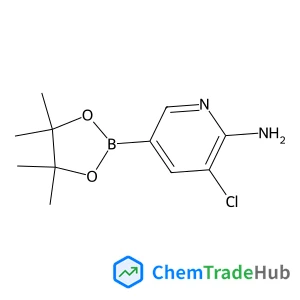
3-Chloro-5-(4,4,5,5-tetramethyl-1,3,2-dioxaborolan-2-yl)-2-pyridinamine
CAS Number:
1032758-99-8
Molecular Formula:
C11H16BClN2O2
![4-Chloro-3-(trifluoromethyl)-1H-pyrrolo[2,3-b]pyridine structure](https://static.chemtradehub.com/structs/869/869335-75-1-a9d0.webp "4-Chloro-3-(trifluoromethyl)-1H-pyrrolo[2,3-b]pyridine structure")
4-Chloro-3-(trifluoromethyl)-1H-pyrrolo[2,3-b]pyridine
CAS Number:
869335-75-1
Molecular Formula:
C8H4ClF3N2
Recommended Suppliers





Disclaimer
This page provides academic journal information for reference and research purposes only. We are not affiliated with any journal publishers and do not handle publication submissions. For publication-related inquiries, please contact the respective journal publishers directly.
If you notice any inaccuracies in the information displayed, please contact us at support@chemtradehub.com. We will promptly review and address your concerns.