


The room-temperature, ambient-pressure conversion of CO2 into value-added pharmaceutical products quinazoline-2,4(1H,3H)-diones
Literature Information
Publication Date
2021-09-04
DOI
10.1039/D1CP03747A
Impact Factor
3.676
Authors
Guan Wang, Tingting Zheng, Chunshan Zuo, Xihong Zhang, Phoebe Fyffe, Xiaobo Chen
View Original
Abstract
As global warming due to CO2 emissions has become a widely recognized concern, CO2 capture, sequestration, neutralization, and conversion have become possible solutions to address this concern. Among these approaches, the conversion of CO2 into fuels or value-added products has attracted considerable attention. In this work, we report the high-efficiency conversion of CO2 to important industrial raw materials for pharmaceutical compounds, quinazoline-2,4(1H,3H)-diones, via reactions with 2-aminobenzonitriles at room temperature and under ambient pressure, with high conversion yields (91.5–99.3%). 1,8-Diazabicyclo-[5.4.0]-undec-7-ene (DBU), 1,1,3,3-tetramethylguanidine (TMG), and cholinium (Ch) ammonium-based ionic liquids (ILs) are employed as catalysts during the process. Cations with a pKa value near 11.9 and anions with a pKa value range of 10 to 15 are necessary for the reaction. The experimental results indicate that the ionic liquid pair [HDBU+][3-Cl-PhO−] has high efficiency under very mild conditions, obtaining high product yields of 91.5% at 25 °C and 1 atm and 99.3% at 30 °C and 1 atm. More importantly, the catalysts retain high efficiency and activity after 5 consecutive cycles. To gain insightful understanding of the reaction, density functional theory (DFT) calculations were conducted to study the reaction mechanism. The computational results indicate that the catalytic process contains three stages: cyano activation, intramolecular rearrangement, and intramolecular cyclization. Of these, the rate-determining step is cyano activation, which shows an energy barrier of 24.5 kcal mol−1. Tuning the types of ions in ILs can effectively reduce this energy barrier and allow high efficiencies.
Recommended Journals

Israel Journal of Chemistry

Fibre Chemistry

Journal of Physics and Chemistry of Solids

Proceedings of the National Academy of Sciences of the United States of America

Organic Preparations and Procedures International

Pharmacological Reviews

European Journal of Wood and Wood Products

Russian Chemical Reviews

Science Progress

Nature
Related Literature
Excited-state hydrogen detachment and hydrogen transfer driven by repulsive 1πσ* states: A new paradigm for nonradiative decay in aromatic biomolecules
A. L. Sobolewski, W. Domcke, C. Dedonder-Lardeux, C. Jouvet
2002-02-28
Invited Article
DOI: 10.1039/B110941N
Fluid phase diagrams of ternary systems with one volatile component and immiscibility in two of the constituent binary mixtures
2002-02-27
Paper
DOI: 10.1039/B109275H
Elementary reactions of the antioxidant action of trans-stilbene derivatives: resveratrol, pinosylvin and 4-hydroxystilbene
Sandra Stojanović, Ortwin Brede
2002-01-29
Paper
DOI: 10.1039/B109063C
Phase behaviour of a two-dimensional Lennard-Jones binary mixture Part II. Type III to Type I transition
Osvaldo H. Scalise, Moises Silbert
2002-02-12
Paper
DOI: 10.1039/B107990P
Pairing of the nucleobase guanine studied by IR–UV double-resonance spectroscopy and ab initio calculations
Christoph Janzen, Petra Imhof, Karl Kleinermanns, Mattanjah S. de Vries
2002-01-29
Paper
DOI: 10.1039/B110360C
A comparison of metallophilic attraction in (X–M–PH3)2 (M = Cu, Ag, Au; X = H, Cl)
Lilia Magnko, Marcus Schweizer, Guntram Rauhut, Martin Schütz, Hermann Stoll, Hans-Joachim Werner
2002-02-14
Paper
DOI: 10.1039/B110624D
The N-methylpyrrolidone–(C1–C10) alkan-1-ols solvent systems
Begoña García, Rafael Alcalde, Santiago Aparicio, José M. Leal
2002-02-27
Paper
DOI: 10.1039/B109709C
Inelastic neutron scattering spectra of the transverse acoustic modes of the normal alkanes
John Tomkinson, Stewart F. Parker, Dale A. Braden, Bruce S. Hudson
2002-01-30
Paper
DOI: 10.1039/B110091B
Pairing of the nucleobases guanine and cytosine in the gas phase studied by IR–UV double-resonance spectroscopy and ab initio calculations
Ch. Janzen, P. Imhof, K. Kleinermanns, M. S. de Vries
2002-01-29
Paper
DOI: 10.1039/B107429F
Energetics of a model NH–π interaction: the gas phase benzene–NH3 complex
Michel Mons, Iliana Dimicoli, Benjamin Tardivel, François Piuzzi, Valérie Brenner, Philippe Millié
2002-01-15
Paper
DOI: 10.1039/B108146M
You might also like
Compound Q&A
What regulatory guidelines apply to 6-Bromo-2-methylimidazo[1,2-a]pyrimidine (CAS: 1111638-05-1)?
6-Bromo-2-methylimidazo[1,2-a]pyrimidine (CAS: 1111638-05-1) falls under various...
1111638-05-16-Bromo-2-methylimid...
Compound Q&A
Are there alternatives to 1-Pyrrolidineethanol, β-methyl-α-phenyl-, (αS,βR) (CAS: 123620-80-4) in synthesis?
While there are no direct alternatives, similar compounds like 1-Pyrrolidineetha...
123620-80-41-Pyrrolidineethanol...
Compound Q&A
Is 4-Methyl-2,6-bis(2-methyl-2-propanyl)phenyl methylcarbamate (CAS: 1918-11-2) safe?
4-Methyl-2,6-bis(2-methyl-2-propanyl)phenyl methylcarbamate (CAS: 1918-11-2) is ...
1918-11-24-Methyl-2,6-bis(2-m...
Compound Q&A
How should 2-(3-Bromo-4-fluorophenyl)-1,3-dioxolane (CAS: 77771-04-1) be stored?
2-(3-Bromo-4-fluorophenyl)-1,3-dioxolane (CAS: 77771-04-1) should be stored in a...
77771-04-12-(3-Bromo-4-fluorop...
Compound Q&A
What are the physical and chemical properties of 4,5,6,7-Tetrahydro-1H-indazole hydrochloride (CAS: 18161-11-0)?
4,5,6,7-Tetrahydro-1H-indazole hydrochloride is a white crystalline solid with a...
18161-11-04,5,6,7-Tetrahydro-1...
Compound Q&A
What is (2R)-1-Methoxy-3-phenyl-2-propanamine (CAS: 59919-07-2)?
(2R)-1-Methoxy-3-phenyl-2-propanamine is a chiral organic compound with the CAS ...
59919-07-2(2R)-1-Methoxy-3-phe...
Compound Q&A
What industries use Ethyl 1-(1-phenylethyl)-1H-imidazole-5-carboxylate (CAS: 56649-47-9)?
Ethyl 1-(1-phenylethyl)-1H-imidazole-5-carboxylate is used in various industries...
56649-47-9Ethyl 1-(1-phenyleth...
Compound Q&A
What regulatory guidelines apply to 4-[(1E,3S)-1-(4-Hydroxyphenyl)-1,4-pentadien-3-yl]phenol (CAS: 17676-24-3)?
4-[(1E,3S)-1-(4-Hydroxyphenyl)-1,4-pentadien-3-yl]phenol (CAS: 17676-24-3) falls...
17676-24-34-[(1E,3S)-1-(4-Hydr...
Compound Q&A
What industries use (S)-3-Amino-5-phenylpentanoic acid hydrochloride (CAS: 331846-97-0)?
(S)-3-Amino-5-phenylpentanoic acid hydrochloride is primarily used in the pharma...
331846-97-0(S)-3-Amino-5-phenyl...
Compound Q&A
How is 7-methoxy-1-benzothiophene-2-carboxylic acid (CAS: 88791-07-5) typically synthesized?
7-Methoxy-1-benzothiophene-2-carboxylic acid is typically synthesized by reactin...
88791-07-57-methoxy-1-benzothi...
Source Journal
Physical Chemistry Chemical Physics

CiteScore:
5.5
Self-citation Rate:
10.3%
Articles per Year:
3036
Physical Chemistry Chemical Physics (PCCP) is an international journal co-owned by 19 physical chemistry and physics societies from around the world. This journal publishes original, cutting-edge research in physical chemistry, chemical physics and biophysical chemistry. To be suitable for publication in PCCP, articles must include significant innovation and/or insight into physical chemistry; this is the most important criterion that reviewers and Editors will judge against when evaluating submissions. The journal has a broad scope and welcomes contributions spanning experiment, theory, computation and data science. Topical coverage includes spectroscopy, dynamics, kinetics, statistical mechanics, thermodynamics, electrochemistry, catalysis, surface science, quantum mechanics, quantum computing and machine learning. Interdisciplinary research areas such as polymers and soft matter, materials, nanoscience, energy, surfaces/interfaces, and biophysical chemistry are welcomed if they demonstrate significant innovation and/or insight into physical chemistry. Joined experimental/theoretical studies are particularly appreciated when complementary and based on up-to-date approaches.
Recommended Compounds
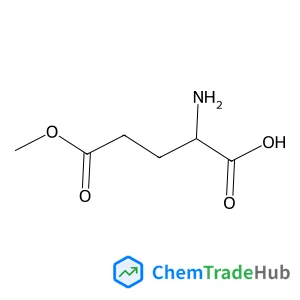
![4-Penten-1-yl 2-[(2-furylmethyl)(1H-imidazol-1-ylcarbonyl)amino]butanoate structure](https://static.chemtradehub.com/structs/101/101903-30-4-ac34.webp "4-Penten-1-yl 2-[(2-furylmethyl)(1H-imidazol-1-ylcarbonyl)amino]butanoate structure")
4-Penten-1-yl 2-[(2-furylmethyl)(1H-imidazol-1-ylcarbonyl)amino]butanoate
CAS Number:
101903-30-4
Molecular Formula:
C18H23N3O4
Recommended Suppliers






Disclaimer
This page provides academic journal information for reference and research purposes only. We are not affiliated with any journal publishers and do not handle publication submissions. For publication-related inquiries, please contact the respective journal publishers directly.
If you notice any inaccuracies in the information displayed, please contact us at support@chemtradehub.com. We will promptly review and address your concerns.