


Elementary reactions of the antioxidant action of trans-stilbene derivatives: resveratrol, pinosylvin and 4-hydroxystilbene
Literature Information
Publication Date
2002-01-29
DOI
10.1039/B109063C
Impact Factor
3.676
Authors
Sandra Stojanović, Ortwin Brede
View Original
Abstract
Using pulse radiolysis, elementary reactions of oxidizing radicals such as OH˙, N3˙ and Tl2+ with three trans-stilbene derivatives (4-hydroxy-, 3,5-dihydroxy- and 3,5,4′-trihydroxystilbene) were studied in detail. Depending on the reaction conditions (pH, oxidizing radical), hydroxycyclohexadienyl and phenoxyl radicals of all three polyphenols could beidentified from the transient absorption spectra. The hydroxycyclohexadienyl radicals decay by water- or OH−-elimination forming phenoxyl radicals in a delayed manner. For trans-3,5-dihydroxystilbene it was found that its phenoxyl radicals were mesomeric with keto C-centered radical forms which could explain their sensitivity towards oxygen. From comparison of the spectral and kinetic properties of the transients derived from trans-resveratrol (trans-3,5,4′-trihydroxystilbene) and its analogues, it could be concluded that in the neutral and acidic solution the para-hydroxy group of trans-resveratrol is more reactive than its meta-hydroxy groups, whereas the reactivity of meta-hydroxy groups increases in alkaline solution. This occurrence enables trans-resveratrol to effectively scavenge free radicals in the pH range 2–12.
Recommended Journals

Organic Process Research & Development

New Journal of Chemistry

Russian Journal of Organic Chemistry

Russian Journal of General Chemistry

Drug Discovery Today

Russian Journal of Applied Chemistry

Chemistry Education Research and Practice

Saudi Pharmaceutical Journal

Journal of Natural Medicines

Russian Journal of Coordination Chemistry
Related Literature
A hybrid polymer to target blood group dependence of cholera toxin
Diksha Haksar, Linda Quarles van Ufford, Roland J. Pieters
2019-11-28
Communication
DOI: 10.1039/C9OB02369K
Regioselective catalytic asymmetric N-alkylation of isoxazol-5-ones with para-quinone methides
Suo-Suo Qi, Zhen-Hui Jiang, Ming-Ming Chu, Yi-Feng Wang, Xue-Yang Chen, Wan-Zhen Ju, Dan-Qian Xu
2020-03-14
Communication
DOI: 10.1039/D0OB00393J
The effect of spermidine on guanine decomposition via photoinduced electron transfer in DNA
Mayu Esumi, Shunsuke Sakurai, Makiko Tanaka
2019-11-27
Communication
DOI: 10.1039/C9OB01860C
Exploring the relationship between structure and activity in BODIPYs designed for antimicrobial phototherapy
Burkhard Gitter, Keith J. Flanagan, Christopher J. Kingsbury, Mathias O. Senge
2020-03-06
Paper
DOI: 10.1039/D0OB00188K
The endo-aza-Michael addition in the synthesis of piperidines and pyrrolidines
Roderick W. Bates, Weiting Ko, Viktor Barát
2020-01-16
Review Article
DOI: 10.1039/C9OB02388G
Asymmetric total syntheses of naturally occurring α,β-enone-containing RALs, L-783290 and L-783277 through intramolecular base-mediated macrolactonization reaction
Joy Chakraborty, Samik Nanda
2020-03-09
Paper
DOI: 10.1039/D0OB00237B
Correction: Base-catalyzed C-alkylation of potassium enolates with styrenes via a metal–ene reaction: a mechanistic study
Thierry N. J. Fouquet, Yasuo Norikane
2020-03-18
Correction
DOI: 10.1039/D0OB90032J
You might also like
Compound Q&A
What regulatory guidelines apply to 6-Bromo-2-methylimidazo[1,2-a]pyrimidine (CAS: 1111638-05-1)?
6-Bromo-2-methylimidazo[1,2-a]pyrimidine (CAS: 1111638-05-1) falls under various...
1111638-05-16-Bromo-2-methylimid...
Compound Q&A
Are there alternatives to 1-Pyrrolidineethanol, β-methyl-α-phenyl-, (αS,βR) (CAS: 123620-80-4) in synthesis?
While there are no direct alternatives, similar compounds like 1-Pyrrolidineetha...
123620-80-41-Pyrrolidineethanol...
Compound Q&A
Is 4-Methyl-2,6-bis(2-methyl-2-propanyl)phenyl methylcarbamate (CAS: 1918-11-2) safe?
4-Methyl-2,6-bis(2-methyl-2-propanyl)phenyl methylcarbamate (CAS: 1918-11-2) is ...
1918-11-24-Methyl-2,6-bis(2-m...
Compound Q&A
How should 2-(3-Bromo-4-fluorophenyl)-1,3-dioxolane (CAS: 77771-04-1) be stored?
2-(3-Bromo-4-fluorophenyl)-1,3-dioxolane (CAS: 77771-04-1) should be stored in a...
77771-04-12-(3-Bromo-4-fluorop...
Compound Q&A
What are the physical and chemical properties of 4,5,6,7-Tetrahydro-1H-indazole hydrochloride (CAS: 18161-11-0)?
4,5,6,7-Tetrahydro-1H-indazole hydrochloride is a white crystalline solid with a...
18161-11-04,5,6,7-Tetrahydro-1...
Compound Q&A
What is (2R)-1-Methoxy-3-phenyl-2-propanamine (CAS: 59919-07-2)?
(2R)-1-Methoxy-3-phenyl-2-propanamine is a chiral organic compound with the CAS ...
59919-07-2(2R)-1-Methoxy-3-phe...
Compound Q&A
What industries use Ethyl 1-(1-phenylethyl)-1H-imidazole-5-carboxylate (CAS: 56649-47-9)?
Ethyl 1-(1-phenylethyl)-1H-imidazole-5-carboxylate is used in various industries...
56649-47-9Ethyl 1-(1-phenyleth...
Compound Q&A
What regulatory guidelines apply to 4-[(1E,3S)-1-(4-Hydroxyphenyl)-1,4-pentadien-3-yl]phenol (CAS: 17676-24-3)?
4-[(1E,3S)-1-(4-Hydroxyphenyl)-1,4-pentadien-3-yl]phenol (CAS: 17676-24-3) falls...
17676-24-34-[(1E,3S)-1-(4-Hydr...
Compound Q&A
What industries use (S)-3-Amino-5-phenylpentanoic acid hydrochloride (CAS: 331846-97-0)?
(S)-3-Amino-5-phenylpentanoic acid hydrochloride is primarily used in the pharma...
331846-97-0(S)-3-Amino-5-phenyl...
Compound Q&A
How is 7-methoxy-1-benzothiophene-2-carboxylic acid (CAS: 88791-07-5) typically synthesized?
7-Methoxy-1-benzothiophene-2-carboxylic acid is typically synthesized by reactin...
88791-07-57-methoxy-1-benzothi...
Source Journal
Physical Chemistry Chemical Physics

CiteScore:
5.5
Self-citation Rate:
10.3%
Articles per Year:
3036
Physical Chemistry Chemical Physics (PCCP) is an international journal co-owned by 19 physical chemistry and physics societies from around the world. This journal publishes original, cutting-edge research in physical chemistry, chemical physics and biophysical chemistry. To be suitable for publication in PCCP, articles must include significant innovation and/or insight into physical chemistry; this is the most important criterion that reviewers and Editors will judge against when evaluating submissions. The journal has a broad scope and welcomes contributions spanning experiment, theory, computation and data science. Topical coverage includes spectroscopy, dynamics, kinetics, statistical mechanics, thermodynamics, electrochemistry, catalysis, surface science, quantum mechanics, quantum computing and machine learning. Interdisciplinary research areas such as polymers and soft matter, materials, nanoscience, energy, surfaces/interfaces, and biophysical chemistry are welcomed if they demonstrate significant innovation and/or insight into physical chemistry. Joined experimental/theoretical studies are particularly appreciated when complementary and based on up-to-date approaches.
Recommended Compounds
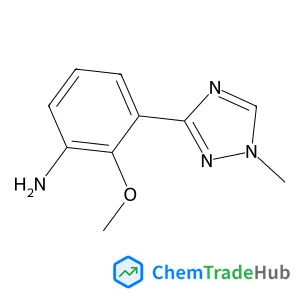
2-Methoxy-3-(1-methyl-1H-1,2,4-triazol-3-yl)aniline
CAS Number:
1609394-10-6
Molecular Formula:
C10H12N4O
![(3R)-4-(4-Chlorophenyl)-3-({[(2-methyl-2-propanyl)oxy]carbonyl}amino)butanoic acid structure](https://static.chemtradehub.com/structs/218/218608-96-9-f871.webp "(3R)-4-(4-Chlorophenyl)-3-({[(2-methyl-2-propanyl)oxy]carbonyl}amino)butanoic acid structure")
(3R)-4-(4-Chlorophenyl)-3-({[(2-methyl-2-propanyl)oxy]carbonyl}amino)butanoic acid
CAS Number:
218608-96-9
Molecular Formula:
C15H20ClNO4
Recommended Suppliers



Disclaimer
This page provides academic journal information for reference and research purposes only. We are not affiliated with any journal publishers and do not handle publication submissions. For publication-related inquiries, please contact the respective journal publishers directly.
If you notice any inaccuracies in the information displayed, please contact us at support@chemtradehub.com. We will promptly review and address your concerns.