













Against the NEER principle: the third type of photochromism for GFP chromophore derivatives
Literature Information
Publication Date
2021-11-27
DOI
10.1039/D1CP03581A
Impact Factor
3.676
Authors
Jun-Wei Liao, Robert Sung, Kuangsen Sung
View Original
Abstract
Photochromism is the heart of photochromic fluorescent proteins. Excited-state proton transfer (ESPT) is the major cause of photochromism for the green fluorescent protein (GFP) and Z–E photoisomerization through τ-torsion is the major cause of photochromism for Dronpa (a GFP mutant). In this article, s-E-1 opens a third type of photochromism for GFP chromophore derivatives, which involves light-driven φ-torsion with no τ-torsion, followed by excited-state intramolecular proton transfer (ESIPT), and is gated by environmental polarity. Since s-E-1 does not follow Z–E photoisomerization through τ-torsion but undergoes light-driven φ-torsion, which involves equilibration of the excited-state rotamers, it is clearly against the NEER (Non-Equilibration of Excited-state Rotamers) principle.
Related Literature
A new coupling reaction for the synthesis of ruthenium half-sandwich complexes with sterically demanding cyclopentadienyl ligands
Sébastien Gauthier, Euro Solari, Barnali Dutta, Rosario Scopelliti, Kay Severin
2007-02-09
Communication
DOI: 10.1039/B618712A
Facile preparation and electrochemical properties of cubic-phase Li4Mn5O12 nanowires
Yang Tian, Dairong Chen, Xiuling Jiao, Yongzheng Duan
2007-02-22
Communication
DOI: 10.1039/B700385D
Quantitative detection of protein expression in single cells using droplet microfluidics
M. Srisa-Art, F. Hollfelder, A. J. deMello
2007-01-26
Communication
DOI: 10.1039/B618570C
Nitrogen-doped magnetic carbon nanoparticles as catalyst supports for efficient recovery and recycling
Hyeonseok Yoon, Sungrok Ko, Jyongsik Jang
2007-03-05
Communication
DOI: 10.1039/B616660A
Fluorescent dyes of the esculetin and alizarin families respond to zinc ions ratiometrically
Lu Zhang, Shen Dong, Lei Zhu
2007-02-19
Communication
DOI: 10.1039/B618413H
Palladium-catalyzed conjugate reduction of enones into α,β-dideuterioketones with hexamethyldisilane and deuterium oxide
Hidehito Otsuka, Eiji Shirakawa, Tamio Hayashi
2007-02-08
Communication
DOI: 10.1039/B618107D
Asymmetric transfer hydrogenation over Ru–TsDPEN catalysts supported on siliceous mesocellular foam
Xiaohua Huang
2007-02-08
Communication
DOI: 10.1039/B615564B
Halogen–magnesium exchange on unprotected aromatic and heteroaromatic carboxylic acids
Felix Kopp, Stefan Wunderlich, Paul Knochel
2007-02-22
Communication
DOI: 10.1039/B618923G
Two-photon degradable supramolecular assemblies of linear-dendritic copolymers
Justin L. Mynar, Andrew P. Goodwin, Joel A. Cohen, Yingzhong Ma, Graham R. Fleming, Jean M. J. Fréchet
2007-03-15
Communication
DOI: 10.1039/B701681F
Four quadruple metal–metal bonds lined up: linear nonachromium(ii) metal string complexes
Rui-Ren Wang, Chen-Yu Yeh, Gene-Hsiang Lee
2006-12-20
Communication
DOI: 10.1039/B614597C
You might also like
Compound Q&A
What precautions should be taken when handling 2-Chloro-1,2-bis(4-methylphenyl)ethanone (CAS: 71193-32-3)?
When handling 2-Chloro-1,2-bis(4-methylphenyl)ethanone (CAS: 71193-32-3), it is ...
71193-32-32-Chloro-1,2-bis(4-m...
Compound Q&A
What industries use 4-Ethoxy-3-(5-methyl-4-oxo-7-propyl-1,4-dihydroimidazo[5,1-f][1,2,4]triazin-2-yl)benzenesulfonyl chloride (CAS: 224789-26-8)?
4-Ethoxy-3-(5-methyl-4-oxo-7-propyl-1,4-dihydroimidazo[5,1-f][1,2,4]triazin-2-yl...
224789-26-84-Ethoxy-3-(5-methyl...
Compound Q&A
How should Methyl 3-Oxo-4-Androsten-17-Carboxylate (CAS: 2681-55-2) be stored?
Methyl 3-Oxo-4-Androsten-17-Carboxylate (CAS: 2681-55-2) should be stored in a c...
2681-55-2Methyl 3-Oxo-4-Andro...
Compound Q&A
What are the main uses of (R)-3-Amino-4-(3-hexylphenylamino)-4-oxobutylphosphonic acid (CAS: 909725-61-7)?
(R)-3-Amino-4-(3-hexylphenylamino)-4-oxobutylphosphonic acid is primarily used i...
909725-61-7(R)-3-Amino-4-(3-hex...
Compound Q&A
What regulatory guidelines apply to 2-Methyl-2-propanyl 3-amino-3-carbamoyl-1-azetidinecarboxylate (CAS: 1254120-14-3)?
2-Methyl-2-propanyl 3-amino-3-carbamoyl-1-azetidinecarboxylate (CAS: 1254120-14-...
1254120-14-32-Methyl-2-propanyl ...
Compound Q&A
Are there alternatives to (E)-4-(tert-Butoxy)-4-oxobut-2-enoic acid (CAS: 135355-96-3) in synthesis?
There are alternative reagents that can be used in synthesis instead of (E)-4-(t...
135355-96-3(E)-4-(tert-Butoxy)-...
Compound Q&A
What are the physical and chemical properties of [2-(3-Chlorophenyl)-1,3-thiazol-4-yl]methanol (CAS: 121202-20-8)?
[2-(3-Chlorophenyl)-1,3-thiazol-4-yl]methanol (CAS: 121202-20-8) is a crystallin...
121202-20-8[2-(3-Chlorophenyl)-...
Compound Q&A
What is the market or research trend for Methyl (2S)-[(4S)-2,2-dimethyl-1,3-dioxolan-4-yl]{[(4-methylphenyl)sulfonyl]oxy}acetate (CAS: 166249-17-8)?
The market and research trends for Methyl (2S)-[(4S)-2,2-dimethyl-1,3-dioxolan-4...
166249-17-8Methyl (2S)-[(4S)-2,...
Compound Q&A
What is the market or research trend for 1-Bromo-2-isocyanatoethane (CAS: 42865-19-0)?
The market for 1-Bromo-2-isocyanatoethane (CAS: 42865-19-0) is driven by its use...
42865-19-01-Bromo-2-isocyanato...
Compound Q&A
What are the main uses of 4-Nitro-D-phenylalanine hydrochloride (CAS: 147065-06-3)?
4-Nitro-D-phenylalanine hydrochloride (CAS: 147065-06-3) is primarily used in re...
147065-06-34-Nitro-D-phenylalan...
Source Journal
Physical Chemistry Chemical Physics

CiteScore:
5.5
Self-citation Rate:
10.3%
Articles per Year:
3036
Physical Chemistry Chemical Physics (PCCP) is an international journal co-owned by 19 physical chemistry and physics societies from around the world. This journal publishes original, cutting-edge research in physical chemistry, chemical physics and biophysical chemistry. To be suitable for publication in PCCP, articles must include significant innovation and/or insight into physical chemistry; this is the most important criterion that reviewers and Editors will judge against when evaluating submissions. The journal has a broad scope and welcomes contributions spanning experiment, theory, computation and data science. Topical coverage includes spectroscopy, dynamics, kinetics, statistical mechanics, thermodynamics, electrochemistry, catalysis, surface science, quantum mechanics, quantum computing and machine learning. Interdisciplinary research areas such as polymers and soft matter, materials, nanoscience, energy, surfaces/interfaces, and biophysical chemistry are welcomed if they demonstrate significant innovation and/or insight into physical chemistry. Joined experimental/theoretical studies are particularly appreciated when complementary and based on up-to-date approaches.
Recommended Compounds
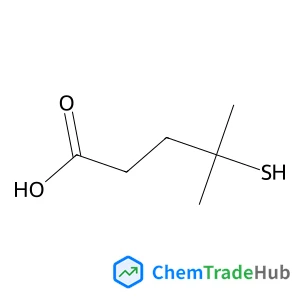
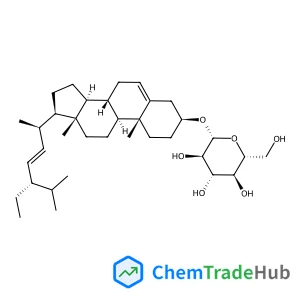
(3beta,22E)-Stigmasta-5,22-dien-3-yl beta-D-glucopyranoside
CAS Number:
19716-26-8
Molecular Formula:
C35H58O6
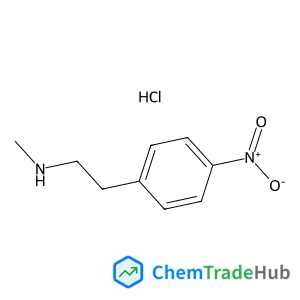
N-Methyl-2-(4-nitrophenyl)ethanamine hydrochloride (1:1)
CAS Number:
166943-39-1
Molecular Formula:
C9H13ClN2O2

3,5-Dihydroxy-4-(3-methylbutanoyl)-2,6,6-tris(3-methyl-2-buten-1-yl)-2,4-cyclohexadien-1-one
CAS Number:
468-28-0
Molecular Formula:
C26H38O4
Recommended Suppliers






Disclaimer
This page provides academic journal information for reference and research purposes only. We are not affiliated with any journal publishers and do not handle publication submissions. For publication-related inquiries, please contact the respective journal publishers directly.
If you notice any inaccuracies in the information displayed, please contact us at support@chemtradehub.com. We will promptly review and address your concerns.