












Adenine ultrafast photorelaxation via electron-driven proton transfer
Literature Information
Publication Date
2021-09-18
DOI
10.1039/D1CP03162G
Impact Factor
3.676
Authors
Naeem Ullah, Shunwei Chen
View Original
Abstract
Photorelaxation of adenine in water was reported to be ultrafast (within 180 fs) primarily due to radiationless relaxation. However, in the last two decades, several experimental and theoretical investigations on photoexcitation of adenine have revealed diverse types of decay mechanisms. Using time-dependent density functional excited-state nonadiabatic dynamics simulations we show that it is the water to adenine electron-driven proton transfer (EDPT) barrierless reaction responsible for the ultrafast component of the adenine relaxation, which, however, occurred only in the case of the 7H isomer of adenine with five water molecules. This result reveals a known reaction pathway, however not found in previous simulations, with inference for the ultrafast relaxation mechanisms of adenine reported in experiments. The 9H isomer of adenine with six water molecules relaxing in a water cluster followed the previously known structural distortion (C2) decay pathway. The observations of the adenine EDPT reaction with water provide the origin of the experimental ultrafast adenine decay component and present a possible method to tackle future computational challenges in molecular-level biological processes.
Related Literature
Chemisorption of HCl to the MgO(001) surface: A DFT study
Andreas Markmann, Jacob L. Gavartin, Alexander L. Shluger
2006-08-22
Paper
DOI: 10.1039/B608719A
High resolution photofragment translational spectroscopy of the near UV photolysis of indole: Dissociation via the 1πσ* state
2006-04-21
Paper
DOI: 10.1039/B603499C
Protein-bound chromophoresastaxanthin and phytochromobilin: excited state quantum chemical studies
Leif A. Eriksson
2006-08-02
Invited Article
DOI: 10.1039/B605682B
Probing spin–orbit mixing and the singlet–triplet gap in dichloromethylene via Ka-sorted emission spectra
Calvin Mukarakate, Yulia Mishchenko, Danielle Brusse, Chong Tao, Scott A. Reid
2006-08-21
Paper
DOI: 10.1039/B610582C
Time-resolved photoelectron and photoion fragmentation spectroscopy study of 9-methyladenine and its hydrates: a contribution to the understanding of the ultrafast radiationless decay of excited DNA bases
Clélia Canuel, Mohamed Elhanine, Michel Mons, François Piuzzi, Benjamin Tardivel, Iliana Dimicoli
2006-07-17
Paper
DOI: 10.1039/B606437J
Vibrational mode and collision energy effects on reaction of H2CO+ with CO2
Jianbo Liu, Brady W. Uselman, Brian Van Devener, Scott L. Anderson
2006-09-11
Paper
DOI: 10.1039/B610814H
Far-infrared spectroscopy of small polycyclic aromatic hydrocarbons
Olivier Pirali, Nguyen-Thi Van-Oanh, Pascal Parneix, Michel Vervloet, Philippe Bréchignac
2006-07-04
Paper
DOI: 10.1039/B605448J
An NMR and relativistic DFT investigation of one-bond nuclear spin–spin coupling in solid triphenyl group-14 chlorides
Mathew J. Willans, Bryan A. Demko, Roderick E. Wasylishen
2006-05-10
Paper
DOI: 10.1039/B603937E
You might also like
Compound Q&A
How is Ethyl 4-chlorothieno[2,3-b]pyridine-5-carboxylate (CAS: 59713-58-5) typically synthesized?
Ethyl 4-chlorothieno[2,3-b]pyridine-5-carboxylate (CAS: 59713-58-5) can be synth...
59713-58-5Ethyl 4-chlorothieno...
Compound Q&A
What regulatory guidelines apply to 5-Methyl-1H-indole-3-carbaldehyde (CAS: 52562-50-2)?
5-Methyl-1H-indole-3-carbaldehyde (CAS: 52562-50-2) is subject to various regula...
52562-50-25-Methyl-1H-indole-3...
Compound Q&A
What are the physical and chemical properties of (1,3-Dimethyl-2,4-dioxo-1,2,3,4-tetrahydro-5-pyrimidinyl)boronic acid (CAS: 223418-73-3)?
(1,3-Dimethyl-2,4-dioxo-1,2,3,4-tetrahydro-5-pyrimidinyl)boronic acid is a white...
223418-73-3(1,3-Dimethyl-2,4-di...
Compound Q&A
How should waste containing Sulfocostunolide A (CAS: 1016983-51-9) be handled?
Waste containing Sulfocostunolide A (CAS: 1016983-51-9) should be handled with c...
1016983-51-9Sulfocostunolide A
Compound Q&A
What precautions should be taken when handling Murraxocin (CAS: 88478-44-8)?
When handling Murraxocin (CAS: 88478-44-8), ensure proper personal protective eq...
88478-44-8Murraxocin
Compound Q&A
What are the physical and chemical properties of Formvar (CAS: 63148-64-1)?
Formvar (CAS: 63148-64-1) is an alkyd resin characterized by a high molecular we...
63148-64-1Formvar(R)
Compound Q&A
Is (S)-4-benzyl-2-((benzyloxy)methyl)morpholine (CAS: 205242-66-6) safe?
(S)-4-benzyl-2-((benzyloxy)methyl)morpholine is generally safe when handled with...
205242-66-6(S)-4-benzyl-2-((ben...
Compound Q&A
What industries use Methyl 1-(5-bromo-2-pyrimidinyl)cyclopropanecarboxylate (CAS: 1447607-69-3)?
Methyl 1-(5-bromo-2-pyrimidinyl)cyclopropanecarboxylate (CAS: 1447607-69-3) is p...
1447607-69-3Methyl 1-(5-bromo-2-...
Compound Q&A
Is 2-Methyl-1-phenyl-1-propanamine hydrochloride (CAS: 24290-47-9) safe?
2-Methyl-1-phenyl-1-propanamine hydrochloride (CAS: 24290-47-9) is generally con...
24290-47-92-Methyl-1-phenyl-1-...
Compound Q&A
How is 3-(4-Bromophenyl)-2-methylpropanoic acid (CAS: 66735-01-1) typically synthesized?
3-(4-Bromophenyl)-2-methylpropanoic acid is synthesized through a multi-step pro...
66735-01-13-(4-Bromophenyl)-2-...
Source Journal
Physical Chemistry Chemical Physics

CiteScore:
5.5
Self-citation Rate:
10.3%
Articles per Year:
3036
Physical Chemistry Chemical Physics (PCCP) is an international journal co-owned by 19 physical chemistry and physics societies from around the world. This journal publishes original, cutting-edge research in physical chemistry, chemical physics and biophysical chemistry. To be suitable for publication in PCCP, articles must include significant innovation and/or insight into physical chemistry; this is the most important criterion that reviewers and Editors will judge against when evaluating submissions. The journal has a broad scope and welcomes contributions spanning experiment, theory, computation and data science. Topical coverage includes spectroscopy, dynamics, kinetics, statistical mechanics, thermodynamics, electrochemistry, catalysis, surface science, quantum mechanics, quantum computing and machine learning. Interdisciplinary research areas such as polymers and soft matter, materials, nanoscience, energy, surfaces/interfaces, and biophysical chemistry are welcomed if they demonstrate significant innovation and/or insight into physical chemistry. Joined experimental/theoretical studies are particularly appreciated when complementary and based on up-to-date approaches.
Recommended Compounds
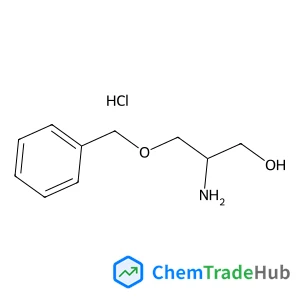
(R)-2-amino-3-(benzyloxy)propan-1-ol hydrochloride
CAS Number:
58577-95-0
Molecular Formula:
C10H16ClNO2
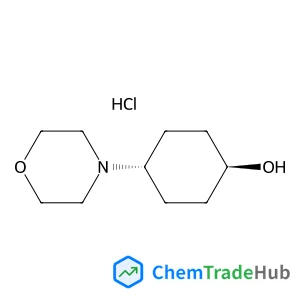
trans-4-(4-Morpholinyl)cyclohexanol hydrochloride (1:1)
CAS Number:
1588441-09-1
Molecular Formula:
C10H20ClNO2
Recommended Suppliers



Disclaimer
This page provides academic journal information for reference and research purposes only. We are not affiliated with any journal publishers and do not handle publication submissions. For publication-related inquiries, please contact the respective journal publishers directly.
If you notice any inaccuracies in the information displayed, please contact us at support@chemtradehub.com. We will promptly review and address your concerns.