












Enhanced photolysis in aerosols: evidence for important surface effects
Literature Information
Publication Date
2006-09-14
DOI
10.1039/B609219E
Impact Factor
3.676
Authors
Paul Nissenson, Christopher J. H. Knox, Barbara J. Finlayson-Pitts, Leon F. Phillips, Donald Dabdub
View Original
Abstract
While there is increasing evidence for unique chemical reactions at interfaces, there are fewer data on photochemistry at liquid–vapor junctions. This paper reports a comparison of the photolysis of molybdenum hexacarbonyl, Mo(CO)6, in 1-decene either as liquid droplets or in bulk-liquid solutions. Mo(CO)6 photolysis is faster by at least three orders of magnitude in the aerosols than in bulk-liquids. Two possible sources of this enhancement are considered: (1) increased light intensity due to either Morphology-Dependent Resonances (MDRs) in the spherical aerosol particles and/or to increased pathlengths for light inside the droplet due to refraction, which are termed physical effects in this paper; and (2) interface effects such as an incomplete solvent-cage at the gas–liquid boundary and/or enhanced interfacial concentrations of Mo(CO)6, which are termed chemical effects. Quantitative calculations of the first possibility were carried out in which the light intensity distribution in the droplets averaged over 215–360 nm was obtained for 1-decene droplets. Calculations show that the average increase in light intensity over the entire droplet is 106%, with an average increase of 51% at the interface. These increases are much smaller than the observed increase in the apparent photolysis rate of droplets compared to the bulk. Thus, chemical effects, i.e., a decreased solvent-cage effect at the interface and/or enhancement in the surface concentration of Mo(CO)6, are most likely responsible for the dramatic increase in the photolysis rate. Similar calculations were also carried out for broadband (290–600 nm) solar irradiation of water droplets, relevant to atmospheric conditions. These calculations show that, in agreement with previous calculations by Mayer and Madronich [B. Mayer and S. Madronich, Atmos. Chem. Phys., 2004, 4, 2241] MDRs produce only a moderate average intensity enhancement relative to the corresponding bulk-liquid slabs when averaged over a range of wavelengths characteristic of solar radiation at the Earth’s surface. However, as in the case of Mo(CO)6 in 1-decene, chemical effects may play a role in enhanced photochemistry at the aerosol–air interface for airborne particles.
Related Literature
CO bond cleavage on supported nano-gold during low temperature oxidation
Albert F. Carley, David J. Morgan, Nianxue Song, M. Wyn Roberts, Stuart H. Taylor, Jonathan K. Bartley, David J. Willock, Kara L. Howard, Graham J. Hutchings
2010-12-10
Paper
DOI: 10.1039/C0CP01852J
Conversion of methanol over 10-ring zeolites with differing volumes at channel intersections: comparison of TNU-9, IM-5, ZSM-11 and ZSM-5
Francesca Bleken, Wegard Skistad, Katia Barbera, Marina Kustova, Silvia Bordiga, Pablo Beato, Karl Petter Lillerud, Stian Svelle, Unni Olsbye
2010-12-10
Paper
DOI: 10.1039/C0CP01982H
Unfolding and refolding details of lysozyme in the presence of β-casein micelles
Fu-Gen Wu, Jun-Jie Luo, Zhi-Wu Yu
2011-01-24
Paper
DOI: 10.1039/C0CP01184C
Catalytic activity of a ζ-class zinc and cadmium containing carbonic anhydrase. Compared work mechanisms
Orazio Amata, Tiziana Marino, Nino Russo, Marirosa Toscano
2011-01-07
Paper
DOI: 10.1039/C0CP01053G
Improved light olefin yield from methyl bromide coupling over modified SAPO-34 molecular sieves
Aihua Zhang, Shouli Sun, Zachary J. A. Komon, Neil Osterwalder, Sagar Gadewar, Peter Stoimenov, Daniel J. Auerbach, Galen D. Stucky, Eric W. McFarland
2011-01-04
Paper
DOI: 10.1039/C0CP01985B
The role of hydrogen bonding in water–metal interactions
Adrien Poissier, Sriram Ganeshan, M. V. Fernández-Serra
2010-12-22
Paper
DOI: 10.1039/C0CP00994F
Constructing hybrid films of conjugated oligomers and gold nanoparticles for efficient photoelectronic properties
Xiaofeng Liu, Ji'en Yang, Chunjie Zhou, Xiaodong Yin, Huibiao Liu, Yongjun Li, Yuliang Li
2010-10-26
Paper
DOI: 10.1039/C0CP01116A
Molecular organization of hydrophobic molecules and co-adsorbed water in SBA-15 ordered mesoporous silica material
Randy Mellaerts, Maarten B. J. Roeffaers, Kristof Houthoofd, Michiel Van Speybroeck, Gert De Cremer, Jasper A. G. Jammaer, Guy Van den Mooter, Patrick Augustijns, Johan Hofkens, Johan A. Martens
2010-12-10
Paper
DOI: 10.1039/C0CP01640C
You might also like
Compound Q&A
How is Ethyl 4-chlorothieno[2,3-b]pyridine-5-carboxylate (CAS: 59713-58-5) typically synthesized?
Ethyl 4-chlorothieno[2,3-b]pyridine-5-carboxylate (CAS: 59713-58-5) can be synth...
59713-58-5Ethyl 4-chlorothieno...
Compound Q&A
What regulatory guidelines apply to 5-Methyl-1H-indole-3-carbaldehyde (CAS: 52562-50-2)?
5-Methyl-1H-indole-3-carbaldehyde (CAS: 52562-50-2) is subject to various regula...
52562-50-25-Methyl-1H-indole-3...
Compound Q&A
What are the physical and chemical properties of (1,3-Dimethyl-2,4-dioxo-1,2,3,4-tetrahydro-5-pyrimidinyl)boronic acid (CAS: 223418-73-3)?
(1,3-Dimethyl-2,4-dioxo-1,2,3,4-tetrahydro-5-pyrimidinyl)boronic acid is a white...
223418-73-3(1,3-Dimethyl-2,4-di...
Compound Q&A
How should waste containing Sulfocostunolide A (CAS: 1016983-51-9) be handled?
Waste containing Sulfocostunolide A (CAS: 1016983-51-9) should be handled with c...
1016983-51-9Sulfocostunolide A
Compound Q&A
What precautions should be taken when handling Murraxocin (CAS: 88478-44-8)?
When handling Murraxocin (CAS: 88478-44-8), ensure proper personal protective eq...
88478-44-8Murraxocin
Compound Q&A
What are the physical and chemical properties of Formvar (CAS: 63148-64-1)?
Formvar (CAS: 63148-64-1) is an alkyd resin characterized by a high molecular we...
63148-64-1Formvar(R)
Compound Q&A
Is (S)-4-benzyl-2-((benzyloxy)methyl)morpholine (CAS: 205242-66-6) safe?
(S)-4-benzyl-2-((benzyloxy)methyl)morpholine is generally safe when handled with...
205242-66-6(S)-4-benzyl-2-((ben...
Compound Q&A
What industries use Methyl 1-(5-bromo-2-pyrimidinyl)cyclopropanecarboxylate (CAS: 1447607-69-3)?
Methyl 1-(5-bromo-2-pyrimidinyl)cyclopropanecarboxylate (CAS: 1447607-69-3) is p...
1447607-69-3Methyl 1-(5-bromo-2-...
Compound Q&A
Is 2-Methyl-1-phenyl-1-propanamine hydrochloride (CAS: 24290-47-9) safe?
2-Methyl-1-phenyl-1-propanamine hydrochloride (CAS: 24290-47-9) is generally con...
24290-47-92-Methyl-1-phenyl-1-...
Compound Q&A
How is 3-(4-Bromophenyl)-2-methylpropanoic acid (CAS: 66735-01-1) typically synthesized?
3-(4-Bromophenyl)-2-methylpropanoic acid is synthesized through a multi-step pro...
66735-01-13-(4-Bromophenyl)-2-...
Source Journal
Physical Chemistry Chemical Physics

CiteScore:
5.5
Self-citation Rate:
10.3%
Articles per Year:
3036
Physical Chemistry Chemical Physics (PCCP) is an international journal co-owned by 19 physical chemistry and physics societies from around the world. This journal publishes original, cutting-edge research in physical chemistry, chemical physics and biophysical chemistry. To be suitable for publication in PCCP, articles must include significant innovation and/or insight into physical chemistry; this is the most important criterion that reviewers and Editors will judge against when evaluating submissions. The journal has a broad scope and welcomes contributions spanning experiment, theory, computation and data science. Topical coverage includes spectroscopy, dynamics, kinetics, statistical mechanics, thermodynamics, electrochemistry, catalysis, surface science, quantum mechanics, quantum computing and machine learning. Interdisciplinary research areas such as polymers and soft matter, materials, nanoscience, energy, surfaces/interfaces, and biophysical chemistry are welcomed if they demonstrate significant innovation and/or insight into physical chemistry. Joined experimental/theoretical studies are particularly appreciated when complementary and based on up-to-date approaches.
Recommended Compounds
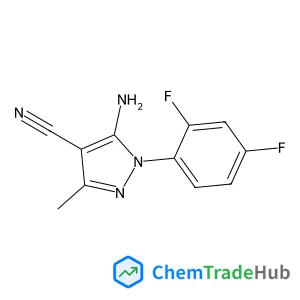
5-Amino-1-(2,4-difluorophenyl)-3-methyl-1H-pyrazole-4-carbonitrile
CAS Number:
1020057-92-4
Molecular Formula:
C11H8F2N4
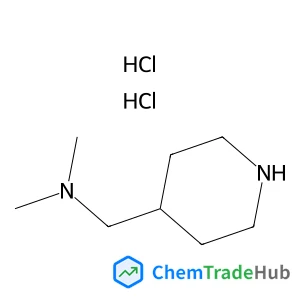
N,N-dimethyl(piperidin-4-yl)methanamine hydrochloride
CAS Number:
172281-72-0
Molecular Formula:
C8H20Cl2N2
![Sodium 6-amino-3-[(E)-{4-[(E)-(4-aminophenyl)diazenyl]-2-methoxy-5-methylphenyl}diazenyl]-4-hydroxy-2-naphthalenesulfonate structure](https://static.chemtradehub.com/structs/294/2945-96-2-092f.webp "Sodium 6-amino-3-[(E)-{4-[(E)-(4-aminophenyl)diazenyl]-2-methoxy-5-methylphenyl}diazenyl]-4-hydroxy-2-naphthalenesulfonate structure")
Sodium 6-amino-3-[(E)-{4-[(E)-(4-aminophenyl)diazenyl]-2-methoxy-5-methylphenyl}diazenyl]-4-hydroxy-2-naphthalenesulfonate
CAS Number:
2945-96-2
Molecular Formula:
C24H21N6NaO5S
Recommended Suppliers




Disclaimer
This page provides academic journal information for reference and research purposes only. We are not affiliated with any journal publishers and do not handle publication submissions. For publication-related inquiries, please contact the respective journal publishers directly.
If you notice any inaccuracies in the information displayed, please contact us at support@chemtradehub.com. We will promptly review and address your concerns.