












Photophysical properties of 1,2,3,4,5-pentaarylcyclopentadienyl–hydrotris(indazolyl)borate ruthenium(ii) complexes
Literature Information
Publication Date
2021-07-15
DOI
10.1039/D1CP02261J
Impact Factor
3.676
Authors
Sheng Gao, Yohan Gisbert, Guillaume Erbland, Seifallah Abid, Claire Kammerer, Alessandro Venturini, Barbara Ventura, Nicola Armaroli
View Original
Abstract
The photophysical properties of heteroleptic rotor-like Ru(II) complexes containing both a cyclopentadienyl-type ligand and a hydrotris(indazolyl)borate chelating unit with a piano stool structure (Ar5L1-Ru-S1 and L3-Ru-S1) and their corresponding subunits have been investigated. The complexes show peculiar absorption features when compared with their related ligands or fragments. L3-Ru-S1 was found to be non-emissive, while Ar5L1-Ru-S1 showed a weak emission with a quantum yield of 0.27%. With the help of DFT calculations, we demonstrate that the new absorption features can be attributed to ruthenium-based charge transfer transitions which involve the π* orbitals of the phenyl substituents of the cyclopentadienyl ligand.
Related Literature
Stability and binding interaction of bilirubin on a gold nano-surface: steady state fluorescence and FT-IR investigation
Mritunjoy Maity, Supriya Das, Nakul C. Maiti
2014-08-01
Paper
DOI: 10.1039/C4CP02649G
Excited states of protonated DNA/RNA bases
Matias Berdakin, Géraldine Féraud, Claude Dedonder-Lardeux, Christophe Jouvet, Gustavo A. Pino
2014-03-28
Paper
DOI: 10.1039/C4CP00742E
Dispersion corrected DFT approaches for anharmonic vibrational frequency calculations: nucleobases and their dimers
Teresa Fornaro, Malgorzata Biczysko, Vincenzo Barone
2014-01-28
Paper
DOI: 10.1039/C3CP54724H
Dye-sensitized solar cell from polyaniline–ZnS nanotubes and its characterization through impedance spectroscopy
Arnab Shit, Shreyam Chatterjee, Arun K. Nandi
2014-07-29
Paper
DOI: 10.1039/C4CP02175D
Pinacyanol chloride forms mesoscopic H- and J-aggregates in aqueous solution – a spectroscopic and cryo-transmission electron microscopy study
Hans v. Berlepsch, Kai Ludwig, Christoph Böttcher
2014-03-31
Paper
DOI: 10.1039/C4CP00967C
Identification of synergistic Cu/V redox pair in VCu:AlPO-5; a comparison with VCu:ZSM-5
Katrine Lie Bøyesen, Tina Kristiansen, Karina Mathisen
2014-08-12
Paper
DOI: 10.1039/C4CP02503B
Control of conformers combining cooling by supersonic expansion of seeded molecular beams with hexapole selection and alignment: experiment and theory on 2-butanol
Keita Kanda, Dock-Chil Che
2013-11-29
Paper
DOI: 10.1039/C3CP54475C
The 6Hankel asymptotic approximation for the uniform description of rainbows and glories in the angular scattering of state-to-state chemical reactions: derivation, properties and applications
Chengkui Xiahou, J. N. L. Connor
2014-01-31
Paper
DOI: 10.1039/C3CP54569E
Morphological effect of gold nanoparticles on the adsorption of bovine serum albumin
Abhishek Chaudhary, Abhishek Gupta, Syamantak Khan, Chayan Kanti Nandi
2014-08-12
Paper
DOI: 10.1039/C4CP01515K
You might also like
Compound Q&A
Is 4-Benzyl-2,2-dimethylmorpholine (CAS: 84761-04-6) safe?
4-Benzyl-2,2-dimethylmorpholine is generally considered safe when handled under ...
84761-04-64-Benzyl-2,2-dimethy...
Compound Q&A
What is (5,6-Dimethoxy-3-pyridinyl)boronic acid (CAS: 1346526-61-1)?
(5,6-Dimethoxy-3-pyridinyl)boronic acid is a chemical compound with the molecula...
1346526-61-1(5,6-Dimethoxy-3-pyr...
Compound Q&A
How is 1,1,3,3-Tetramethyl-1,3-bis(2-methyl-2-propanyl)disiloxane (CAS: 67875-55-2) typically synthesized?
1,1,3,3-Tetramethyl-1,3-bis(2-methyl-2-propanyl)disiloxane is synthesized throug...
67875-55-21,1,3,3-Tetramethyl-...
Compound Q&A
What are the main uses of (2R,4S)-1-Boc-4-methylpyrrolidine-2-carboxylic acid (CAS: 1018818-04-6)?
(2R,4S)-1-Boc-4-methylpyrrolidine-2-carboxylic acid is primarily used as a build...
1018818-04-6(2R,4S)-1-Boc-4-meth...
Compound Q&A
What precautions should be taken when handling 2,3-Dichloroacrylonitrile (CAS: 22410-58-8)?
When handling 2,3-Dichloroacrylonitrile, it is crucial to wear appropriate perso...
22410-58-82,3-Dichloroacryloni...
Compound Q&A
How should (S)-1-(o-Tolyl)ethanamine hydrochloride (CAS: 1332832-16-2) be stored?
(S)-1-(o-Tolyl)ethanamine hydrochloride should be stored in a cool, dry place to...
1332832-16-2(S)-1-(o-Tolyl)ethan...
Compound Q&A
What are the physical and chemical properties of Benzyl [1-(hydroxyamino)-1-imino-2-methyl-2-propanyl]carbamate (CAS: 518047-98-8)?
Benzyl [1-(hydroxyamino)-1-imino-2-methyl-2-propanyl]carbamate (CAS: 518047-98-8...
518047-98-8Benzyl [1-(hydroxyam...
Compound Q&A
What industries use 2-Methyloxazole-5-carbaldehyde (CAS: 885273-42-7)?
2-Methyloxazole-5-carbaldehyde is used in the pharmaceutical industry for the sy...
885273-42-72-Methyloxazole-5-ca...
Compound Q&A
What is the market or research trend for 2-Methyl-2-propanyl 4-[(1S)-1-hydroxyethyl]-1-piperidinecarboxylate (CAS: 389889-82-1)?
The market for 2-Methyl-2-propanyl 4-[(1S)-1-hydroxyethyl]-1-piperidinecarboxyla...
389889-82-12-Methyl-2-propanyl ...
Compound Q&A
Is 1-Butyl-3-methylpyridinium bromide (CAS: 26576-85-2) safe?
1-Butyl-3-methylpyridinium bromide is generally considered safe for laboratory u...
26576-85-21-Butyl-3-methylpyri...
Source Journal
Physical Chemistry Chemical Physics

CiteScore:
5.5
Self-citation Rate:
10.3%
Articles per Year:
3036
Physical Chemistry Chemical Physics (PCCP) is an international journal co-owned by 19 physical chemistry and physics societies from around the world. This journal publishes original, cutting-edge research in physical chemistry, chemical physics and biophysical chemistry. To be suitable for publication in PCCP, articles must include significant innovation and/or insight into physical chemistry; this is the most important criterion that reviewers and Editors will judge against when evaluating submissions. The journal has a broad scope and welcomes contributions spanning experiment, theory, computation and data science. Topical coverage includes spectroscopy, dynamics, kinetics, statistical mechanics, thermodynamics, electrochemistry, catalysis, surface science, quantum mechanics, quantum computing and machine learning. Interdisciplinary research areas such as polymers and soft matter, materials, nanoscience, energy, surfaces/interfaces, and biophysical chemistry are welcomed if they demonstrate significant innovation and/or insight into physical chemistry. Joined experimental/theoretical studies are particularly appreciated when complementary and based on up-to-date approaches.
Recommended Compounds
![9-Ethyl-3-{(E)-[ethyl(2-methylphenyl)hydrazono]methyl}-9H-carbazole structure](https://static.chemtradehub.com/structs/127/1274948-12-7-301f.webp "9-Ethyl-3-{(E)-[ethyl(2-methylphenyl)hydrazono]methyl}-9H-carbazole structure")
9-Ethyl-3-{(E)-[ethyl(2-methylphenyl)hydrazono]methyl}-9H-carbazole
CAS Number:
1274948-12-7
Molecular Formula:
C24H25N3

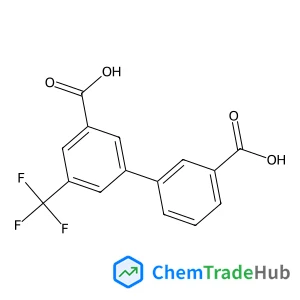
3-(3-Carboxyphenyl)-5-(trifluoromethyl)benzoic acid
CAS Number:
1261930-96-4
Molecular Formula:
C15H9F3O4
![2-[1-(4-Chlorobenzyl)-1H-indol-3-yl]-2-oxo-N-(6-quinolinyl)acetamide structure](https://static.chemtradehub.com/structs/501/501921-61-5-756a.webp "2-[1-(4-Chlorobenzyl)-1H-indol-3-yl]-2-oxo-N-(6-quinolinyl)acetamide structure")
2-[1-(4-Chlorobenzyl)-1H-indol-3-yl]-2-oxo-N-(6-quinolinyl)acetamide
CAS Number:
501921-61-5
Molecular Formula:
C26H18ClN3O2
Recommended Suppliers






Disclaimer
This page provides academic journal information for reference and research purposes only. We are not affiliated with any journal publishers and do not handle publication submissions. For publication-related inquiries, please contact the respective journal publishers directly.
If you notice any inaccuracies in the information displayed, please contact us at support@chemtradehub.com. We will promptly review and address your concerns.