


Control of conformers combining cooling by supersonic expansion of seeded molecular beams with hexapole selection and alignment: experiment and theory on 2-butanol
Literature Information
Publication Date
2013-11-29
DOI
10.1039/C3CP54475C
Impact Factor
3.676
Authors
Keita Kanda, Dock-Chil Che
View Original
Abstract
Selection and alignment of rotamers and, more in general, of conformers in the gas phase is a challenge that we tackle experimentally by supersonic expansion of seeded molecular beams and hexapolar electrostatic fields with quadrupole mass detection. The studied system involves the nine conformers of the asymmetric-top molecule 2-butanol, which coexist because of nearly free rotations around a CC and a CO bond. From the measured time-of-flight of a 2-butanol supersonic molecular beam seeded in either He or Ar, the corresponding velocity distributions are obtained. The different nature and masses of the seeding gas decrease selectively the vibrational temperature and determine the population of the conformers, which is assessed on the basis of their statistical distribution, derived from high level accompanying quantum mechanical calculations. The use of a hexapolar electrostatic field permits us to induce a variation of the population distribution as a function of the applied voltage and of the selective focusing and alignment of the conformers. A technique, recently developed for treating asymmetric tops and involving extensive trajectory simulations, is applied to obtain the link between the focusing curves, i.e. the dependence of the beam intensity on the hexapole voltage, and the conformers' populations and alignment. Perspectives are provided for photo- and stereo-dynamics experiments, particularly appealing also on account that 2-butanol is the simplest chiral alcohol.
Recommended Journals

Bioorganic & Medicinal Chemistry Letters

Biocatalysis and Biotransformation

NDT & E International

Bioorganic & Medicinal Chemistry

Journal of Asian Natural Products Research

Chinese Journal of Chemistry

Heteroatom Chemistry

Main Group Chemistry

Critical Reviews in Solid State and Materials Sciences

Electroanalysis
Related Literature
Rapid, accurate, and comparative differentiation of clinically and industrially relevant microorganisms via multiple vibrational spectroscopic fingerprinting
Howbeer Muhamadali, Abdu Subaihi, Mahsa Mohammadtaheri, Yun Xu, David I. Ellis, Rajesh Ramanathan, Vipul Bansal, Royston Goodacre
2016-07-07
Paper
DOI: 10.1039/C6AN00883F
The efficiencies of resonant and nonresonant multiphoton ionization in the femtosecond region
Hiroaki Kouno
2016-06-06
Paper
DOI: 10.1039/C6AN00577B
THE DISCOVERY OF SERS: an idiosyncratic account from a vibrational spectroscopist
2016-07-12
Editorial
DOI: 10.1039/C6AN90055K
Label-free, ITO-based immunosensor for the detection of a cancer biomarker: Receptor for Activated C Kinase 1
E. B. Bahadır, M. K. Sezgintürk
2016-07-13
Paper
DOI: 10.1039/C6AN00694A
Epigenetic changes in cancer by Raman imaging, fluorescence imaging, AFM and scanning near-field optical microscopy (SNOM). Acetylation in normal and human cancer breast cells MCF10A, MCF7 and MDA-MB-231
Halina Abramczyk, Jakub Surmacki, Monika Kopeć, Alicja Klaudia Olejnik, Agnieszka Kaufman-Szymczyk, Krystyna Fabianowska-Majewska
2016-07-27
Paper
DOI: 10.1039/C6AN00859C
Infrared matrix-assisted laser desorption electrospray ionization mass spectrometry imaging analysis of biospecimens
M. T. Bokhart, D. C. Muddiman
2016-07-19
Tutorial Review
DOI: 10.1039/C6AN01189F
Improvement in ionization efficiency of direct analysis in real time-mass spectrometry (DART-MS) by corona discharge
Kanako Sekimoto, Motoshi Sakakura, Takatomo Kawamukai, Hiroshi Hike, Teruhisa Shiota, Fumihiko Usui, Yasuhiko Bando, Mitsuo Takayama
2016-06-27
Paper
DOI: 10.1039/C6AN00779A
Sensitive fluorescence assay of organophosphorus pesticides based on the fluorescence resonance energy transfer between CdTe quantum dots and porphyrin
Gao Xue, Zhao Yue, Zhang Bing, Tang Yiwei, Liu Xiuying, Li Jianrong
2016-06-06
Paper
DOI: 10.1039/C6AN00626D
Sensitive SERS nanotags for use with 1550 nm (retina-safe) laser excitation
Hayleigh Kearns, Matthew A. Bedics, Neil C. Shand, Karen Faulds, Michael R. Detty, Duncan Graham
2016-01-14
Communication
DOI: 10.1039/C5AN02662H
You might also like
Compound Q&A
What precautions should be taken when handling 2-Chloro-1,2-bis(4-methylphenyl)ethanone (CAS: 71193-32-3)?
When handling 2-Chloro-1,2-bis(4-methylphenyl)ethanone (CAS: 71193-32-3), it is ...
71193-32-32-Chloro-1,2-bis(4-m...
Compound Q&A
What industries use 4-Ethoxy-3-(5-methyl-4-oxo-7-propyl-1,4-dihydroimidazo[5,1-f][1,2,4]triazin-2-yl)benzenesulfonyl chloride (CAS: 224789-26-8)?
4-Ethoxy-3-(5-methyl-4-oxo-7-propyl-1,4-dihydroimidazo[5,1-f][1,2,4]triazin-2-yl...
224789-26-84-Ethoxy-3-(5-methyl...
Compound Q&A
How should Methyl 3-Oxo-4-Androsten-17-Carboxylate (CAS: 2681-55-2) be stored?
Methyl 3-Oxo-4-Androsten-17-Carboxylate (CAS: 2681-55-2) should be stored in a c...
2681-55-2Methyl 3-Oxo-4-Andro...
Compound Q&A
What are the main uses of (R)-3-Amino-4-(3-hexylphenylamino)-4-oxobutylphosphonic acid (CAS: 909725-61-7)?
(R)-3-Amino-4-(3-hexylphenylamino)-4-oxobutylphosphonic acid is primarily used i...
909725-61-7(R)-3-Amino-4-(3-hex...
Compound Q&A
What regulatory guidelines apply to 2-Methyl-2-propanyl 3-amino-3-carbamoyl-1-azetidinecarboxylate (CAS: 1254120-14-3)?
2-Methyl-2-propanyl 3-amino-3-carbamoyl-1-azetidinecarboxylate (CAS: 1254120-14-...
1254120-14-32-Methyl-2-propanyl ...
Compound Q&A
Are there alternatives to (E)-4-(tert-Butoxy)-4-oxobut-2-enoic acid (CAS: 135355-96-3) in synthesis?
There are alternative reagents that can be used in synthesis instead of (E)-4-(t...
135355-96-3(E)-4-(tert-Butoxy)-...
Compound Q&A
What are the physical and chemical properties of [2-(3-Chlorophenyl)-1,3-thiazol-4-yl]methanol (CAS: 121202-20-8)?
[2-(3-Chlorophenyl)-1,3-thiazol-4-yl]methanol (CAS: 121202-20-8) is a crystallin...
121202-20-8[2-(3-Chlorophenyl)-...
Compound Q&A
What is the market or research trend for Methyl (2S)-[(4S)-2,2-dimethyl-1,3-dioxolan-4-yl]{[(4-methylphenyl)sulfonyl]oxy}acetate (CAS: 166249-17-8)?
The market and research trends for Methyl (2S)-[(4S)-2,2-dimethyl-1,3-dioxolan-4...
166249-17-8Methyl (2S)-[(4S)-2,...
Compound Q&A
What is the market or research trend for 1-Bromo-2-isocyanatoethane (CAS: 42865-19-0)?
The market for 1-Bromo-2-isocyanatoethane (CAS: 42865-19-0) is driven by its use...
42865-19-01-Bromo-2-isocyanato...
Compound Q&A
What are the main uses of 4-Nitro-D-phenylalanine hydrochloride (CAS: 147065-06-3)?
4-Nitro-D-phenylalanine hydrochloride (CAS: 147065-06-3) is primarily used in re...
147065-06-34-Nitro-D-phenylalan...
Source Journal
Physical Chemistry Chemical Physics

CiteScore:
5.5
Self-citation Rate:
10.3%
Articles per Year:
3036
Physical Chemistry Chemical Physics (PCCP) is an international journal co-owned by 19 physical chemistry and physics societies from around the world. This journal publishes original, cutting-edge research in physical chemistry, chemical physics and biophysical chemistry. To be suitable for publication in PCCP, articles must include significant innovation and/or insight into physical chemistry; this is the most important criterion that reviewers and Editors will judge against when evaluating submissions. The journal has a broad scope and welcomes contributions spanning experiment, theory, computation and data science. Topical coverage includes spectroscopy, dynamics, kinetics, statistical mechanics, thermodynamics, electrochemistry, catalysis, surface science, quantum mechanics, quantum computing and machine learning. Interdisciplinary research areas such as polymers and soft matter, materials, nanoscience, energy, surfaces/interfaces, and biophysical chemistry are welcomed if they demonstrate significant innovation and/or insight into physical chemistry. Joined experimental/theoretical studies are particularly appreciated when complementary and based on up-to-date approaches.
Recommended Compounds
![Ethyl 2-[(3-bromo-4-pyridinyl)sulfanyl]-2-methylpropanoate structure](https://static.chemtradehub.com/structs/135/1352794-86-5-a8aa.webp "Ethyl 2-[(3-bromo-4-pyridinyl)sulfanyl]-2-methylpropanoate structure")
Ethyl 2-[(3-bromo-4-pyridinyl)sulfanyl]-2-methylpropanoate
CAS Number:
1352794-86-5
Molecular Formula:
C11H14BrNO2S
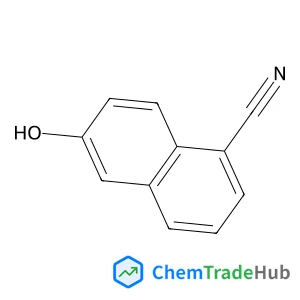

Phenanthro(3,2-b)furan-6(2H)-one, 1,8,9,11b-tetrahydro-7,11-dihydroxy-3,4,9,11b-tetramethyl-, cis-
CAS Number:
99624-92-7
Molecular Formula:
C20H22O4
![N-[2-Bromo-4-(trifluoromethoxy)phenyl]formamide structure](https://static.chemtradehub.com/structs/941/941294-53-7-f783.webp "N-[2-Bromo-4-(trifluoromethoxy)phenyl]formamide structure")
N-[2-Bromo-4-(trifluoromethoxy)phenyl]formamide
CAS Number:
941294-53-7
Molecular Formula:
C8H5BrF3NO2
Recommended Suppliers





Disclaimer
This page provides academic journal information for reference and research purposes only. We are not affiliated with any journal publishers and do not handle publication submissions. For publication-related inquiries, please contact the respective journal publishers directly.
If you notice any inaccuracies in the information displayed, please contact us at support@chemtradehub.com. We will promptly review and address your concerns.