












A method for calculating temperature-dependent photodissociation cross sections and rates
Literature Information
Publication Date
2021-07-20
DOI
10.1039/D1CP02162A
Impact Factor
3.676
Authors
Marco Pezzella, Sergei N. Yurchenko, Jonathan Tennyson
View Original
Abstract
The destruction of molecules by photodissociation plays a major role in many radiation-rich environments, including the evolution of the atmospheres of exoplanets, which often exist close to UV-rich stars. Most current photodissociation calculations and databases assume T = 0 K, which is inadequate for hot exoplanets and stars. A method is developed for computing photodissociation spectra of diatomic molecules as a function of temperature exploiting bound state variational nuclear motion program Duo and post-processing program ExoCross. Discrete transition intensities are spread out to represent a continuous photodissociation spectrum either by Gaussian smoothing or by averaging calculations over a range of different grid sizes. Our approach is tested on four different chemical species (HCl, HF, NaCl and BeH+), showing its ability to reproduce photodissociation cross sections and rates computed with other approaches and experiment. The temperature dependence of photodissociation cross sections and rates is studies showing strong temperature variation of the photodissociation cross sections.
Related Literature
Molecular modeling of membrane tube pearling and the effect of nanoparticle adsorption
Tongtao Yue, Xianren Zhang, Fang Huang
2014-04-03
Paper
DOI: 10.1039/C4CP01201A
Unraveling non-covalent interactions within flexible biomolecules: from electron density topology to gas phase spectroscopy
R. Chaudret, B. de Courcy, J. Contreras-García, A. Zehnacker-Rentien, J.-P. Piquemal
2013-10-11
Paper
DOI: 10.1039/C3CP52774C
Pinacyanol chloride forms mesoscopic H- and J-aggregates in aqueous solution – a spectroscopic and cryo-transmission electron microscopy study
Hans v. Berlepsch, Kai Ludwig, Christoph Böttcher
2014-03-31
Paper
DOI: 10.1039/C4CP00967C
Dispersion corrected DFT approaches for anharmonic vibrational frequency calculations: nucleobases and their dimers
Teresa Fornaro, Malgorzata Biczysko, Vincenzo Barone
2014-01-28
Paper
DOI: 10.1039/C3CP54724H
Correction: Relative contributions of quantum and double layer capacitance to the supercapacitor performance of carbon nanotubes in an ionic liquid
Alexander J. Pak, Eunsu Paek, Gyeong S. Hwang
2014-08-20
Correction
DOI: 10.1039/C4CP90113D
Directions of chemical change: experimental characterization of the stereodynamics of photodissociation and reactive processes
Dock-Chil Che, Michio Okada, Federico Palazzetti, Vincenzo Aquilanti
2014-04-14
Perspective
DOI: 10.1039/C4CP00464G
Electrical mobilities of multiply charged ionic-liquid nanodrops in air and carbon dioxide over a wide temperature range: influence of ion-induced dipole interactions
Juan Fernández-García, Juan Fernández de la Mora
2014-08-04
Paper
DOI: 10.1039/C4CP02850C
Quantum Monte Carlo for noncovalent interactions: an efficient protocol attaining benchmark accuracy
Matúš Dubecký, René Derian, Petr Jurečka, Lubos Mitas, Michal Otyepka
2014-08-01
Paper
DOI: 10.1039/C4CP02093F
You might also like
Compound Q&A
Is 4-Benzyl-2,2-dimethylmorpholine (CAS: 84761-04-6) safe?
4-Benzyl-2,2-dimethylmorpholine is generally considered safe when handled under ...
84761-04-64-Benzyl-2,2-dimethy...
Compound Q&A
What is (5,6-Dimethoxy-3-pyridinyl)boronic acid (CAS: 1346526-61-1)?
(5,6-Dimethoxy-3-pyridinyl)boronic acid is a chemical compound with the molecula...
1346526-61-1(5,6-Dimethoxy-3-pyr...
Compound Q&A
How is 1,1,3,3-Tetramethyl-1,3-bis(2-methyl-2-propanyl)disiloxane (CAS: 67875-55-2) typically synthesized?
1,1,3,3-Tetramethyl-1,3-bis(2-methyl-2-propanyl)disiloxane is synthesized throug...
67875-55-21,1,3,3-Tetramethyl-...
Compound Q&A
What are the main uses of (2R,4S)-1-Boc-4-methylpyrrolidine-2-carboxylic acid (CAS: 1018818-04-6)?
(2R,4S)-1-Boc-4-methylpyrrolidine-2-carboxylic acid is primarily used as a build...
1018818-04-6(2R,4S)-1-Boc-4-meth...
Compound Q&A
What precautions should be taken when handling 2,3-Dichloroacrylonitrile (CAS: 22410-58-8)?
When handling 2,3-Dichloroacrylonitrile, it is crucial to wear appropriate perso...
22410-58-82,3-Dichloroacryloni...
Compound Q&A
How should (S)-1-(o-Tolyl)ethanamine hydrochloride (CAS: 1332832-16-2) be stored?
(S)-1-(o-Tolyl)ethanamine hydrochloride should be stored in a cool, dry place to...
1332832-16-2(S)-1-(o-Tolyl)ethan...
Compound Q&A
What are the physical and chemical properties of Benzyl [1-(hydroxyamino)-1-imino-2-methyl-2-propanyl]carbamate (CAS: 518047-98-8)?
Benzyl [1-(hydroxyamino)-1-imino-2-methyl-2-propanyl]carbamate (CAS: 518047-98-8...
518047-98-8Benzyl [1-(hydroxyam...
Compound Q&A
What industries use 2-Methyloxazole-5-carbaldehyde (CAS: 885273-42-7)?
2-Methyloxazole-5-carbaldehyde is used in the pharmaceutical industry for the sy...
885273-42-72-Methyloxazole-5-ca...
Compound Q&A
What is the market or research trend for 2-Methyl-2-propanyl 4-[(1S)-1-hydroxyethyl]-1-piperidinecarboxylate (CAS: 389889-82-1)?
The market for 2-Methyl-2-propanyl 4-[(1S)-1-hydroxyethyl]-1-piperidinecarboxyla...
389889-82-12-Methyl-2-propanyl ...
Compound Q&A
Is 1-Butyl-3-methylpyridinium bromide (CAS: 26576-85-2) safe?
1-Butyl-3-methylpyridinium bromide is generally considered safe for laboratory u...
26576-85-21-Butyl-3-methylpyri...
Source Journal
Physical Chemistry Chemical Physics

CiteScore:
5.5
Self-citation Rate:
10.3%
Articles per Year:
3036
Physical Chemistry Chemical Physics (PCCP) is an international journal co-owned by 19 physical chemistry and physics societies from around the world. This journal publishes original, cutting-edge research in physical chemistry, chemical physics and biophysical chemistry. To be suitable for publication in PCCP, articles must include significant innovation and/or insight into physical chemistry; this is the most important criterion that reviewers and Editors will judge against when evaluating submissions. The journal has a broad scope and welcomes contributions spanning experiment, theory, computation and data science. Topical coverage includes spectroscopy, dynamics, kinetics, statistical mechanics, thermodynamics, electrochemistry, catalysis, surface science, quantum mechanics, quantum computing and machine learning. Interdisciplinary research areas such as polymers and soft matter, materials, nanoscience, energy, surfaces/interfaces, and biophysical chemistry are welcomed if they demonstrate significant innovation and/or insight into physical chemistry. Joined experimental/theoretical studies are particularly appreciated when complementary and based on up-to-date approaches.
Recommended Compounds
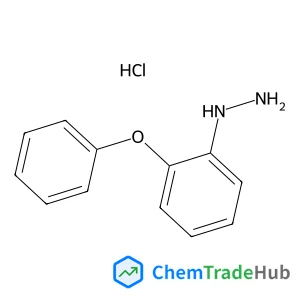
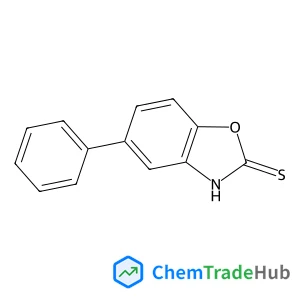
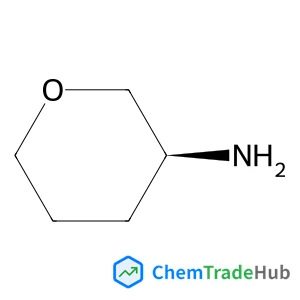
Recommended Suppliers






Disclaimer
This page provides academic journal information for reference and research purposes only. We are not affiliated with any journal publishers and do not handle publication submissions. For publication-related inquiries, please contact the respective journal publishers directly.
If you notice any inaccuracies in the information displayed, please contact us at support@chemtradehub.com. We will promptly review and address your concerns.