


Unraveling non-covalent interactions within flexible biomolecules: from electron density topology to gas phase spectroscopy
Literature Information
Publication Date
2013-10-11
DOI
10.1039/C3CP52774C
Impact Factor
3.676
Authors
R. Chaudret, B. de Courcy, J. Contreras-García, A. Zehnacker-Rentien, J.-P. Piquemal
View Original
Abstract
The NCI (Non-Covalent Interactions) method, a recently-developed theoretical strategy to visualize weak non-covalent interactions from the topological analysis of the electron density and of its reduced gradient, is applied in the present paper to document intra- and inter-molecular interactions in flexible molecules and systems of biological interest in combination with IR spectroscopy. We first describe the conditions of application of the NCI method to the specific case of intramolecular interactions. Then we apply it to a series of stable conformations of isolated molecules as an interpretative technique to decipher the different physical interactions at play in these systems. Examples are chosen among neutral molecular systems exhibiting a large diversity of interactions, for which an extensive spectroscopic characterization under gas-phase isolation conditions has been obtained using state-of-the-art conformer-specific experimental techniques. The interactions presently documented range from weak intra-molecular H-bonds in simple amino-alcohols, to more complex patterns, with interactions of various strengths in model peptides, as well as in chiral bimolecular systems, where invaluable hints for the understanding of chiral recognition are revealed. We also provide a detailed technical appendix, which discusses the choices of cut-offs as well as the applicability of the NCI analysis to specific constrained systems, where local effects require attention. Finally, the NCI technique provides IR spectroscopists with an elegant visualization of the interactions that potentially impact their vibrational probes, namely the OH and NH stretching motions. This contribution illustrates the power and the conditions of use of the NCI technique, with the aim of providing an easy tool for all chemists, experimentalists and theoreticians, for the visualization and characterization of the interactions shaping complex molecular systems.
Recommended Journals

Medicinal Chemistry Research

Electroanalysis

Topics in Catalysis

Journal of the Indian Institute of Science

Biocatalysis and Biotransformation

Chinese Journal of Chemistry

Journal of Asian Natural Products Research

Bioorganic & Medicinal Chemistry Letters

Polycyclic Aromatic Compounds

Bioorganic & Medicinal Chemistry
Related Literature
Detection of mSiglec-E, in solution and expressed on the surface of Chinese hamster ovary cells, using sialic acid functionalised gold nanoparticles
Claire L. Schofield, María J. Marín, Martin Rejzek, Paul R. Crocker, Robert A. Field, David A. Russell
2016-08-18
Paper
DOI: 10.1039/C6AN01230B
Assembling substrate-less plasmonic metacrystals at the oil/water interface for multiplex ultratrace analyte detection
Yih Hong Lee, Jonathan Yong Chew Ho, Yijie Yang, Xing Yi Ling
2016-07-04
Paper
DOI: 10.1039/C6AN01239F
Detection of potentially toxic metals by SERS using salen complexes
Julie Docherty, Samuel Mabbott, Ewen Smith, Karen Faulds, Christine Davidson, John Reglinski, Duncan Graham
2016-08-10
Paper
DOI: 10.1039/C6AN01584K
Multiplexed cancer biomarker detection using chip-integrated silicon photonic sensor arrays
Adam L. Washburn, Winnie W. Shia, Kimberly A. Lenkeit, So-Hyun Lee, Ryan C. Bailey
2016-07-05
Paper
DOI: 10.1039/C6AN01076H
Molecular labels for analysis of amines and diols by spray based ionization-mass spectrometry
S. T. Ayrton, R. G. Cooks, M. Pugia
2016-06-22
Paper
DOI: 10.1039/C6AN00907G
Recent topics on single-molecule fluctuation analysis using blinking in surface-enhanced resonance Raman scattering: clarification by the electromagnetic mechanism
Tamitake Itoh
2016-05-16
Minireview
DOI: 10.1039/C6AN00936K
Applications of graphene and its derivatives in intracellular biosensing and bioimaging
Yang Liu, Pei Li, Zhou Nie, Jinghong Li
2016-06-20
Minireview
DOI: 10.1039/C6AN01090C
A sandwich-like strategy for the label-free detection of oligonucleotides by surface plasmon fluorescence spectroscopy (SPFS)
Qiang Su, Gilbert Nöll
2016-07-25
Paper
DOI: 10.1039/C6AN01129B
Nanoscale silicon surface-assisted laser desorption/ionization mass spectrometry: environment stability and activation by simple vacuum oven desiccation
Chia-Wen Tsao, Yuan-Jing Lin, Pi-Yu Chen, Yu-Liang Yang, Say Hwa Tan
2016-06-13
Paper
DOI: 10.1039/C6AN00659K
You might also like
Compound Q&A
What precautions should be taken when handling 2-Chloro-1,2-bis(4-methylphenyl)ethanone (CAS: 71193-32-3)?
When handling 2-Chloro-1,2-bis(4-methylphenyl)ethanone (CAS: 71193-32-3), it is ...
71193-32-32-Chloro-1,2-bis(4-m...
Compound Q&A
What industries use 4-Ethoxy-3-(5-methyl-4-oxo-7-propyl-1,4-dihydroimidazo[5,1-f][1,2,4]triazin-2-yl)benzenesulfonyl chloride (CAS: 224789-26-8)?
4-Ethoxy-3-(5-methyl-4-oxo-7-propyl-1,4-dihydroimidazo[5,1-f][1,2,4]triazin-2-yl...
224789-26-84-Ethoxy-3-(5-methyl...
Compound Q&A
How should Methyl 3-Oxo-4-Androsten-17-Carboxylate (CAS: 2681-55-2) be stored?
Methyl 3-Oxo-4-Androsten-17-Carboxylate (CAS: 2681-55-2) should be stored in a c...
2681-55-2Methyl 3-Oxo-4-Andro...
Compound Q&A
What are the main uses of (R)-3-Amino-4-(3-hexylphenylamino)-4-oxobutylphosphonic acid (CAS: 909725-61-7)?
(R)-3-Amino-4-(3-hexylphenylamino)-4-oxobutylphosphonic acid is primarily used i...
909725-61-7(R)-3-Amino-4-(3-hex...
Compound Q&A
What regulatory guidelines apply to 2-Methyl-2-propanyl 3-amino-3-carbamoyl-1-azetidinecarboxylate (CAS: 1254120-14-3)?
2-Methyl-2-propanyl 3-amino-3-carbamoyl-1-azetidinecarboxylate (CAS: 1254120-14-...
1254120-14-32-Methyl-2-propanyl ...
Compound Q&A
Are there alternatives to (E)-4-(tert-Butoxy)-4-oxobut-2-enoic acid (CAS: 135355-96-3) in synthesis?
There are alternative reagents that can be used in synthesis instead of (E)-4-(t...
135355-96-3(E)-4-(tert-Butoxy)-...
Compound Q&A
What are the physical and chemical properties of [2-(3-Chlorophenyl)-1,3-thiazol-4-yl]methanol (CAS: 121202-20-8)?
[2-(3-Chlorophenyl)-1,3-thiazol-4-yl]methanol (CAS: 121202-20-8) is a crystallin...
121202-20-8[2-(3-Chlorophenyl)-...
Compound Q&A
What is the market or research trend for Methyl (2S)-[(4S)-2,2-dimethyl-1,3-dioxolan-4-yl]{[(4-methylphenyl)sulfonyl]oxy}acetate (CAS: 166249-17-8)?
The market and research trends for Methyl (2S)-[(4S)-2,2-dimethyl-1,3-dioxolan-4...
166249-17-8Methyl (2S)-[(4S)-2,...
Compound Q&A
What is the market or research trend for 1-Bromo-2-isocyanatoethane (CAS: 42865-19-0)?
The market for 1-Bromo-2-isocyanatoethane (CAS: 42865-19-0) is driven by its use...
42865-19-01-Bromo-2-isocyanato...
Compound Q&A
What are the main uses of 4-Nitro-D-phenylalanine hydrochloride (CAS: 147065-06-3)?
4-Nitro-D-phenylalanine hydrochloride (CAS: 147065-06-3) is primarily used in re...
147065-06-34-Nitro-D-phenylalan...
Source Journal
Physical Chemistry Chemical Physics

CiteScore:
5.5
Self-citation Rate:
10.3%
Articles per Year:
3036
Physical Chemistry Chemical Physics (PCCP) is an international journal co-owned by 19 physical chemistry and physics societies from around the world. This journal publishes original, cutting-edge research in physical chemistry, chemical physics and biophysical chemistry. To be suitable for publication in PCCP, articles must include significant innovation and/or insight into physical chemistry; this is the most important criterion that reviewers and Editors will judge against when evaluating submissions. The journal has a broad scope and welcomes contributions spanning experiment, theory, computation and data science. Topical coverage includes spectroscopy, dynamics, kinetics, statistical mechanics, thermodynamics, electrochemistry, catalysis, surface science, quantum mechanics, quantum computing and machine learning. Interdisciplinary research areas such as polymers and soft matter, materials, nanoscience, energy, surfaces/interfaces, and biophysical chemistry are welcomed if they demonstrate significant innovation and/or insight into physical chemistry. Joined experimental/theoretical studies are particularly appreciated when complementary and based on up-to-date approaches.
Recommended Compounds
![(3aR,7R,7aR)-2,2-Diethyl-3a,6,7,7a-tetrahydro-7-[(methylsulfonyl)oxy]-1,3-benzodioxole-5-carboxylic Acid Ethyl Ester structure](https://static.chemtradehub.com/structs/204/204254-90-0-7172.webp "(3aR,7R,7aR)-2,2-Diethyl-3a,6,7,7a-tetrahydro-7-[(methylsulfonyl)oxy]-1,3-benzodioxole-5-carboxylic Acid Ethyl Ester structure")
(3aR,7R,7aR)-2,2-Diethyl-3a,6,7,7a-tetrahydro-7-[(methylsulfonyl)oxy]-1,3-benzodioxole-5-carboxylic Acid Ethyl Ester
CAS Number:
204254-90-0
Molecular Formula:
C15H24O7S
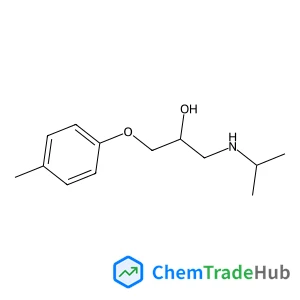
1-(4-Methylphenoxy)-3-(propan-2-ylamino)propan-2-ol
CAS Number:
5790-46-5
Molecular Formula:
C13H21NO2
![7-Amino-5-methyl-5,7-dihydro-6H-dibenzo[b,d]azepin-6-one hydrochloride (1:1) structure](https://static.chemtradehub.com/structs/209/209984-32-7-9912.webp "7-Amino-5-methyl-5,7-dihydro-6H-dibenzo[b,d]azepin-6-one hydrochloride (1:1) structure")
7-Amino-5-methyl-5,7-dihydro-6H-dibenzo[b,d]azepin-6-one hydrochloride (1:1)
CAS Number:
209984-32-7
Molecular Formula:
C15H15ClN2O
Recommended Suppliers






Disclaimer
This page provides academic journal information for reference and research purposes only. We are not affiliated with any journal publishers and do not handle publication submissions. For publication-related inquiries, please contact the respective journal publishers directly.
If you notice any inaccuracies in the information displayed, please contact us at support@chemtradehub.com. We will promptly review and address your concerns.