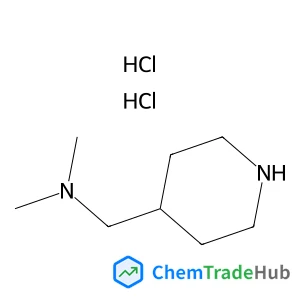
N,N-dimethyl(piperidin-4-yl)methanamine hydrochloride
CAS Number:
172281-72-0
Molecular Formula:
C8H20Cl2N2
Ivette Angarita, Ma. Florencia Mazzobre
In this work, we revisited the glass transition temperature (Tg) behavior of bulk and confined water–glycerol solutions as a function of the mixture composition and size of the confinement media, with the aim to shed some light on some controversies found in the literature. In the case of bulk mixtures, some discrepancies are observed due to the differences in the way of calculating Tg from the DSC experiments and differences in the protocols of cooling/reheating. However, unphysical behavior observed below the eutectic composition can be due to the crystallization of water during the cooling of the mixture. We also analyzed the effect of confinement on the glass transition of glycerol aqueous solutions, with glycerol mass fraction, wG, between 0.5 and 1.0, in silica mesoporous samples with pore diameters between 2 and 58 nm. Our results show that the the Tg dependence on pore size changes with the mixture composition. For glycerol-rich samples, Tg decreases with a decreasing pore size. This tendency changes with increasing water concentration below wG ∼ 0.6 for samples with dp between 2 and 8 nm, where two glass transition temperatures appear. We hypothesize that this effect is related to the existence of two liquid phases with different densities. The Tg composition dependence in confined glycerol–water mixtures was analyzed with the Gordon–Taylor equation modified for confined mixtures, which allowed us to calculate the Tg of the pure components as a function of the pore size. This analysis shows that for pores with dp > 20 nm, and for pure water and pure glycerol, Tg decreases with the pore size, attaining an almost constant value for samples with pore sizes between 2 and 8 nm. This Tg pore size dependence is explained considering the competition of two opposite effects: a reduction in Tg with a decreasing pore size given when the length scale of dynamics is comparable to the pore size, and an increment in Tg with a decreasing pore size as a result of increasing interactions of the confined liquid with the pore walls.
E. Groppo, C. Lamberti, F. Cesano, A. Zecchina
DOI: 10.1039/B604515D
Cunshun Huang, Sridhar A. Lahankar, Myung Hwa Kim, Bailin Zhang, Arthur G. Suits
DOI: 10.1039/B612324D
Christopher J. Pursell, Leon F. Phillips
DOI: 10.1039/B608369B
C. Chi, G. Wegner
DOI: 10.1039/B601531J
Wei Xu, Xi-Chen Li, Hongwei Tan, Guang-Ju Chen
DOI: 10.1039/B609278K
Barbara Jagoda-Cwiklik, Pavel Jungwirth
DOI: 10.1039/B609941F
Wolfgang Preis
DOI: 10.1039/B600033A
Ethyl 4-chlorothieno[2,3-b]pyridine-5-carboxylate (CAS: 59713-58-5) can be synth...
5-Methyl-1H-indole-3-carbaldehyde (CAS: 52562-50-2) is subject to various regula...
(1,3-Dimethyl-2,4-dioxo-1,2,3,4-tetrahydro-5-pyrimidinyl)boronic acid is a white...
Waste containing Sulfocostunolide A (CAS: 1016983-51-9) should be handled with c...
When handling Murraxocin (CAS: 88478-44-8), ensure proper personal protective eq...
Formvar (CAS: 63148-64-1) is an alkyd resin characterized by a high molecular we...
(S)-4-benzyl-2-((benzyloxy)methyl)morpholine is generally safe when handled with...
Methyl 1-(5-bromo-2-pyrimidinyl)cyclopropanecarboxylate (CAS: 1447607-69-3) is p...
2-Methyl-1-phenyl-1-propanamine hydrochloride (CAS: 24290-47-9) is generally con...
3-(4-Bromophenyl)-2-methylpropanoic acid is synthesized through a multi-step pro...

Physical Chemistry Chemical Physics (PCCP) is an international journal co-owned by 19 physical chemistry and physics societies from around the world. This journal publishes original, cutting-edge research in physical chemistry, chemical physics and biophysical chemistry. To be suitable for publication in PCCP, articles must include significant innovation and/or insight into physical chemistry; this is the most important criterion that reviewers and Editors will judge against when evaluating submissions. The journal has a broad scope and welcomes contributions spanning experiment, theory, computation and data science. Topical coverage includes spectroscopy, dynamics, kinetics, statistical mechanics, thermodynamics, electrochemistry, catalysis, surface science, quantum mechanics, quantum computing and machine learning. Interdisciplinary research areas such as polymers and soft matter, materials, nanoscience, energy, surfaces/interfaces, and biophysical chemistry are welcomed if they demonstrate significant innovation and/or insight into physical chemistry. Joined experimental/theoretical studies are particularly appreciated when complementary and based on up-to-date approaches.