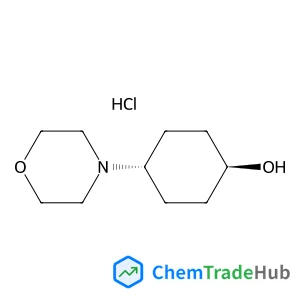
trans-4-(4-Morpholinyl)cyclohexanol hydrochloride (1:1)
CAS Number:
1588441-09-1
Molecular Formula:
C10H20ClNO2
Jocasta Avila, Luiz Fernando Lepre, Kateryna Goloviznina, Lorenzo Guazzelli, Christian Silvio Pomelli, Cinzia Chiappe, Agilio Pádua, Margarida Costa Gomes
Four divalent ionic liquids based on imidazolium cations with alkyl or ether functionalized side-chains were synthesised and characterized: 3,3′-(tetraethyleneglycol-1,11-diyl)bis(1-methyl-1H-imidazolium)bromide, [tetraEG(mim)2][Br]2, 3,3′-(tetraethyleneglycol-1,11-diyl)bis(1-methyl-1H-imidazolium)acetate, [tetraEG(mim)2][OAc]2, 1-butyl-3-methylimidazolium malonate, [C4mim]2[Mal], and 3-butyl-1-methylimidazolium glutarate, [C4mim]2[Glut]. Their densities vary between 1.1 and 1.5 g cm−3 and their viscosities between 0.2 and 4 Pa s at 353 K. We found that the molar volumes are not additive, especially in the case of the divalent ionic liquids based on the double-charged imidazolium cations, meaning that they cannot be predicted using common group contribution methods. The reason for this behaviour could be explained by the structure of the cations, which is dominated by intramolecular hydrogen bonding. The carboxylate-based divalent ionic liquids absorb reversibly large quantities of carbon dioxide following a chemical mechanism described before. An improved 1 : 1 stoichiometry is achieved both in a double-charged imidazolium acetate ionic liquid and in imidazolium carboxylate salts with double charged anions. This behaviour places these ionic liquids amongst the best performing for carbon dioxide absorption.
E. Hadzifejzovic, J. A. Sanchez Galiani, D. J. Caruana
DOI: 10.1039/B600115G
Andrew P. Abbott, Glen Capper, Katy J. McKenzie, Andrew Glidle, Karl S. Ryder
DOI: 10.1039/B607763N
J. Tomkinson, M. T. F. Telling
DOI: 10.1039/B608590C
Christopher J. Pursell, Leon F. Phillips
DOI: 10.1039/B608369B
M. Riese, Z. Altug, J. Grotemeyer
DOI: 10.1039/B607402B
Samuel Rentsch, Ramon Pericet-Camara, Georg Papastavrou, Michal Borkovec
DOI: 10.1039/B602145J
Andrew D. Newman, D. Robert Brown, Prem Siril, Adam F. Lee, Karen Wilson
DOI: 10.1039/B603979K
Christian Tuma, Joachim Sauer
DOI: 10.1039/B608262A
Uroš Tasić, Yuri Alexeev, Grigoriy Vayner, T. Daniel Crawford, Theresa L. Windus, William L. Hase
DOI: 10.1039/B609743J
Ethyl 4-chlorothieno[2,3-b]pyridine-5-carboxylate (CAS: 59713-58-5) can be synth...
5-Methyl-1H-indole-3-carbaldehyde (CAS: 52562-50-2) is subject to various regula...
(1,3-Dimethyl-2,4-dioxo-1,2,3,4-tetrahydro-5-pyrimidinyl)boronic acid is a white...
Waste containing Sulfocostunolide A (CAS: 1016983-51-9) should be handled with c...
When handling Murraxocin (CAS: 88478-44-8), ensure proper personal protective eq...
Formvar (CAS: 63148-64-1) is an alkyd resin characterized by a high molecular we...
(S)-4-benzyl-2-((benzyloxy)methyl)morpholine is generally safe when handled with...
Methyl 1-(5-bromo-2-pyrimidinyl)cyclopropanecarboxylate (CAS: 1447607-69-3) is p...
2-Methyl-1-phenyl-1-propanamine hydrochloride (CAS: 24290-47-9) is generally con...
3-(4-Bromophenyl)-2-methylpropanoic acid is synthesized through a multi-step pro...

Physical Chemistry Chemical Physics (PCCP) is an international journal co-owned by 19 physical chemistry and physics societies from around the world. This journal publishes original, cutting-edge research in physical chemistry, chemical physics and biophysical chemistry. To be suitable for publication in PCCP, articles must include significant innovation and/or insight into physical chemistry; this is the most important criterion that reviewers and Editors will judge against when evaluating submissions. The journal has a broad scope and welcomes contributions spanning experiment, theory, computation and data science. Topical coverage includes spectroscopy, dynamics, kinetics, statistical mechanics, thermodynamics, electrochemistry, catalysis, surface science, quantum mechanics, quantum computing and machine learning. Interdisciplinary research areas such as polymers and soft matter, materials, nanoscience, energy, surfaces/interfaces, and biophysical chemistry are welcomed if they demonstrate significant innovation and/or insight into physical chemistry. Joined experimental/theoretical studies are particularly appreciated when complementary and based on up-to-date approaches.
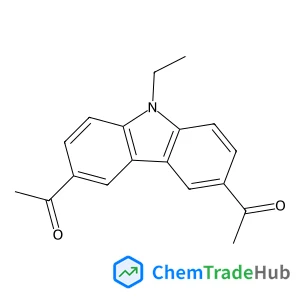
![2-(Methylsulfonyl)-2,4,5,6-tetrahydropyrrolo[3,4-c]pyrazole structure](https://static.chemtradehub.com/structs/122/1226781-80-1-09d5.webp "2-(Methylsulfonyl)-2,4,5,6-tetrahydropyrrolo[3,4-c]pyrazole structure")