


Evaluating the nature of the vertical excited states of fused-ring electron acceptors using TD-DFT and density-based charge transfer
Literature Information
Publication Date
2021-06-28
DOI
10.1039/D1CP01917A
Impact Factor
3.676
Authors
Amjad Ali, Muhammad Imran Rafiq, Baojing Zhou, Weihua Tang
View Original
Abstract
Acceptor–donor–acceptor structured fused-ring electron acceptors (FREAs) are the most efficient electron acceptors used in organic solar cells. We use density functional theory (DFT), its time-dependent version (TD-DFT), and an intra-molecular charge transfer index to evaluate the nature of the excited states of FREAs. Typically, several efficient electronic transitions contribute to the absorption spectra of FREAs. An investigation of every efficient electronic transition of each FREA is performed based on the electronic density variation in the donor and acceptor moieties of the molecules upon absorbing solar photons. Not all these transitions are equivalent for light-to-electricity conversion. The first transition contributes the most to the absorption spectra. This transition is intense and extremely efficient for light-to-electricity conversion, giving a higher value of intra-molecular charge transfer. For certain effective transitions of FREAs, the phenyl rings in the donor unit behave as the electron-donating units, such as IDT-NTI-2EH, BTCN-M, and MeIC. The foremost finding of the present research work is that the furthermost strong electronic transitions are not essentially the most effective ones for the conversion of sunlight into electricity.
Recommended Journals

Chemistry Education Research and Practice

Current Opinion in Colloid & Interface Science

Current Opinion in Solid State & Materials Science

Russian Journal of General Chemistry

Saudi Pharmaceutical Journal

Journal of Natural Medicines

Russian Journal of Coordination Chemistry

Russian Journal of Applied Chemistry

Journal of Peptide Science

Acta Materialia
Related Literature
Changed reactivity of the 1-bromo-4-nitrobenzene radical anion in a room temperature ionic liquid
Sven Ernst, Kristopher R. Ward, Sarah E. Norman, Christopher Hardacre, Richard G. Compton
2013-03-15
Paper
DOI: 10.1039/C3CP51004B
In situ determination of the surface excess upon electrochemical sulfate adsorption on Au(111) films by surface plasmon resonance
2013-02-14
Paper
DOI: 10.1039/C3CP44303E
A statistical approach for analyzing the development of 1H multiple-quantum coherence in solids
Yuuki Mogami, Yasuto Noda, Hiroto Ishikawa, K. Takegoshi
2013-04-12
Paper
DOI: 10.1039/C3CP43778G
An oxygen pumping anode for electrowinning aluminium
Changqing Liu, Xiaobo Ji, Pingmin Zhang, Qiyuan Chen, Craig E. Banks
2013-03-22
Paper
DOI: 10.1039/C3CP44171G
Co–Ni layered double hydroxides for water oxidation in neutral electrolyte
Ye Zhang, Bai Cui, Chunsong Zhao, Hong Lin
2013-03-18
Paper
DOI: 10.1039/C3CP50202C
Understanding multi-quantum NMR through secular approximation
Deepansh Srivastava, R. Venkata SubbaRao, Ramesh Ramachandran
2013-02-15
Paper
DOI: 10.1039/C3CP44296A
Complementary mechanistic properties of Fe- and Mn-doped aluminophosphates in the catalytic aerobic oxidation of hydrocarbons
Luis Gómez-Hortigüela, Furio Corà, C. Richard A. Catlow
2013-03-14
Paper
DOI: 10.1039/C3CP51079D
Benchmark quantum-chemical calculations on a complete set of rotameric families of the DNA sugar–phosphate backbone and their comparison with modern density functional theory
Arnošt Mládek, Miroslav Krepl, Michal Otyepka, Pavel Banáš, Marie Zgarbová, Petr Jurečka
2013-03-18
Paper
DOI: 10.1039/C3CP44383C
Low-lying excited-states of 5-benzyluracil
Marco Micciarelli, Carlo Altucci, Bartolomeo Della Ventura, Raffaele Velotta, Valer Toşa, Adán B. Gónzalez Pérez, Martin Pérez Rodríguez, Ángel R. de Lera, Attila Bende
2013-03-19
Paper
DOI: 10.1039/C3CP50343G
Measurement of the interface tension of smectic membranes in water
Kirsten Harth, Ralf Stannarius
2013-03-18
Paper
DOI: 10.1039/C3CP44055A
You might also like
Compound Q&A
Is 4-Benzyl-2,2-dimethylmorpholine (CAS: 84761-04-6) safe?
4-Benzyl-2,2-dimethylmorpholine is generally considered safe when handled under ...
84761-04-64-Benzyl-2,2-dimethy...
Compound Q&A
What is (5,6-Dimethoxy-3-pyridinyl)boronic acid (CAS: 1346526-61-1)?
(5,6-Dimethoxy-3-pyridinyl)boronic acid is a chemical compound with the molecula...
1346526-61-1(5,6-Dimethoxy-3-pyr...
Compound Q&A
How is 1,1,3,3-Tetramethyl-1,3-bis(2-methyl-2-propanyl)disiloxane (CAS: 67875-55-2) typically synthesized?
1,1,3,3-Tetramethyl-1,3-bis(2-methyl-2-propanyl)disiloxane is synthesized throug...
67875-55-21,1,3,3-Tetramethyl-...
Compound Q&A
What are the main uses of (2R,4S)-1-Boc-4-methylpyrrolidine-2-carboxylic acid (CAS: 1018818-04-6)?
(2R,4S)-1-Boc-4-methylpyrrolidine-2-carboxylic acid is primarily used as a build...
1018818-04-6(2R,4S)-1-Boc-4-meth...
Compound Q&A
What precautions should be taken when handling 2,3-Dichloroacrylonitrile (CAS: 22410-58-8)?
When handling 2,3-Dichloroacrylonitrile, it is crucial to wear appropriate perso...
22410-58-82,3-Dichloroacryloni...
Compound Q&A
How should (S)-1-(o-Tolyl)ethanamine hydrochloride (CAS: 1332832-16-2) be stored?
(S)-1-(o-Tolyl)ethanamine hydrochloride should be stored in a cool, dry place to...
1332832-16-2(S)-1-(o-Tolyl)ethan...
Compound Q&A
What are the physical and chemical properties of Benzyl [1-(hydroxyamino)-1-imino-2-methyl-2-propanyl]carbamate (CAS: 518047-98-8)?
Benzyl [1-(hydroxyamino)-1-imino-2-methyl-2-propanyl]carbamate (CAS: 518047-98-8...
518047-98-8Benzyl [1-(hydroxyam...
Compound Q&A
What industries use 2-Methyloxazole-5-carbaldehyde (CAS: 885273-42-7)?
2-Methyloxazole-5-carbaldehyde is used in the pharmaceutical industry for the sy...
885273-42-72-Methyloxazole-5-ca...
Compound Q&A
What is the market or research trend for 2-Methyl-2-propanyl 4-[(1S)-1-hydroxyethyl]-1-piperidinecarboxylate (CAS: 389889-82-1)?
The market for 2-Methyl-2-propanyl 4-[(1S)-1-hydroxyethyl]-1-piperidinecarboxyla...
389889-82-12-Methyl-2-propanyl ...
Compound Q&A
Is 1-Butyl-3-methylpyridinium bromide (CAS: 26576-85-2) safe?
1-Butyl-3-methylpyridinium bromide is generally considered safe for laboratory u...
26576-85-21-Butyl-3-methylpyri...
Source Journal
Physical Chemistry Chemical Physics

CiteScore:
5.5
Self-citation Rate:
10.3%
Articles per Year:
3036
Physical Chemistry Chemical Physics (PCCP) is an international journal co-owned by 19 physical chemistry and physics societies from around the world. This journal publishes original, cutting-edge research in physical chemistry, chemical physics and biophysical chemistry. To be suitable for publication in PCCP, articles must include significant innovation and/or insight into physical chemistry; this is the most important criterion that reviewers and Editors will judge against when evaluating submissions. The journal has a broad scope and welcomes contributions spanning experiment, theory, computation and data science. Topical coverage includes spectroscopy, dynamics, kinetics, statistical mechanics, thermodynamics, electrochemistry, catalysis, surface science, quantum mechanics, quantum computing and machine learning. Interdisciplinary research areas such as polymers and soft matter, materials, nanoscience, energy, surfaces/interfaces, and biophysical chemistry are welcomed if they demonstrate significant innovation and/or insight into physical chemistry. Joined experimental/theoretical studies are particularly appreciated when complementary and based on up-to-date approaches.
Recommended Compounds
![N-[(1R,2R)-2-Amino-1,2-diphenylethyl]-1,1,1-trifluoromethanesulfonamide structure](https://static.chemtradehub.com/structs/852/852212-89-6-5ef9.webp "N-[(1R,2R)-2-Amino-1,2-diphenylethyl]-1,1,1-trifluoromethanesulfonamide structure")
N-[(1R,2R)-2-Amino-1,2-diphenylethyl]-1,1,1-trifluoromethanesulfonamide
CAS Number:
852212-89-6
Molecular Formula:
C15H15F3N2O2S
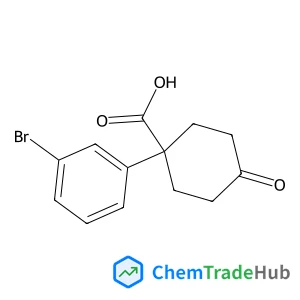
1-(3-Bromophenyl)-4-oxocyclohexanecarboxylic acid
CAS Number:
1385694-53-0
Molecular Formula:
C13H13BrO3
Recommended Suppliers






Disclaimer
This page provides academic journal information for reference and research purposes only. We are not affiliated with any journal publishers and do not handle publication submissions. For publication-related inquiries, please contact the respective journal publishers directly.
If you notice any inaccuracies in the information displayed, please contact us at support@chemtradehub.com. We will promptly review and address your concerns.