












Structures of ions accommodated in salty ice Ih crystals
Literature Information
Publication Date
2021-07-20
DOI
10.1039/D1CP01624E
Impact Factor
3.676
Authors
Yuga Yashima, Yusuke Okada, Makoto Harada, Tetsuo Okada
View Original
Abstract
Frozen aqueous electrolytes are ubiquitous and involved in various phenomena occurring in the natural environment. Although salts are expelled from ice during freezing of aqueous solutions, minor amounts of the constituent ions are accommodated in the crystal lattice of ice. This phenomenon was associated with the generation of the Workman–Reynolds freezing potential. Molecular simulations also confirmed the ion incorporation in the crystal lattice of ice Ih upon freezing of aqueous electrolytes and identified possible local structures of the ions. However, no experimental information is available on the structure of ions accommodated in the crystal lattice of ice Ih. In this work, we use X-ray absorption fine structure (XAFS) to study the local structures of K+ and Cl− accommodated in ice Ih single crystals. Previous molecular simulations predicted that ions are trapped in the hexagonal cavities of the ice structure or replace two water molecules in the crystal lattice. Four possible configurations are considered and optimized by the calculations using ONIOM (QM/QM/QM). The results are evaluated in terms of the agreement between the experimental XAFS spectra and those simulated from the optimized structures. The spectra are most reasonably interpreted by assuming that K+ replaces one water molecule in the ice crystal lattice and is accommodated in a tetrahedral coordination cage. Similarly, Cl− probably adopts the same configuration, because it explains the coordination number better than other structures, such as that assuming the replacement of two water molecules belonging to the same hexagonal planes.
Related Literature
Aqueous-biphasic hydroformylation of higher alkenes promoted by alkylimidazolium salts
Simon L. Desset, David J. Cole-Hamilton, Douglas F. Foster
2007-04-10
Communication
DOI: 10.1039/B618785D
Effects of cucurbit[7]uril on enzymatic activity
Andreas Hennig, Garima Ghale, Werner M. Nau
2007-02-22
Communication
DOI: 10.1039/B618703J
Reversible operation of chiral molecular scissors by redox and UV light
Takahiro Muraoka, Takuzo Aida
2007-03-09
Communication
DOI: 10.1039/B618248H
A new coupling reaction for the synthesis of ruthenium half-sandwich complexes with sterically demanding cyclopentadienyl ligands
Sébastien Gauthier, Euro Solari, Barnali Dutta, Rosario Scopelliti, Kay Severin
2007-02-09
Communication
DOI: 10.1039/B618712A
Promiscuous zinc-dependent acylase-mediated carbon–carbon bond formation in organic media
Jian-Ming Xu, Fu Zhang, Bo-Kai Liu, Qi Wu, Xian-Fu Lin
2007-02-22
Communication
DOI: 10.1039/B700327G
Activity-based fingerprinting and inhibitor discovery of cysteine proteases in a microarray
Mahesh Uttamchandani, Kai Liu, Resmi C. Panicker
2007-03-15
Communication
DOI: 10.1039/B702826A
Ba7Mn5Cr2O20: charge and chemical order
Sarah J. Dunstone, Joanna H. Clark, Michael A. Hayward
2007-04-20
Communication
DOI: 10.1039/B703877A
Nanofibers from self-assembly of an aromatic facial amphiphile with oligo(ethylene oxide) dendrons
Dong-Je Hong, Eunji Lee, Myongsoo Lee
2007-02-12
Communication
DOI: 10.1039/B617404C
Pure silica ITQ-32 zeolite allows separation of linear olefins from paraffins
Miguel Palomino, Angel Cantín, Avelino Corma, Sandra Leiva, Fernando Rey, Susana Valencia
2007-02-22
Communication
DOI: 10.1039/B700358G
Enantioselective catalytic syntheses of α-branched chiral amines
Stefan Bräse, Thomas Baumann, Stefan Dahmen, Henning Vogt
2007-01-30
Feature Article
DOI: 10.1039/B611619A
You might also like
Compound Q&A
What precautions should be taken when handling 2-Chloro-1,2-bis(4-methylphenyl)ethanone (CAS: 71193-32-3)?
When handling 2-Chloro-1,2-bis(4-methylphenyl)ethanone (CAS: 71193-32-3), it is ...
71193-32-32-Chloro-1,2-bis(4-m...
Compound Q&A
What industries use 4-Ethoxy-3-(5-methyl-4-oxo-7-propyl-1,4-dihydroimidazo[5,1-f][1,2,4]triazin-2-yl)benzenesulfonyl chloride (CAS: 224789-26-8)?
4-Ethoxy-3-(5-methyl-4-oxo-7-propyl-1,4-dihydroimidazo[5,1-f][1,2,4]triazin-2-yl...
224789-26-84-Ethoxy-3-(5-methyl...
Compound Q&A
How should Methyl 3-Oxo-4-Androsten-17-Carboxylate (CAS: 2681-55-2) be stored?
Methyl 3-Oxo-4-Androsten-17-Carboxylate (CAS: 2681-55-2) should be stored in a c...
2681-55-2Methyl 3-Oxo-4-Andro...
Compound Q&A
What are the main uses of (R)-3-Amino-4-(3-hexylphenylamino)-4-oxobutylphosphonic acid (CAS: 909725-61-7)?
(R)-3-Amino-4-(3-hexylphenylamino)-4-oxobutylphosphonic acid is primarily used i...
909725-61-7(R)-3-Amino-4-(3-hex...
Compound Q&A
What regulatory guidelines apply to 2-Methyl-2-propanyl 3-amino-3-carbamoyl-1-azetidinecarboxylate (CAS: 1254120-14-3)?
2-Methyl-2-propanyl 3-amino-3-carbamoyl-1-azetidinecarboxylate (CAS: 1254120-14-...
1254120-14-32-Methyl-2-propanyl ...
Compound Q&A
Are there alternatives to (E)-4-(tert-Butoxy)-4-oxobut-2-enoic acid (CAS: 135355-96-3) in synthesis?
There are alternative reagents that can be used in synthesis instead of (E)-4-(t...
135355-96-3(E)-4-(tert-Butoxy)-...
Compound Q&A
What are the physical and chemical properties of [2-(3-Chlorophenyl)-1,3-thiazol-4-yl]methanol (CAS: 121202-20-8)?
[2-(3-Chlorophenyl)-1,3-thiazol-4-yl]methanol (CAS: 121202-20-8) is a crystallin...
121202-20-8[2-(3-Chlorophenyl)-...
Compound Q&A
What is the market or research trend for Methyl (2S)-[(4S)-2,2-dimethyl-1,3-dioxolan-4-yl]{[(4-methylphenyl)sulfonyl]oxy}acetate (CAS: 166249-17-8)?
The market and research trends for Methyl (2S)-[(4S)-2,2-dimethyl-1,3-dioxolan-4...
166249-17-8Methyl (2S)-[(4S)-2,...
Compound Q&A
What is the market or research trend for 1-Bromo-2-isocyanatoethane (CAS: 42865-19-0)?
The market for 1-Bromo-2-isocyanatoethane (CAS: 42865-19-0) is driven by its use...
42865-19-01-Bromo-2-isocyanato...
Compound Q&A
What are the main uses of 4-Nitro-D-phenylalanine hydrochloride (CAS: 147065-06-3)?
4-Nitro-D-phenylalanine hydrochloride (CAS: 147065-06-3) is primarily used in re...
147065-06-34-Nitro-D-phenylalan...
Source Journal
Physical Chemistry Chemical Physics

CiteScore:
5.5
Self-citation Rate:
10.3%
Articles per Year:
3036
Physical Chemistry Chemical Physics (PCCP) is an international journal co-owned by 19 physical chemistry and physics societies from around the world. This journal publishes original, cutting-edge research in physical chemistry, chemical physics and biophysical chemistry. To be suitable for publication in PCCP, articles must include significant innovation and/or insight into physical chemistry; this is the most important criterion that reviewers and Editors will judge against when evaluating submissions. The journal has a broad scope and welcomes contributions spanning experiment, theory, computation and data science. Topical coverage includes spectroscopy, dynamics, kinetics, statistical mechanics, thermodynamics, electrochemistry, catalysis, surface science, quantum mechanics, quantum computing and machine learning. Interdisciplinary research areas such as polymers and soft matter, materials, nanoscience, energy, surfaces/interfaces, and biophysical chemistry are welcomed if they demonstrate significant innovation and/or insight into physical chemistry. Joined experimental/theoretical studies are particularly appreciated when complementary and based on up-to-date approaches.
Recommended Compounds
![2-Hydroxy-4-[({[(4-methylphenyl)sulfonyl]oxy}acetyl)amino]benzoic acid structure](https://static.chemtradehub.com/structs/501/501919-59-1-579f.webp "2-Hydroxy-4-[({[(4-methylphenyl)sulfonyl]oxy}acetyl)amino]benzoic acid structure")
2-Hydroxy-4-[({[(4-methylphenyl)sulfonyl]oxy}acetyl)amino]benzoic acid
CAS Number:
501919-59-1
Molecular Formula:
C16H15NO7S
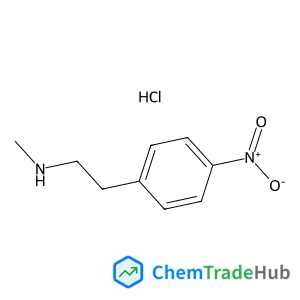
N-Methyl-2-(4-nitrophenyl)ethanamine hydrochloride (1:1)
CAS Number:
166943-39-1
Molecular Formula:
C9H13ClN2O2
Recommended Suppliers





Disclaimer
This page provides academic journal information for reference and research purposes only. We are not affiliated with any journal publishers and do not handle publication submissions. For publication-related inquiries, please contact the respective journal publishers directly.
If you notice any inaccuracies in the information displayed, please contact us at support@chemtradehub.com. We will promptly review and address your concerns.