












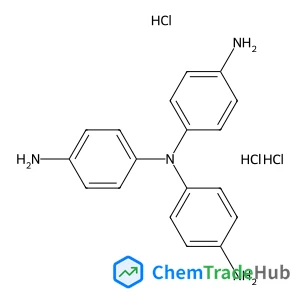
N1,N1-Bis(4-aminophenyl)benzene-1,4-diamine trihydrochloride
CAS Number:
114254-48-7
Molecular Formula:
C18H21Cl3N4
Yan-Hui Chen, Jing Zhang, Yi Li, Yong-Fan Zhang, Shu-Ping Huang, Wei Lin
Ni-rich layered oxides, like LiNi0.8Co0.1Mn0.1O2 (NCM811), have been widely investigated as cathodes due to their high energy density. However, gradual structural transformation during cycling can lead to capacity degradation and potential decay of cathode materials. Herein, we doped high-valence transition metal (TM) ions (V5+, Nb5+, and Zr4+) at the Ni site of NCM811 by first principles simulations and explored the mechanism of doping TMs in NCMs for enhancing the electrochemical performance. Analysis of the calculations shows that doping V, Nb and Zr has an efficient influence on alleviating the Ni oxidation, reducing the loss of oxygen, and facilitating Li+ migration. Moreover, V doping can further suppress the lattice distortion due to the radius of V5+ being close to the radius of Mn4+. In particular, compared with the barrier of the pristine NCM in Li divacancy, the barrier of V-doped NCM reaches the lowest. In conclusion, V is the most favorable dopant for NCM811 to improve the electrochemical properties and achieve both high capacity and cycling stability.
D. Jonathan Bennett, Paula L. Pickering, Nigel S. Simpkins
DOI: 10.1039/B403193H
Michael Chi-Yung Tang, Kwok-Yin Wong, Tak Hang Chan
DOI: 10.1039/B416837B
Juan R. Dehli, Julien Legros, Carsten Bolm
DOI: 10.1039/B415954C
Rex A. Corbin, Brandon E. Dusick, Khamphee Phomphrai, Phillip E. Fanwick, Ian P. Rothwell
DOI: 10.1039/B416536E
Lihua Bi, Firasat Hussain, Ulrich Kortz, Masahiro Sadakane, Michael H. Dickman
DOI: 10.1039/B403902E
Catherine McCusker, Joseph B. Carroll, Vincent M. Rotello
DOI: 10.1039/B416266H
Nihar R. Sarkar, Theresa Rosendahl, Aaron B. Krueger, Abir L. Banerjee, Keith Benton, Sanku Mallik, D. K. Srivastava
DOI: 10.1039/B416827E
Grzegorz A. Orlowski, Somenath Chowdhury, Yi-Tao Long, Todd C. Sutherland, Heinz-Bernhard Kraatz
DOI: 10.1039/B415278F
Rachel Shaw, Ian S. Tidmarsh, Rebecca H. Laye, Barbara Breeze, Madeleine Helliwell, Euan K. Brechin, Sarah L. Heath, Mark Murrie, Stefan Ochsenbein, Hans-Ulrich Güdel, Eric J. L. McInnes
DOI: 10.1039/B403876B
Alida H. Éll, Jeffrey B. Johnson, Jan-E. Bäckvall
DOI: 10.1039/B303258B
Waste containing N-Methoxy-N-methyl-1,3-thiazole-5-carboxamide (CAS: 898825-89-3...
N-(4-Biphenylyl)dibenzo[b,d]furan-4-amine should be stored in a tightly sealed c...
The market for 3-Acetamido-5-amino-2,4,6-triiodobenzoic acid (CAS: 1713-07-1) is...
Benzyl 2-O-acetyl-3,4,6-tri-O-benzyl-beta-D-galactopyranoside (CAS: 61820-03-9) ...
2-Ethylpiperazine dihydrochloride (CAS: 438050-52-3) is regulated under the Glob...
1,1'-[1,3-Phenylenebis(methylene)]bis(3-methyl-1H-pyrrole-2,5-dione) (CAS: 11946...
Several alternatives can be used in the synthesis of 5-Fluoro-2-(1-pyrrolidinyl)...
Proper personal protective equipment (PPE) must be worn when handling this compo...
When handling 6-Bromoimidazo[1,2-a]pyridin-8-amine, it is important to wear appr...
Alternatives to (2S,4R)-4-(4-Nitrobenzyl)pyrrolidine-2-carboxylic acid hydrochlo...

Physical Chemistry Chemical Physics (PCCP) is an international journal co-owned by 19 physical chemistry and physics societies from around the world. This journal publishes original, cutting-edge research in physical chemistry, chemical physics and biophysical chemistry. To be suitable for publication in PCCP, articles must include significant innovation and/or insight into physical chemistry; this is the most important criterion that reviewers and Editors will judge against when evaluating submissions. The journal has a broad scope and welcomes contributions spanning experiment, theory, computation and data science. Topical coverage includes spectroscopy, dynamics, kinetics, statistical mechanics, thermodynamics, electrochemistry, catalysis, surface science, quantum mechanics, quantum computing and machine learning. Interdisciplinary research areas such as polymers and soft matter, materials, nanoscience, energy, surfaces/interfaces, and biophysical chemistry are welcomed if they demonstrate significant innovation and/or insight into physical chemistry. Joined experimental/theoretical studies are particularly appreciated when complementary and based on up-to-date approaches.
![2-Methylbenzo[h]quinoline structure](https://static.chemtradehub.com/structs/605/605-88-9-ac43.webp "2-Methylbenzo[h]quinoline structure")

![tert-Butyl 6-chloro-4-oxospiro[chroman-2,4'-piperidine]-1'-carboxylate structure](https://static.chemtradehub.com/structs/101/1011482-37-3-88a5.webp "tert-Butyl 6-chloro-4-oxospiro[chroman-2,4'-piperidine]-1'-carboxylate structure")



