


A highly sensitive electrochemical microRNA-21 biosensor based on intercalating methylene blue signal amplification and a highly dispersed gold nanoparticles/graphene/polypyrrole composite
Literature Information
Publication Date
2021-02-16
DOI
10.1039/D1AN00116G
Impact Factor
4.616
Authors
Noppadol Aroonyadet, Suwussa Bamrungsap
View Original
Abstract
Numerous clinical studies suggest that microRNAs (miRNAs) are indicative biomolecules for the early diagnosis of cancer. This work aims to develop a cost-effective and label-free electrochemical biosensor to detect miRNA-21, a biomarker of breast cancer. An electrochemical sensor is fabricated using a nanocomposite, consisting of graphene (GP), polypyrrole (PPY) and gold nanoparticles (AuNPs), modified onto a screen-printed carbon electrode (SPCE) to improve electron transfer properties and increase the degree of methylene blue (MB) intercalation for signal amplification. The GP/PPY-modified electrode offers good electrochemical reactivity and high dispersibility of AuNPs, resulting in excellent sensor performance. Peak current of the MB redox process, which is proportional to miRNA-21 concentration on the electrode surface, is monitored by differential pulse voltammetry (DPV). Under optimal conditions, this sensor is operated by monitoring the MB signal response due to the amount of hybridization products between miRNA-21 target molecules and DNA-21 probes immobilized on the electrode. The proposed biosensor reveals a linear range from 1.0 fM to 1.0 nM with a low detection limit of 0.020 fM. In addition, the miRNA-21 biosensor provides good selectivity, high stability, and satisfactory reproducibility, which shows promising potential in clinical research and diagnostic applications.
Recommended Journals

Organic Preparations and Procedures International

Planta Medica

European Journal of Wood and Wood Products

Helvetica Chimica Acta

Journal of Heterocyclic Chemistry

Journal of Medicinal Chemistry

Proceedings of the National Academy of Sciences of the United States of America

Pharmacological Reviews

Russian Chemical Reviews

Kinetics and Catalysis
Related Literature
Efficient electrophilic catalysis of 1,5-anhydrocellobiitol hydrolysis by AlIII; implications for the conservation of “rosin-alum” sized paper
John Baty, Michael L. Sinnott
2004-02-27
Communication
DOI: 10.1039/B316417A
Organization of branched rod–coil molecules into a 3-D tetragonally perforated lamellar mesophase
Nam-Keun Oh, Wang-Cheol Zin, Jun-Hwan Im, Ja-Hyoung Ryu, Myongsoo Lee
2004-04-01
Communication
DOI: 10.1039/B317109D
Regioselective uncatalysed hydrophosphination of alkenes: a facile route to P-alkylated phosphine derivatives
Olivier Delacroix, Annie-Claude Gaumont
2003-10-29
Communication
DOI: 10.1039/B311892D
New dibenzofuran-bridged bis(amidoamine) and bis(ethylenediamine) ligands and their dinuclear zinc and aluminium complexes
Mark L. Hlavinka, John R. Hagadorn
2003-09-26
Communication
DOI: 10.1039/B309732C
Room temperature borylation of arenes and heteroarenes using stoichiometric amounts of pinacolborane catalyzed by iridium complexes in an inert solvent
Tatsuo Ishiyama, Yusuke Nobuta, John F. Hartwig, Norio Miyaura
2003-10-22
Communication
DOI: 10.1039/B311103B
Ionic liquids based on N-alkyl-N-methylmorpholinium salts as potential electrolytes
Ki-Sub Kim, Sukjeong Choi, D. Demberelnyamba, Huen Lee, Jaeseung Oh, Byoung-Bae Lee, Su-Jin Mun
2004-02-27
Communication
DOI: 10.1039/B400198B
Facilitation of addition–elimination reactions in pyrimidines and purines using trifluoroacetic acid in trifluoroethanol
Hayley J. Whitfield, Roger J. Griffin, Ian R. Hardcastle, Andrew Henderson, Jerome Meneyrol, Veronique Mesguiche, Kerry L. Sayle, Bernard T. Golding
2003-10-14
Communication
DOI: 10.1039/B308948G
Different thermal reactivity of a 1,2-thiaphospholo[a]phosphirane in free and metal carbonyl complexed form
Tamaki Jikyo, Gerhard Maas
2003-10-14
Communication
DOI: 10.1039/B310256D
Selective deposition of polystyrene nanoparticles in a nanoetchpit array on a silicon substrate
Manabu Tanaka, Takumi Hosaka, Takashi Tanii, Iwao Ohdomari, Hiroyuki Nishide
2004-03-16
Communication
DOI: 10.1039/B315816K
A new class of C1-symmetric monosulfoximine ligands for enantioselective hetero Diels–Alder reactions
Carsten Bolm, Marinella Verrucci, Oliver Simic, Pier Giorgio Cozzi, Gerhard Raabe, Hiroaki Okamura
2003-10-13
Communication
DOI: 10.1039/B309556H
You might also like
Compound Q&A
What is the market or research trend for N-(4-Methoxybenzyl)-2-pyridinamine (CAS: 52818-63-0)?
N-(4-Methoxybenzyl)-2-pyridinamine (CAS: 52818-63-0) is increasingly being used ...
52818-63-0N-(4-Methoxybenzyl)-...
Compound Q&A
What precautions should be taken when handling Ethyl 4-(2-chlorophenyl)-1,3-thiazole-2-carboxylate (CAS: 1050507-06-6)?
When handling Ethyl 4-(2-chlorophenyl)-1,3-thiazole-2-carboxylate, appropriate p...
1050507-06-6Ethyl 4-(2-chlorophe...
Compound Q&A
What regulatory guidelines apply to diethyldiselane (CAS: 628-39-7)?
Diethyldiselane (CAS: 628-39-7) is classified under the Globally Harmonized Syst...
628-39-7Diethyldiselane
Compound Q&A
What is the market or research trend for oxocopper (CAS: 12053-18-8)?
The market for oxocopper (CAS: 12053-18-8) is primarily driven by its use in cat...
12053-18-8oxocopper; oxo-(oxoc...
Compound Q&A
What is the market or research trend for 5-{[(2-Methyl-2-propanyl)oxy]carbonyl}-5-azaspiro[2.4]heptane-7-carboxylic acid?
The market for 5-{[(2-Methyl-2-propanyl)oxy]carbonyl}-5-azaspiro[2.4]heptane-7-c...
1268519-54-55-{[(2-Methyl-2-prop...
Compound Q&A
What is 2-(1-Pyrrolidinyl)-4-pyridinamine (CAS: 35981-63-6)?
2-(1-Pyrrolidinyl)-4-pyridinamine is a chemical compound with the CAS number 359...
35981-63-62-(1-Pyrrolidinyl)-4...
Compound Q&A
What are the physical and chemical properties of 2-(3-Pyridinyl)-1-azabicyclo[2.2.2]octane (CAS: 91556-75-1)?
2-(3-Pyridinyl)-1-azabicyclo[2.2.2]octane (CAS: 91556-75-1) is a crystalline sol...
91556-75-12-(3-Pyridinyl)-1-az...
Compound Q&A
How is (S)-Alpha-allyl-proline hydrochloride (CAS: 129704-91-2) typically synthesized?
(S)-Alpha-allyl-proline hydrochloride is usually synthesized via a Wittig reacti...
129704-91-2(S)-Alpha-allyl-prol...
Compound Q&A
What is 3-Methyl-1,2-oxazole-5-carboxylic acid (CAS: 4857-42-5)?
3-Methyl-1,2-oxazole-5-carboxylic acid (CAS: 4857-42-5) is an organic compound w...
4857-42-53-Methyl-1,2-oxazole...
Compound Q&A
How is Lys-SMCC-DM1 (CAS: 1281816-04-3) typically synthesized?
Lys-SMCC-DM1 is synthesized via a multi-step process involving the coupling of S...
1281816-04-3Lys-SMCC-DM1
Source Journal
Analyst

CiteScore:
7.8
Self-citation Rate:
5.6%
Articles per Year:
653
Analyst publishes analytical and bioanalytical research that reports premier fundamental discoveries and inventions, and the applications of those discoveries, unconfined by traditional discipline barriers.
Recommended Compounds
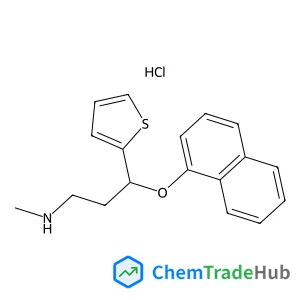
N-Methyl-3-(1-naphthyloxy)-3-(2-thienyl)-1-propanamine hydrochloride (1:1)
CAS Number:
1188266-11-6
Molecular Formula:
C18H20ClNOS
![N-{[(2-Methyl-2-propanyl)oxy]carbonyl}-L-methionylglycine structure](https://static.chemtradehub.com/structs/234/23446-03-9-e1e5.webp "N-{[(2-Methyl-2-propanyl)oxy]carbonyl}-L-methionylglycine structure")
N-{[(2-Methyl-2-propanyl)oxy]carbonyl}-L-methionylglycine
CAS Number:
23446-03-9
Molecular Formula:
C12H22N2O5S
![1-[6-(1H-Imidazol-1-yl)-3-pyridinyl]methanamine structure](https://static.chemtradehub.com/structs/914/914637-08-4-8825.webp "1-[6-(1H-Imidazol-1-yl)-3-pyridinyl]methanamine structure")
Recommended Suppliers






Disclaimer
This page provides academic journal information for reference and research purposes only. We are not affiliated with any journal publishers and do not handle publication submissions. For publication-related inquiries, please contact the respective journal publishers directly.
If you notice any inaccuracies in the information displayed, please contact us at support@chemtradehub.com. We will promptly review and address your concerns.