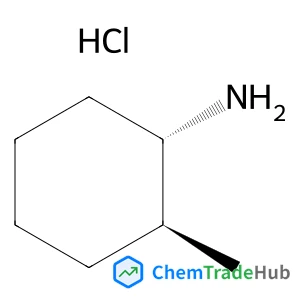
(1R,2R)-2-Methylcyclohexanamine hydrochloride (1:1)
CAS Number:
39558-31-1
Molecular Formula:
C7H16ClN
HyoWon Kim, Yongju Lee, DongHoon Song, YongKeun Kwon, Eom-Ji Kim, EunAe Cho
To utilize hydrogen as an energy carrier to store surplus electricity, it is necessary to develop a highly efficient and low-cost hydrogen evolution reaction (HER) catalyst for water electrolysis. This work presents an alkaline HER catalyst composed of earth-abundant elements. Through a one-step facile and non-toxic process that combines the phosphorization of copper and the cyclization of polyacrylonitrile (PAN), copper phosphide (Cu3P) particles embedded in nitrogen-doped carbon were synthesized (Cu3P/N–C). In the complex structure, Cu3P is catalytically active towards the HER and N-doped carbon connects the Cu3P particles electrically and physically. Thus, the incorporation of N-doped carbon simply by adding PAN to a phosphorus precursor improves the electrical conductivity and structural integrity of the Cu3P electrode during the HER. To achieve the best HER activity, the P-to-PAN ratio was optimized. Cu3P/N–C prepared on copper foam showed HER overpotentials of 211.1 and 301.8 mV to obtain corresponding current density of 10 and 50 mA cm−2 in a 1 M KOH solution. At the current density of 10 mA cm−2, the HER overpotential was stably maintained from 211.1 to 222.1 mV for 24 h. In addition to the enlarged electrochemical active surface area (ECSA), the synergistic effects of the disordered carbon structure formed by the influence of the P source result in the superior performance outcomes of Cu3P/N–C.
Silong Quan, Linghui He, Yong Ni
DOI: 10.1039/C8CP04360D
Tae Yeon Kim, Gopinathan Anoop, Yeong Jun Son, Soo Hyeon Kim, Eunji Lee, Ji Young Jo
DOI: 10.1039/C8CP02024H
Fu-Qiang Zhou, Ru-Fang Zhao, Jin-Feng Li, Wen-Hua Xu, Chao-Chao Li, Lan Luo, Jian-Li Li, Bing Yin
DOI: 10.1039/C8CP07313A
Yong-yang Su, Rachael E. H. Miles, Zhi-ming Li, Jonathan P. Reid, Jiang Xu
DOI: 10.1039/C8CP05250F
Henning Weiss, Hailong Li, Oleg Konovalov, Sven Festersen, Uta Rütt
DOI: 10.1039/C8CP91851A
Diana Hötger, Markus Etzkorn, Benjamin Wurster, Jan Dreiser, Sebastian Stepanow, Doris Grumelli, Rico Gutzler
DOI: 10.1039/C8CP07463A
Sebastian Mahlik, Agata Lazarowska, Jumpei Ueda, Setsuhisa Tanabe, Marek Grinberg
DOI: 10.1039/C8CP07122E
Fabian Kollhoff, Johannes Schneider, Gao Li, Sami Barkaoui, Wenjie Shen, Thomas Berger, Oliver Diwald
DOI: 10.1039/C8CP04873H
Elia Grueso, Emilio Roldan, Pilar Perez-Tejeda, Edyta Kuliszewska, Blanca Molero, Lothar Brecker, R. M. Giráldez-Pérez
DOI: 10.1039/C8CP02791A
2-(2-Chloroacetamido)-3-phenylpropanoic acid (CAS: 7765-11-9) is generally consi...
2-(Benzyloxy)-5-bromobenzoic acid can be handled safely if appropriate precautio...
(4-Methyl-1,2,5-oxadiazol-3-yl)methanamine hydrochloride is a chemical compound ...
2-(5-Hexylthiophen-2-yl)-4,4,5,5-tetramethyl-1,3,2-dioxaborolane (CAS: 917985-54...
While 4-(8-Methyl-9H-1,3-dioxolo[4,5-h][2,3]benzodiazepin-5-yl)benzenamine (CAS:...
The market for tert-butyl 3-hydroxy-4,5,7,8-tetrahydro-2H-pyrazolo[3,4-d]azepine...
Waste containing 3,5-Diamino-1H-pyrazole-4-carbonitrile (CAS: 6844-58-2) should ...
(6-Fluoro-3-pyridinyl)boronic acid can be synthesized through the reaction of 6-...
Dibenzyl carbonimidoylbiscarbamate (CAS: 10065-79-9) finds applications in vario...
The market for (beta,beta,2,3,4,5,6-~2~H_7_)Phenylalanine (CAS: 74228-83-4) is g...
![5-Chloropyrrolo[2,1-f][1,2,4]triazin-4(3H)-one structure](https://static.chemtradehub.com/structs/888/888720-60-3-4f7c.webp "5-Chloropyrrolo[2,1-f][1,2,4]triazin-4(3H)-one structure")
![(4-Methyl-1H-benzo[d]imidazol-2-yl)methanamine structure](https://static.chemtradehub.com/structs/933/933756-31-1-7b0b.webp "(4-Methyl-1H-benzo[d]imidazol-2-yl)methanamine structure")