












Inside back cover
Literature Information
Publication Date
DOI
10.1039/C8CP91861A
Impact Factor
3.676
Authors
View Original
Abstract
A graphical abstract is available for this content
Related Literature
Thermoresponsive nanogels with film-forming ability
Ana S. Sonzogni, Stefanie Wedepohl, Marcelo Calderón
2018-01-18
Paper
DOI: 10.1039/C7PY01798G
Polymerization of alkyl diazoacetates initiated by the amidinate/Pd system: efficient synthesis of high molecular weight poly(alkoxycarbonylmethylene)s with moderate stereoregularity
Hiroaki Shimomoto, Junya Kawamata, Hirokazu Murakami, Kazuki Yamashita, Tomomichi Itoh, Eiji Ihara
2017-06-19
Paper
DOI: 10.1039/C7PY00816C
N-[2-(Dimethylamino)ethyl]-1,8-naphthalimide derivatives as photoinitiators under LEDs
Nicolas Zivic, Frédéric Dumur, Bernadette Graff, Jean Pierre Fouassier, Didier Gigmes, Jacques Lalevée
2018-01-22
Paper
DOI: 10.1039/C8PY00055G
Temperature responsive poly(phosphonate) copolymers: from single chains to macroscopic coacervates
Thomas Wolf, Johannes Hunold, Johanna Simon, Christine Rosenauer, Dariush Hinderberger, Frederik R. Wurm
2017-12-19
Paper
DOI: 10.1039/C7PY01811H
Ethylene/propylene copolymerization catalyzed by half-titanocenes containing monodentate anionic nitrogen ligands: effect of ligands on catalytic behaviour and structure of copolymers
Zhi-Qian Zhang, Jun-Teng Qu, Shu Zhang, Qiu-Ping Miao, Yi-Xian Wu
2017-12-04
Paper
DOI: 10.1039/C7PY01807J
Phosphazene/triisobutylaluminum-promoted anionic ring-opening polymerization of 1,2-epoxybutane initiated by secondary carbamates
L. Hassouna, N. Illy, P. Guégan
2017-06-13
Paper
DOI: 10.1039/C7PY00675F
Thermoresponsive laterally-branched polythiophene phenylene derivative as water-soluble temperature sensor
Victor R. De la Rosa, David Barker, Richard Hoogenboom
2017-06-21
Paper
DOI: 10.1039/C7PY00919D
A sustainable photocontrolled ATRP strategy: facile separation and recycling of a visible-light-mediated catalyst fac-[Ir(ppy)3]
Xiaodong Liu, Yuanyuan Ni, Jian Wu, Hongjuan Jiang, Zhengbiao Zhang, Lifen Zhang, Zhenping Cheng
2018-01-03
Paper
DOI: 10.1039/C7PY02008B
Mussel-inspired thermoresponsive polymers with a tunable LCST by Cu(0)-LRP for the construction of smart TiO2 nanocomposites
Donghao Wang, Shutong Guo, Qiang Zhang, Paul Wilson, David M. Haddleton
2017-05-26
Paper
DOI: 10.1039/C7PY00736A
You might also like
Compound Q&A
What precautions should be taken when handling 4-(2-Furylmethyl)thiomorpholine 1,1-dioxide (CAS: 79206-94-3)?
When handling 4-(2-Furylmethyl)thiomorpholine 1,1-dioxide (CAS: 79206-94-3), it ...
79206-94-34-(2-Furylmethyl)thi...
Compound Q&A
What precautions should be taken when handling 4-Chloro-N-[2-(4-morpholinyl)ethyl]benzamide (CAS: 71320-77-9)?
When handling 4-Chloro-N-[2-(4-morpholinyl)ethyl]benzamide (CAS: 71320-77-9), it...
71320-77-94-Chloro-N-[2-(4-mor...
Compound Q&A
How should waste containing 2-[2-(2-Methoxyethoxy)ethoxy]ethyl 4-methylbenzenesulfonate (CAS: 62921-74-8) be handled?
Waste containing this compound (CAS: 62921-74-8) should be handled according to ...
62921-74-82-[2-(2-Methoxyethox...
Compound Q&A
How should waste containing (S)-Methyl 2-amino-3-cyclohexylpropanoate be handled?
Waste containing (S)-Methyl 2-amino-3-cyclohexylpropanoate should be collected i...
40056-18-6(S)-Methyl 2-amino-3...
Compound Q&A
How is 5-({4-[(2S,4R)-4-Hydroxy-2-methyltetrahydro-2H-pyran-4-yl]-2-thienyl}sulfanyl)-1-methyl-1,3-dihydro-2H-indol-2-one (CAS: 166882-70-8) typically synthesized?
This compound can be synthesized using a multi-step process involving the conjug...
166882-70-85-({4-[(2S,4R)-4-Hyd...
Compound Q&A
Are there alternatives to (2E)-3-(3,4-Dichlorophenyl)acrylic acid (CAS: 7312-27-8) in synthesis?
There are several alternatives to (2E)-3-(3,4-Dichlorophenyl)acrylic acid in syn...
7312-27-8(2E)-3-(3,4-Dichloro...
Compound Q&A
How should Ethyl 6-(2-nitrophenyl)imidazo[2,1-b][1,3]thiazole-3-carboxylate (CAS: 925437-84-9) be stored?
Ethyl 6-(2-nitrophenyl)imidazo[2,1-b][1,3]thiazole-3-carboxylate (CAS: 925437-84...
925437-84-9Ethyl 6-(2-nitrophen...
Compound Q&A
How should waste containing 2-(1,3-Thiazol-2-yl)ethanamine (CAS: 18453-07-1) be handled?
Waste containing 2-(1,3-Thiazol-2-yl)ethanamine (CAS: 18453-07-1) should be coll...
18453-07-12-(1,3-Thiazol-2-yl)...
Compound Q&A
How is Methyl 5-iodo-2-methylbenzoate (CAS: 103440-54-6) typically synthesized?
Methyl 5-iodo-2-methylbenzoate can be synthesized through the iodination of meth...
103440-54-6Methyl 5-iodo-2-meth...
Compound Q&A
How is 5-Chloro[1,2,4]triazolo[1,5-a]pyridine (CAS: 1427399-34-5) typically synthesized?
5-Chloro[1,2,4]triazolo[1,5-a]pyridine is commonly synthesized via the condensat...
1427399-34-55-Chloro[1,2,4]triaz...
Source Journal
Physical Chemistry Chemical Physics

CiteScore:
5.5
Self-citation Rate:
10.3%
Articles per Year:
3036
Physical Chemistry Chemical Physics (PCCP) is an international journal co-owned by 19 physical chemistry and physics societies from around the world. This journal publishes original, cutting-edge research in physical chemistry, chemical physics and biophysical chemistry. To be suitable for publication in PCCP, articles must include significant innovation and/or insight into physical chemistry; this is the most important criterion that reviewers and Editors will judge against when evaluating submissions. The journal has a broad scope and welcomes contributions spanning experiment, theory, computation and data science. Topical coverage includes spectroscopy, dynamics, kinetics, statistical mechanics, thermodynamics, electrochemistry, catalysis, surface science, quantum mechanics, quantum computing and machine learning. Interdisciplinary research areas such as polymers and soft matter, materials, nanoscience, energy, surfaces/interfaces, and biophysical chemistry are welcomed if they demonstrate significant innovation and/or insight into physical chemistry. Joined experimental/theoretical studies are particularly appreciated when complementary and based on up-to-date approaches.
Recommended Compounds

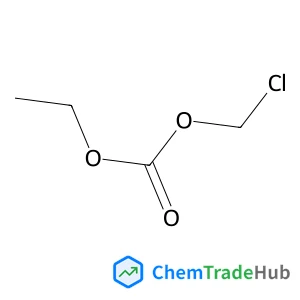
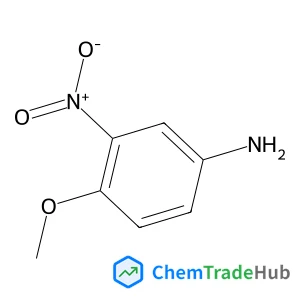
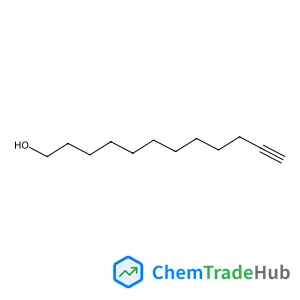
Recommended Suppliers






Disclaimer
This page provides academic journal information for reference and research purposes only. We are not affiliated with any journal publishers and do not handle publication submissions. For publication-related inquiries, please contact the respective journal publishers directly.
If you notice any inaccuracies in the information displayed, please contact us at support@chemtradehub.com. We will promptly review and address your concerns.