













In situ electrochemical reduction-assisted exfoliation: conversion of BiOCl nanoplates into Bi nanosheets enables efficient electrocatalytic nitrogen fixation
Literature Information
Publication Date
2020-04-28
DOI
10.1039/D0SE00445F
Impact Factor
6.367
Authors
You Xu, Tianlun Ren, Shanshan Yu, Hongjie Yu, Shuli Yin, Ziqiang Wang, Xiaonian Li, Liang Wang, Hongjing Wang
View Original
Abstract
The electrocatalytic nitrogen reduction reaction (NRR) for ammonia (NH3) synthesis is highly desirable yet still challenging. Catalysts, as the core component of electrocatalytic NRR systems, are a specific focus of research. In this work, we demonstrate that NRR active semimetal bismuth (Bi) ultrathin nanosheets (Bi NSs) could be prepared by means of the in situ electrochemical reduction-assisted exfoliation of BiOCl nanoplates (BiOCl NPs). Such a conversion, from semiconductive BiOCl NPs to semimetal Bi NSs, could create enlarged surface areas and bring about abundant under-coordinated Bi sites and accelerated electron transport capability. With these advantageous properties, the as-converted Bi NSs exhibit efficient NRR electrocatalytic activity in 0.1 M Na2SO4, achieving a high faradaic efficiency (14.14%) and NH3 yield (11.11 μg h−1 mgcat.−1) at −0.5 V (vs. reversible hydrogen electrode), as well as high NH3 selectivity.
Recommended Journals
Related Literature
Ruthenium and ruthenium oxide nanofiber supports for enhanced activity of platinum electrocatalysts in the methanol oxidation reaction
Geon-Hyoung An, Eun-Hwan Lee
2016-05-03
Paper
DOI: 10.1039/C6CP01964A
Oversolubility in the microvicinity of solid–solution interfaces
Isabelle Bergonzi, Lionel Mercury, Patrick Simon, Frédéric Jamme, Kirill Shmulovich
2016-04-27
Paper
DOI: 10.1039/C5CP08012F
Mechanisms and energetics for N-glycosidic bond cleavage of protonated adenine nucleosides: N3 protonation induces base rotation and enhances N-glycosidic bond stability
R. R. Wu, M. T. Rodgers
2016-05-20
Paper
DOI: 10.1039/C6CP01445C
Charge carrier kinetics of carbon nitride colloid: a femtosecond transient absorption spectroscopy study
Huiyu Zhang, Yaping Chen, Rong Lu, Ruiyu Li, Anchi Yu
2016-05-05
Paper
DOI: 10.1039/C6CP01600F
Ligand-to-ligand charge transfer in heteroleptic Ir-complexes: comprehensive investigations of its fast dynamics and mechanism
Yang-Jin Cho, So-Yoen Kim, Minji Cho, Kyung-Ryang Wee, Ho-Jin Son, Won-Sik Han, Sang Ook Kang
2016-05-06
Paper
DOI: 10.1039/C6CP02087A
Legitimate intermediates of oxygen evolution on iridium oxide revealed by in situ electrochemical evanescent wave spectroscopy
Hideshi Ooka, Yuanqing Wang, Akira Yamaguchi, Makoto Hatakeyama, Shinichiro Nakamura, Kazuhito Hashimoto, Ryuhei Nakamura
2016-05-12
Paper
DOI: 10.1039/C6CP02385A
Controlling electronic effects and intermolecular packing in contorted polyaromatic hydrocarbons (c-PAHs): towards high mobility field effect transistors
Kalishankar Bhattacharyya, Titas Kumar Mukhopadhyay, Ayan Datta
2016-05-05
Paper
DOI: 10.1039/C6CP02387H
Theory of diffusion-influenced reactions in complex geometries
Sergey D. Traytak, Francesco Piazza
2016-05-17
Paper
DOI: 10.1039/C6CP01147K
I. Dissociation free energies of drug–receptor systems via non-equilibrium alchemical simulations: a theoretical framework
2016-05-05
Paper
DOI: 10.1039/C5CP05519A
Analysis of the magnetically induced current density of molecules consisting of annelated aromatic and antiaromatic hydrocarbon rings
Dage Sundholm, Raphael J. F. Berger, Heike Fliegl
2016-05-13
Paper
DOI: 10.1039/C6CP01968D
You might also like
Compound Q&A
Is 4-Benzyl-2,2-dimethylmorpholine (CAS: 84761-04-6) safe?
4-Benzyl-2,2-dimethylmorpholine is generally considered safe when handled under ...
84761-04-64-Benzyl-2,2-dimethy...
Compound Q&A
What is (5,6-Dimethoxy-3-pyridinyl)boronic acid (CAS: 1346526-61-1)?
(5,6-Dimethoxy-3-pyridinyl)boronic acid is a chemical compound with the molecula...
1346526-61-1(5,6-Dimethoxy-3-pyr...
Compound Q&A
How is 1,1,3,3-Tetramethyl-1,3-bis(2-methyl-2-propanyl)disiloxane (CAS: 67875-55-2) typically synthesized?
1,1,3,3-Tetramethyl-1,3-bis(2-methyl-2-propanyl)disiloxane is synthesized throug...
67875-55-21,1,3,3-Tetramethyl-...
Compound Q&A
What are the main uses of (2R,4S)-1-Boc-4-methylpyrrolidine-2-carboxylic acid (CAS: 1018818-04-6)?
(2R,4S)-1-Boc-4-methylpyrrolidine-2-carboxylic acid is primarily used as a build...
1018818-04-6(2R,4S)-1-Boc-4-meth...
Compound Q&A
What precautions should be taken when handling 2,3-Dichloroacrylonitrile (CAS: 22410-58-8)?
When handling 2,3-Dichloroacrylonitrile, it is crucial to wear appropriate perso...
22410-58-82,3-Dichloroacryloni...
Compound Q&A
How should (S)-1-(o-Tolyl)ethanamine hydrochloride (CAS: 1332832-16-2) be stored?
(S)-1-(o-Tolyl)ethanamine hydrochloride should be stored in a cool, dry place to...
1332832-16-2(S)-1-(o-Tolyl)ethan...
Compound Q&A
What are the physical and chemical properties of Benzyl [1-(hydroxyamino)-1-imino-2-methyl-2-propanyl]carbamate (CAS: 518047-98-8)?
Benzyl [1-(hydroxyamino)-1-imino-2-methyl-2-propanyl]carbamate (CAS: 518047-98-8...
518047-98-8Benzyl [1-(hydroxyam...
Compound Q&A
What industries use 2-Methyloxazole-5-carbaldehyde (CAS: 885273-42-7)?
2-Methyloxazole-5-carbaldehyde is used in the pharmaceutical industry for the sy...
885273-42-72-Methyloxazole-5-ca...
Compound Q&A
What is the market or research trend for 2-Methyl-2-propanyl 4-[(1S)-1-hydroxyethyl]-1-piperidinecarboxylate (CAS: 389889-82-1)?
The market for 2-Methyl-2-propanyl 4-[(1S)-1-hydroxyethyl]-1-piperidinecarboxyla...
389889-82-12-Methyl-2-propanyl ...
Compound Q&A
Is 1-Butyl-3-methylpyridinium bromide (CAS: 26576-85-2) safe?
1-Butyl-3-methylpyridinium bromide is generally considered safe for laboratory u...
26576-85-21-Butyl-3-methylpyri...
Source Journal
Recommended Compounds
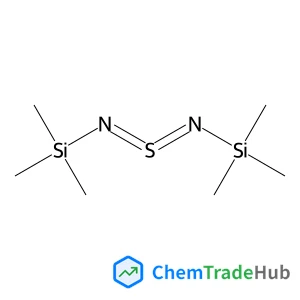
1,3-Bis(trimethylsilyl)-2lambda~4~-diazathia-1,2-diene
CAS Number:
18156-25-7
Molecular Formula:
C6H18N2SSi2
Recommended Suppliers






Disclaimer
This page provides academic journal information for reference and research purposes only. We are not affiliated with any journal publishers and do not handle publication submissions. For publication-related inquiries, please contact the respective journal publishers directly.
If you notice any inaccuracies in the information displayed, please contact us at support@chemtradehub.com. We will promptly review and address your concerns.