












Controlling electronic effects and intermolecular packing in contorted polyaromatic hydrocarbons (c-PAHs): towards high mobility field effect transistors
Literature Information
Publication Date
2016-05-05
DOI
10.1039/C6CP02387H
Impact Factor
3.676
Authors
Kalishankar Bhattacharyya, Titas Kumar Mukhopadhyay, Ayan Datta
View Original
Abstract
We have investigated the electronic and charge transport properties of two regioisomeric contorted polyaromatic hydrocarbons at the molecular level as well as in the crystalline state. Electron and hole transport is studied on the basis of an incoherent charge hopping model through DFT calculations. For trifluro-dibenzoperylene (CF3-DBP, 1), which crystallizes as a herringbone network, the computed drift hole and electron mobilities are 0.234 and 0.008 cm2 V−1 S−1, respectively. The greater hole mobility in the DBP crystal (μh/μe = 29) can be rationalized by its lower hole reorganization energy and higher hole transfer integral simultaneously. These calculations for the pristine DBP crystal differ from recent experiments indicating its preferential electron conductivity. This might be attributed to the interaction of the molecules with the gold source/drain electrodes. Its second regioisomer, 2, having a HOMO–LUMO gap of 3.2 eV and thus expectedly inefficient, can be converted into an effective OFET material by replacing the Ph-CF3 groups by oxo groups (>CO) in the 9 and 10 positions (9,10-dioxotribenzopyrene, 3). 3 has a suitable HOMO–LUMO gap of 2.18 eV. This bowl-shaped molecule is predicted to pack in a stacked orientation with preferential concave⋯concave pairs having a short intermolecular distance of 4.15 Å and identical inter-chromophoric electron/hole coupling (th ∼ te). This creates an ambipolar charge transport behavior in 3. Clearly, fine tuning the structure–property relationship opens up the possibility of implanting tailored OFET properties in the existing library of molecules.
Related Literature
Cascade cyclization versus chemoselective reduction: a solvent-controlled product divergence
Farnaz Jafarpour, Saideh Rajai-Daryasarei, Mohammad Hossein Gohari
2020-09-08
Research Article
DOI: 10.1039/D0QO00876A
Direct C–S bond formation via C–O bond activation of phenols in a crossover Pd/Cu dual-metal catalysis system
Vahid Khakyzadeh, Abed Rostami, Hojat Veisi, Behzad Shirmardi Shaghasemi, Erik Reimhult, Yuanzhi Xia, Sima Darvishi
2019-04-10
Paper
DOI: 10.1039/C9OB00313D
Oxidative oxy-cyclization of 2-alkynylbenzamide enabled by TBAB/Oxone: switchable synthesis of isocoumarin-1-imines and isobenzofuran-1-imine
Guanyinsheng Qiu, Hongwei Zhou, Jin-Biao Liu
2019-04-01
Paper
DOI: 10.1039/C9OB00320G
Electrochemical α-methoxymethylation and aminomethylation of propiophenones using methanol as a green C1 source
Xiu-Jin Meng, Yong-Zhou Pan, Shi-Kun Mo, Heng-Shan Wang, Hai-Tao Tang, Ying-Ming Pan
2020-07-17
Research Article
DOI: 10.1039/D0QO00593B
Insights into the thioamidation of thiopeptins to enhance the understanding of the biosynthetic logic of thioamide-containing thiopeptides
Yuqing Li, Qingfei Zheng, Dandan Chen
2019-03-21
Communication
DOI: 10.1039/C9OB00402E
Coupling of amides with ketones via C–N/C–H bond cleavage: a mild synthesis of 1,3-diketones
Yuanzhi Xia, Sunwoo Lee
2020-08-11
Research Article
DOI: 10.1039/D0QO00797H
Photoinduced double [2 + 2] cycloaddition relay of yne–allenones for highly diastereoselective synthesis of hexacyclic 1-naphthols
Shan-Shan Zhu, Jiang-Nan Zhou, Quan-Long Wu, Wen-Juan Hao, Shu-Jiang Tu, Bo Jiang
2020-08-28
Research Article
DOI: 10.1039/D0QO00917B
Recent advances in tandem selenocyclization and tellurocyclization with alkenes and alkynes
Xin Wang, Chao Li, He Wang, Lei Li
2020-08-18
Review Article
DOI: 10.1039/D0QO00849D
You might also like
Compound Q&A
Is 2-(2-chloroacetamido)-3-phenylpropanoic acid (CAS: 7765-11-9) safe?
2-(2-Chloroacetamido)-3-phenylpropanoic acid (CAS: 7765-11-9) is generally consi...
7765-11-92-(2-chloroacetamido...
Compound Q&A
Is 2-(Benzyloxy)-5-bromobenzoic acid (CAS: 62176-31-2) safe?
2-(Benzyloxy)-5-bromobenzoic acid can be handled safely if appropriate precautio...
62176-31-22-(Benzyloxy)-5-brom...
Compound Q&A
What is (4-Methyl-1,2,5-oxadiazol-3-yl)methanamine hydrochloride (CAS: 1159825-48-5)?
(4-Methyl-1,2,5-oxadiazol-3-yl)methanamine hydrochloride is a chemical compound ...
1159825-48-5(4-Methyl-1,2,5-oxad...
Compound Q&A
What is 2-(5-Hexylthiophen-2-yl)-4,4,5,5-tetramethyl-1,3,2-dioxaborolane (CAS: 917985-54-7)?
2-(5-Hexylthiophen-2-yl)-4,4,5,5-tetramethyl-1,3,2-dioxaborolane (CAS: 917985-54...
917985-54-72-(5-Hexylthiophen-2...
Compound Q&A
Are there alternatives to 4-(8-Methyl-9H-1,3-dioxolo[4,5-h][2,3]benzodiazepin-5-yl)benzenamine (CAS: 102771-26-6) in synthesis?
While 4-(8-Methyl-9H-1,3-dioxolo[4,5-h][2,3]benzodiazepin-5-yl)benzenamine (CAS:...
102771-26-64-(8-Methyl-9H-1,3-d...
Compound Q&A
What is the market or research trend for tert-butyl 3-hydroxy-4,5,7,8-tetrahydro-2H-pyrazolo[3,4-d]azepine-6-carboxylate (CAS: 851376-80-2)?
The market for tert-butyl 3-hydroxy-4,5,7,8-tetrahydro-2H-pyrazolo[3,4-d]azepine...
851376-80-2tert-butyl 3-hydroxy...
Compound Q&A
How should waste containing 3,5-Diamino-1H-pyrazole-4-carbonitrile (CAS: 6844-58-2) be handled?
Waste containing 3,5-Diamino-1H-pyrazole-4-carbonitrile (CAS: 6844-58-2) should ...
6844-58-23,5-Diamino-1H-pyraz...
Compound Q&A
How is (6-Fluoro-3-pyridinyl)boronic acid (CAS: 351019-18-6) typically synthesized?
(6-Fluoro-3-pyridinyl)boronic acid can be synthesized through the reaction of 6-...
351019-18-6(6-Fluoro-3-pyridiny...
Compound Q&A
What industries use Dibenzyl carbonimidoylbiscarbamate (CAS: 10065-79-9)?
Dibenzyl carbonimidoylbiscarbamate (CAS: 10065-79-9) finds applications in vario...
10065-79-9Dibenzyl carbonimido...
Compound Q&A
What is the market or research trend for (beta,beta,2,3,4,5,6-~2~H_7_)Phenylalanine (CAS: 74228-83-4)?
The market for (beta,beta,2,3,4,5,6-~2~H_7_)Phenylalanine (CAS: 74228-83-4) is g...
74228-83-4(beta,beta,2,3,4,5,6...
Source Journal
Physical Chemistry Chemical Physics

CiteScore:
5.5
Self-citation Rate:
10.3%
Articles per Year:
3036
Physical Chemistry Chemical Physics (PCCP) is an international journal co-owned by 19 physical chemistry and physics societies from around the world. This journal publishes original, cutting-edge research in physical chemistry, chemical physics and biophysical chemistry. To be suitable for publication in PCCP, articles must include significant innovation and/or insight into physical chemistry; this is the most important criterion that reviewers and Editors will judge against when evaluating submissions. The journal has a broad scope and welcomes contributions spanning experiment, theory, computation and data science. Topical coverage includes spectroscopy, dynamics, kinetics, statistical mechanics, thermodynamics, electrochemistry, catalysis, surface science, quantum mechanics, quantum computing and machine learning. Interdisciplinary research areas such as polymers and soft matter, materials, nanoscience, energy, surfaces/interfaces, and biophysical chemistry are welcomed if they demonstrate significant innovation and/or insight into physical chemistry. Joined experimental/theoretical studies are particularly appreciated when complementary and based on up-to-date approaches.
Recommended Compounds

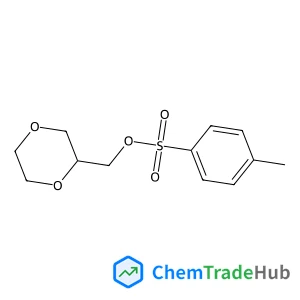
(S)-(1,4-Dioxan-2-yl)methyl 4-methylbenzenesulfonate
CAS Number:
917882-64-5
Molecular Formula:
C12H16O5S
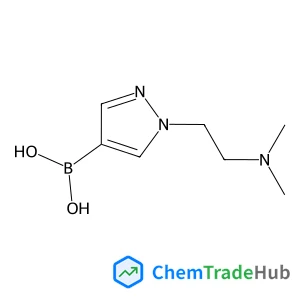
(1-(2-(Dimethylamino)ethyl)-1H-pyrazol-4-yl)boronic acid
CAS Number:
1086063-73-1
Molecular Formula:
C7H14BN3O2
Recommended Suppliers






Disclaimer
This page provides academic journal information for reference and research purposes only. We are not affiliated with any journal publishers and do not handle publication submissions. For publication-related inquiries, please contact the respective journal publishers directly.
If you notice any inaccuracies in the information displayed, please contact us at support@chemtradehub.com. We will promptly review and address your concerns.