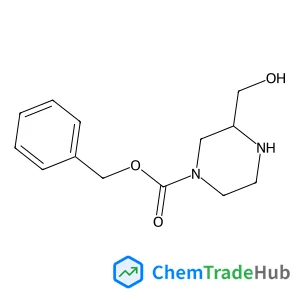
Benzyl 3-(hydroxymethyl)-1-piperazinecarboxylate
CAS Number:
191739-40-9
Molecular Formula:
C13H18N2O3
Hao-Dong Yang, Jun-Hao Huang, Kengo Shibata, Daling Lu, Kazuhiko Maeda, Chechia Hu
In this study, graphitic carbon nitride (g-C3N4, CN) was decorated with polyaniline (PANI), which was incorporated with inorganic (H2SO4) and organic (5-sulfosalicylic acid, SSA) acids for photocatalytic H2O2 production under simulated solar irradiation. The PANI/CN sample exhibited H2O2 production of approximately 1.5 mM within 3 h, which is much higher than that of either CN or PANI alone in the presence of AgNO3 solution. The increased photocatalytic activity for H2O2 production could be ascribed to the extended visible-light absorption, large specific surface area, and reduced electrical resistance as well as the appropriate redox potential. It should be noted that doping of H2SO4 on PANI could lead to a high oxidation level, which can increase the electrical conductivity of PANI/CN, while the doping of SSA on PANI may induce delocalization and, hence, the enlargement of the specific surface area of PANI. Additionally, CN could afford electron transit through π–π* between the conjugate units of PANI and its tri-s-triazine units, facilitating effective separation for photoexcited electron–hole pairs. This study demonstrated that the doping of PANI with H2SO4 and SSA and coupling with g-C3N4 is a promising technique for photocatalytic H2O2 production utilizing solar energy.
Min Huang, Gengyu Cao
DOI: 10.1039/C6CP01362G
Sergey D. Traytak, Francesco Piazza
DOI: 10.1039/C6CP01147K
Oliver Flender, Mirko Scholz, Jonas Hölzer, Kawon Oum, Thomas Lenzer
DOI: 10.1039/C6CP01335J
Mohamed Ben Hassine
DOI: 10.1039/C6CP01581F
Weidong He, Wenjin Yang, Chenggang Wang, Xiaolong Deng, Baodan Liu, Xijin Xu
DOI: 10.1039/C6CP02548J
Zijing Lin
DOI: 10.1039/C5CP07968C
Yuanping Yi
DOI: 10.1039/C6CP02296K
Grzegorz Gabka, Piotr Bujak, Jan Żukrowski, Damian Zabost, Kamil Kotwica, Karolina Malinowska, Andrzej Ostrowski, Ireneusz Wielgus, Wojciech Lisowski, Janusz W. Sobczak, Adam Pron
DOI: 10.1039/C6CP01887D
Long Yang, Da-Jun Shu, Shao-Chun Li, Mu Wang
DOI: 10.1039/C6CP01106C
Neha Agnihotri, Ronald P. Steer
DOI: 10.1039/C6CP00300A
4-Benzyl-2,2-dimethylmorpholine is generally considered safe when handled under ...
(5,6-Dimethoxy-3-pyridinyl)boronic acid is a chemical compound with the molecula...
1,1,3,3-Tetramethyl-1,3-bis(2-methyl-2-propanyl)disiloxane is synthesized throug...
(2R,4S)-1-Boc-4-methylpyrrolidine-2-carboxylic acid is primarily used as a build...
When handling 2,3-Dichloroacrylonitrile, it is crucial to wear appropriate perso...
(S)-1-(o-Tolyl)ethanamine hydrochloride should be stored in a cool, dry place to...
Benzyl [1-(hydroxyamino)-1-imino-2-methyl-2-propanyl]carbamate (CAS: 518047-98-8...
2-Methyloxazole-5-carbaldehyde is used in the pharmaceutical industry for the sy...
The market for 2-Methyl-2-propanyl 4-[(1S)-1-hydroxyethyl]-1-piperidinecarboxyla...
1-Butyl-3-methylpyridinium bromide is generally considered safe for laboratory u...