












Markedly different adsorption behaviors of gas molecules on defective monolayer MoS2: a first-principles study
Literature Information
Publication Date
2016-05-03
DOI
10.1039/C6CP01362G
Impact Factor
3.676
Authors
Min Huang, Gengyu Cao
View Original
Abstract
Sulfur vacancy (SV) is one of the most typical defects in two-dimensional monolayer MoS2, leading to reactive sites. We presented a systematic study of the adsorption behaviors of gas molecules, CO2, N2, H2O, CO, NH3, NO, O2, H2 and NO2, on monolayer MoS2 with single SV by first-principles calculations. It was found that CO2, N2 and H2O molecules physisorbed at the proximity of single SV. Our adsorption energy calculations and charge transfer analysis showed that the interactions between CO2, N2 and H2O molecules and defective MoS2 are stronger than the cases of CO2, N2 and H2O molecules adsorbed on pristine MoS2, respectively. The defective MoS2 based gas sensors may be more sensitive to CO2, N2 and H2O molecules than pristine MoS2 based ones. CO, NO, O2 and NH3 molecules were found to chemisorb at the S vacancy site and thus modify the electronic properties of defective monolayer MoS2. Magnetism was induced upon adsorption of NO molecules and the defective states induced by S vacancy can be completely removed upon adsorption of O2 molecules, which may provide some helpful information for designing new MoS2 based nanoelectronic devices in future. The H2 and NO2 molecules were found to dissociate at S vacancy. The dissociation of NO2 molecules resulted in O atoms located at the S vacancy site and NO molecules physisorbed on O-doped MoS2. The calculated results showed that NO2 molecules can help heal the S vacancy of the MoS2 monolayer.
Related Literature
An enzymatic acetal/hemiacetal conversion for the physiological temperature activation of the alkoxyamine C–ON bond homolysis
Muriel Albalat, Gérard Audran, Maxence Holzritter, Sylvain R. A. Marque, Nicolas Vanthuyne, Pierre Voisin
2020-07-30
Research Article
DOI: 10.1039/D0QO00559B
Synthesis of S-aryl thioesters via palladium-catalyzed thiocarbonylation of aryl iodides and aryl sulfonyl hydrazides
Yeojin Kim, Kwang Ho Song, Sunwoo Lee
2020-08-12
Research Article
DOI: 10.1039/D0QO00748J
Novel 3,4-seco-3,19-dinorspongian and 5,17-epoxy-19-norspongian diterpenes from the marine sponge Spongia sp.
Xiao-Jian Liao, Bing-Xin Zhao, Shi-Hai Xu
2020-09-17
Research Article
DOI: 10.1039/D0QO00977F
Cavity-based applications of metallo-supramolecular coordination cages (MSCCs)
Sarita Yadav, Palanisamy Kannan, Guanyinsheng Qiu
2020-07-20
Review Article
DOI: 10.1039/D0QO00681E
Oxidative oxy-cyclization of 2-alkynylbenzamide enabled by TBAB/Oxone: switchable synthesis of isocoumarin-1-imines and isobenzofuran-1-imine
Guanyinsheng Qiu, Hongwei Zhou, Jin-Biao Liu
2019-04-01
Paper
DOI: 10.1039/C9OB00320G
Making endo-cyclizations favorable again: a conceptually new synthetic approach to benzotriazoles via azide group directed lithiation/cyclization of 2-azidoaryl bromides
Alexandra A. Ageshina, Igor V. Alabugin
2019-04-08
Paper
DOI: 10.1039/C9OB00615J
I2-Catalyzed oxidative synthesis of N,4-disubstituted quinazolines and quinazoline oxides‡
Nagesh Jatangi, Radha Krishna Palakodety
2019-03-07
Communication
DOI: 10.1039/C9OB00349E
Recent advances in the synthesis of bridgehead (or ring-junction) nitrogen heterocycles via transition metal-catalyzed C–H bond activation and functionalization
Biao Nie, Wanqing Wu, Yingjun Zhang, Huanfeng Jiang, Ji Zhang
2020-08-05
Review Article
DOI: 10.1039/D0QO00510J
Nickel-catalyzed enantioselective electroreductive cross-couplings
Zhijun Zhou, Sheng Xu, Jing Zhang, Wangqing Kong
2020-09-03
Highlight
DOI: 10.1039/D0QO00901F
You might also like
Compound Q&A
Is 2-(2-chloroacetamido)-3-phenylpropanoic acid (CAS: 7765-11-9) safe?
2-(2-Chloroacetamido)-3-phenylpropanoic acid (CAS: 7765-11-9) is generally consi...
7765-11-92-(2-chloroacetamido...
Compound Q&A
Is 2-(Benzyloxy)-5-bromobenzoic acid (CAS: 62176-31-2) safe?
2-(Benzyloxy)-5-bromobenzoic acid can be handled safely if appropriate precautio...
62176-31-22-(Benzyloxy)-5-brom...
Compound Q&A
What is (4-Methyl-1,2,5-oxadiazol-3-yl)methanamine hydrochloride (CAS: 1159825-48-5)?
(4-Methyl-1,2,5-oxadiazol-3-yl)methanamine hydrochloride is a chemical compound ...
1159825-48-5(4-Methyl-1,2,5-oxad...
Compound Q&A
What is 2-(5-Hexylthiophen-2-yl)-4,4,5,5-tetramethyl-1,3,2-dioxaborolane (CAS: 917985-54-7)?
2-(5-Hexylthiophen-2-yl)-4,4,5,5-tetramethyl-1,3,2-dioxaborolane (CAS: 917985-54...
917985-54-72-(5-Hexylthiophen-2...
Compound Q&A
Are there alternatives to 4-(8-Methyl-9H-1,3-dioxolo[4,5-h][2,3]benzodiazepin-5-yl)benzenamine (CAS: 102771-26-6) in synthesis?
While 4-(8-Methyl-9H-1,3-dioxolo[4,5-h][2,3]benzodiazepin-5-yl)benzenamine (CAS:...
102771-26-64-(8-Methyl-9H-1,3-d...
Compound Q&A
What is the market or research trend for tert-butyl 3-hydroxy-4,5,7,8-tetrahydro-2H-pyrazolo[3,4-d]azepine-6-carboxylate (CAS: 851376-80-2)?
The market for tert-butyl 3-hydroxy-4,5,7,8-tetrahydro-2H-pyrazolo[3,4-d]azepine...
851376-80-2tert-butyl 3-hydroxy...
Compound Q&A
How should waste containing 3,5-Diamino-1H-pyrazole-4-carbonitrile (CAS: 6844-58-2) be handled?
Waste containing 3,5-Diamino-1H-pyrazole-4-carbonitrile (CAS: 6844-58-2) should ...
6844-58-23,5-Diamino-1H-pyraz...
Compound Q&A
How is (6-Fluoro-3-pyridinyl)boronic acid (CAS: 351019-18-6) typically synthesized?
(6-Fluoro-3-pyridinyl)boronic acid can be synthesized through the reaction of 6-...
351019-18-6(6-Fluoro-3-pyridiny...
Compound Q&A
What industries use Dibenzyl carbonimidoylbiscarbamate (CAS: 10065-79-9)?
Dibenzyl carbonimidoylbiscarbamate (CAS: 10065-79-9) finds applications in vario...
10065-79-9Dibenzyl carbonimido...
Compound Q&A
What is the market or research trend for (beta,beta,2,3,4,5,6-~2~H_7_)Phenylalanine (CAS: 74228-83-4)?
The market for (beta,beta,2,3,4,5,6-~2~H_7_)Phenylalanine (CAS: 74228-83-4) is g...
74228-83-4(beta,beta,2,3,4,5,6...
Source Journal
Physical Chemistry Chemical Physics

CiteScore:
5.5
Self-citation Rate:
10.3%
Articles per Year:
3036
Physical Chemistry Chemical Physics (PCCP) is an international journal co-owned by 19 physical chemistry and physics societies from around the world. This journal publishes original, cutting-edge research in physical chemistry, chemical physics and biophysical chemistry. To be suitable for publication in PCCP, articles must include significant innovation and/or insight into physical chemistry; this is the most important criterion that reviewers and Editors will judge against when evaluating submissions. The journal has a broad scope and welcomes contributions spanning experiment, theory, computation and data science. Topical coverage includes spectroscopy, dynamics, kinetics, statistical mechanics, thermodynamics, electrochemistry, catalysis, surface science, quantum mechanics, quantum computing and machine learning. Interdisciplinary research areas such as polymers and soft matter, materials, nanoscience, energy, surfaces/interfaces, and biophysical chemistry are welcomed if they demonstrate significant innovation and/or insight into physical chemistry. Joined experimental/theoretical studies are particularly appreciated when complementary and based on up-to-date approaches.
Recommended Compounds
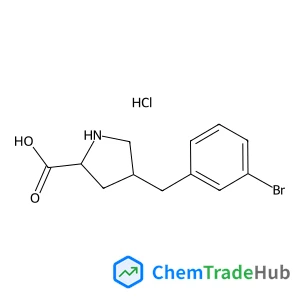
(2S,4R)-4-(3-Bromobenzyl)pyrrolidine-2-carboxylic acid hydrochloride
CAS Number:
1049734-10-2
Molecular Formula:
C12H15BrClNO2
![(3S,4aS,8aS)-2-[(2R,3S)-3-Amino-2-hydroxy-4-phenylbutyl]-N-(2-methyl-2-propanyl)decahydro-3-isoquinolinecarboxamide structure](https://static.chemtradehub.com/structs/136/136522-17-3-4d77.webp "(3S,4aS,8aS)-2-[(2R,3S)-3-Amino-2-hydroxy-4-phenylbutyl]-N-(2-methyl-2-propanyl)decahydro-3-isoquinolinecarboxamide structure")
(3S,4aS,8aS)-2-[(2R,3S)-3-Amino-2-hydroxy-4-phenylbutyl]-N-(2-methyl-2-propanyl)decahydro-3-isoquinolinecarboxamide
CAS Number:
136522-17-3
Molecular Formula:
C24H39N3O2
Recommended Suppliers






Disclaimer
This page provides academic journal information for reference and research purposes only. We are not affiliated with any journal publishers and do not handle publication submissions. For publication-related inquiries, please contact the respective journal publishers directly.
If you notice any inaccuracies in the information displayed, please contact us at support@chemtradehub.com. We will promptly review and address your concerns.