













Tacticity, molecular weight, and temporal control by lanthanide triflate-catalyzed stereoselective radical polymerization of acrylamides with an organotellurium chain transfer agent
Literature Information
Publication Date
2020-11-03
DOI
10.1039/D0PY01280G
Impact Factor
5.582
Authors
Yuji Imamura, Takehiro Fujita, Yu Kobayashi, Shigeru Yamago
View Original
Abstract
Dual control over molecular weight and tacticity in the polymerization of N,N-dimethylacyrlamide, N,N-diethylacrylamide, N-isopropylacrylamide, and acrylamide was achieved by organotellurium-mediated radical polymerization (TERP) in the presence of Y(OTf)3 or Yb(OTf)3 as a Lewis acid catalyst. While previous dual-control reactions have been limited to the synthesis of low-molecular-weight polyacrylamides, the current conditions significantly expanded this limitation. The high compatibility of the TERP chain transfer agent and dormant species to the Lewis acid was demonstrated by nearly complete end-group fidelity. Stereoblock copolymers consisting of atactic and isotactic PDEAA blocks were also successfully synthesized. Temporal control while maintaining dual control was also achieved by using photoactivation of organotellurium species. The effect of tacticity on the polymer structure in the gas phase was estimated for the first time by ion mobility spectrometry, revealing that the collision cross section increased as the meso diad selectivity of the polyacrylamide increased.
Recommended Journals
Related Literature
A method for rapid reaction optimisation in continuous-flow microfluidic reactors using online Raman spectroscopic detection
Shee-Ann Leung, Richard F. Winkle, Robert C. R. Wootton, Andrew J. deMello
2004-11-22
Paper
DOI: 10.1039/B412069H
Application of the lag-after-pulsed-separation (LAPS) flow meter to different protein solutions
Shramik Sengupta, Goher Mahmud, Daniel J. Chiou, Babak Ziaie
2004-12-16
Paper
DOI: 10.1039/B413808M
Raman spectroscopy of endoliths from Antarctic cold desert environments
Susana E. Jorge Villar, Howell G. M. Edwards, Charles S. Cockell
2004-12-07
Paper
DOI: 10.1039/B410854J
Effects of semicore electrons on stopping power in helium-irradiated aluminum nanosheets
Su-Na Pang, Feng Wang, Ya-Ting Sun, Fei Mao, Cong-Zhang Gao
2023-06-22
Paper
DOI: 10.1039/D3CP01506H
Electric-field frictional effects in confined zwitterionic molecules
Melisa M. Gianetti, Roberto Guerra, Andrea Vanossi, Michael Urbakh, Nicola Manini
2023-07-06
Paper
DOI: 10.1039/D3CP00914A
In-tube solid-phase microextraction with poly(methacrylic acid-ethylene glycol dimethacrylate) monolithic capillary for direct high-performance liquid chromatographic determination of ketamine in urine samples
Yi Fan, Yu-Qi Feng, Shi-Lu Da, Xiao-Ping Gao
2004-10-06
Paper
DOI: 10.1039/B410785C
Transition from Schottky to ohmic contacts in the C31 and MoS2 van der Waals heterostructure
Fei Lu, Shengli Zhang
2023-07-18
Paper
DOI: 10.1039/D3CP02357E
Spurious serotonin dimer formation using electrokinetic injection in capillary electrophoresis from small volume biological samples
Jeffrey N. Stuart, Nathan G. Hatcher, Xin Zhang, Rhanor Gillette, Jonathan V. Sweedler
2004-12-07
Paper
DOI: 10.1039/B413024C
Alkaline earth metal ion doping to enhance the light emission from Er3+:SnO2 nanocrystal Co-doped silica films
Enze Qu, Lixiang Wang, Jiaming Chen, Jingjie Zhao, Jun Xu, Kunji Chen
2023-06-15
Paper
DOI: 10.1039/D3CP00337J
You might also like
Compound Q&A
What are the main uses of 1H-Indazole-6-carbonitrile (CAS: 141290-59-7)?
1H-Indazole-6-carbonitrile finds applications in pharmaceuticals, where it serve...
141290-59-71H-Indazole-6-carbon...
Compound Q&A
How should waste containing Dioctyl (2E)-2-butenedioate (CAS: 2997-85-5) be handled?
Waste containing Dioctyl (2E)-2-butenedioate (CAS: 2997-85-5) should be collecte...
2997-85-5Dioctyl (2E)-2-buten...
Compound Q&A
What industries use Sodium [(1,2-benzoxazol-3-ylmethyl)sulfonyl]azanide (CAS: 68291-98-5)?
Sodium [(1,2-benzoxazol-3-ylmethyl)sulfonyl]azanide is primarily used in pharmac...
68291-98-5Sodium [(1,2-benzoxa...
Compound Q&A
Are there alternatives to Dimethyl 4-(4,4,5,5-tetramethyl-1,3,2-dioxaborolan-2-yl)-2,6-pyridinedicarboxylate (CAS: 741709-66-0) in synthesis?
Dimethyl 4-(4,4,5,5-tetramethyl-1,3,2-dioxaborolan-2-yl)-2,6-pyridinedicarboxyla...
741709-66-0Dimethyl 4-(4,4,5,5-...
Compound Q&A
How should waste containing 2-Fluoro-6-hydrazinopyridine (CAS: 80714-39-2) be handled?
Waste containing 2-Fluoro-6-hydrazinopyridine (CAS: 80714-39-2) should be manage...
80714-39-22-Fluoro-6-hydrazino...
Compound Q&A
What is 6-Formyl-2-pyridinecarboxylic acid (CAS: 499214-11-8)?
6-Formyl-2-pyridinecarboxylic acid is an organic compound with the molecular for...
499214-11-86-Formyl-2-pyridinec...
Compound Q&A
What is the market or research trend for 3-(3,4-dimethoxyphenyl)-2,5-dimethyl-N-(2-morpholin-4-ylethyl)pyrazolo[1,5-a]pyrimidin-7-amine (CAS: 900874-91-1)?
Research trends for this compound indicate a focus on its potential applications...
900874-91-13-(3,4-dimethoxyphen...
Compound Q&A
How is 9H-Tribenzo[b,d,f]azepine (CAS: 29875-73-8) typically synthesized?
9H-Tribenzo[b,d,f]azepine is typically synthesized via a multi-step process invo...
29875-73-89H-Tribenzo[b,d,f]az...
Compound Q&A
How is 1-Cyclopropyl-7-ethoxy-6-fluoro-8-methoxy-4-oxo-1,4-dihydro-3-quinolinecarboxylic acid (CAS: 1797982-51-4) typically synthesized?
1-Cyclopropyl-7-ethoxy-6-fluoro-8-methoxy-4-oxo-1,4-dihydro-3-quinolinecarboxyli...
1797982-51-41-Cyclopropyl-7-etho...
Compound Q&A
How should waste containing Methyl 3-oxo-1,2,3,4-tetrahydro-6-quinoxalinecarboxylate (CAS: 671820-52-3) be handled?
Waste containing Methyl 3-oxo-1,2,3,4-tetrahydro-6-quinoxalinecarboxylate (CAS: ...
671820-52-3Methyl 3-oxo-1,2,3,4...
Source Journal
Polymer Chemistry

CiteScore:
8.6
Self-citation Rate:
7.3%
Articles per Year:
457
Polymer Chemistry welcomes submissions in all areas of polymer science that have a strong focus on macromolecular chemistry. Manuscripts may cover a broad range of fields, yet no direct application focus is required.
Recommended Compounds

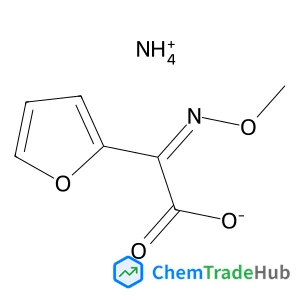
Ammonium (Z)-2-(furan-2-yl)-2-(methoxyimino)acetate
CAS Number:
97148-39-5
Molecular Formula:
C7H10N2O4
Recommended Suppliers







Disclaimer
This page provides academic journal information for reference and research purposes only. We are not affiliated with any journal publishers and do not handle publication submissions. For publication-related inquiries, please contact the respective journal publishers directly.
If you notice any inaccuracies in the information displayed, please contact us at support@chemtradehub.com. We will promptly review and address your concerns.