












A domino annulation approach to 3,4-diacylpyrrolo[1,2-a]pyrazines: decoration of pyrazine units
Literature Information
Publication Date
2020-04-07
DOI
10.1039/D0OB00444H
Impact Factor
3.876
Authors
Anuradha Dagar, Yohan Seo, Ikyon Kim
View Original
Abstract
A new one-pot, sequential three-component access to 3,4-diacylpyrrolo[1,2-a]pyrazine was achieved from the reaction of an α-haloketone, azide, and N-substituted pyrrole-2-carboxaldehyde under mild reaction conditions, through which a polysubstitution pattern on the pyrazine moiety of the scaffold was realized. The formation of multiple bonds (one C–C and two C–N) was enabled by this domino process involving the in situ generation of α-iminoketones, intermolecular Mannich reaction, intramolecular imine formation, and aromatization. Construction of the relevant 3,4-diacylpyrazino[1,2-a]indole and further expansion of this chemical space via synthetic elaboration of the resulting products were demonstrated as well. Preliminary biological screening of the synthesized derivatives against oral adenosquamous carcinoma cells (CAL-27) and triple negative human breast cancer cells (MDA-MB-231) led us to identify a potent hit compound (7o) having ∼3 times stronger in vitro anticancer activity than that of the anticancer agent, capecitabine.
Related Literature
Facile construction of functionalized 4H-chromenevia tandem benzylation and cyclization
Jinmin Fan, Zhiyong Wang
2008-09-17
Communication
DOI: 10.1039/B812046C
Molecularly imprinted cavities template the macrocyclization of tetrapeptides
Dar-Fu Tai, Yee-Fung Lin
2008-09-29
Communication
DOI: 10.1039/B813439A
Molecular tectonics: control of pore size and polarity in 3-D hexagonal coordination networks based on porphyrins and a zinc cation
Elisabeth Kühn, Véronique Bulach, Mir Wais Hosseini
2008-09-24
Communication
DOI: 10.1039/B812831F
A two-step spin crossover mononuclear iron(ii) complex with a [HS–LS–LS] intermediate phase
Sylvestre Bonnet, Maxime A. Siegler, José Sánchez Costa, Gábor Molnár, Azzedine Bousseksou, Anthony L. Spek, Patrick Gamez, Jan Reedijk
2008-09-29
Communication
DOI: 10.1039/B811746B
4-(Pyridin-2-yl)thiazol-2-yl thioglycosides as bidentate ligands for oligosaccharide synthesisvia temporary deactivation
Papapida Pornsuriyasak, Nigam P. Rath, Alexei V. Demchenko
2008-10-01
Communication
DOI: 10.1039/B810569C
An enzymatic kinetics investigation into the significantly enhanced activity of functionalized gold nanoparticles
Chung-Shu Wu, Chia-Tien Wu, Yuh-Shyong Yang, Fu-Hsiang Ko
2008-09-17
Communication
DOI: 10.1039/B810889G
Highly enantioselective carbon–carbon bond formation by Cu-catalyzed asymmetric [2,3]-sigmatropic rearrangement: application to the syntheses of seven-membered oxacycles and six-membered carbocycles
Gullapalli Kumaraswamy, Kadivendi Sadaiah, Duggirala Subrahmanya Ramakrishna, Naresh Police, Balasubramanian Sridhar, Jagadeesh Bharatam
2008-09-17
Communication
DOI: 10.1039/B810770J
Crystallographic characterization and identification of a minor isomer of C84fullerene
Lars Epple, Konstantin Amsharov, Kalin Simeonov, Ina Dix, Martin Jansen
2008-09-26
Communication
DOI: 10.1039/B811872H
You might also like
Compound Q&A
What regulatory guidelines apply to 6-Bromo-2-methylimidazo[1,2-a]pyrimidine (CAS: 1111638-05-1)?
6-Bromo-2-methylimidazo[1,2-a]pyrimidine (CAS: 1111638-05-1) falls under various...
1111638-05-16-Bromo-2-methylimid...
Compound Q&A
Are there alternatives to 1-Pyrrolidineethanol, β-methyl-α-phenyl-, (αS,βR) (CAS: 123620-80-4) in synthesis?
While there are no direct alternatives, similar compounds like 1-Pyrrolidineetha...
123620-80-41-Pyrrolidineethanol...
Compound Q&A
Is 4-Methyl-2,6-bis(2-methyl-2-propanyl)phenyl methylcarbamate (CAS: 1918-11-2) safe?
4-Methyl-2,6-bis(2-methyl-2-propanyl)phenyl methylcarbamate (CAS: 1918-11-2) is ...
1918-11-24-Methyl-2,6-bis(2-m...
Compound Q&A
How should 2-(3-Bromo-4-fluorophenyl)-1,3-dioxolane (CAS: 77771-04-1) be stored?
2-(3-Bromo-4-fluorophenyl)-1,3-dioxolane (CAS: 77771-04-1) should be stored in a...
77771-04-12-(3-Bromo-4-fluorop...
Compound Q&A
What are the physical and chemical properties of 4,5,6,7-Tetrahydro-1H-indazole hydrochloride (CAS: 18161-11-0)?
4,5,6,7-Tetrahydro-1H-indazole hydrochloride is a white crystalline solid with a...
18161-11-04,5,6,7-Tetrahydro-1...
Compound Q&A
What is (2R)-1-Methoxy-3-phenyl-2-propanamine (CAS: 59919-07-2)?
(2R)-1-Methoxy-3-phenyl-2-propanamine is a chiral organic compound with the CAS ...
59919-07-2(2R)-1-Methoxy-3-phe...
Compound Q&A
What industries use Ethyl 1-(1-phenylethyl)-1H-imidazole-5-carboxylate (CAS: 56649-47-9)?
Ethyl 1-(1-phenylethyl)-1H-imidazole-5-carboxylate is used in various industries...
56649-47-9Ethyl 1-(1-phenyleth...
Compound Q&A
What regulatory guidelines apply to 4-[(1E,3S)-1-(4-Hydroxyphenyl)-1,4-pentadien-3-yl]phenol (CAS: 17676-24-3)?
4-[(1E,3S)-1-(4-Hydroxyphenyl)-1,4-pentadien-3-yl]phenol (CAS: 17676-24-3) falls...
17676-24-34-[(1E,3S)-1-(4-Hydr...
Compound Q&A
What industries use (S)-3-Amino-5-phenylpentanoic acid hydrochloride (CAS: 331846-97-0)?
(S)-3-Amino-5-phenylpentanoic acid hydrochloride is primarily used in the pharma...
331846-97-0(S)-3-Amino-5-phenyl...
Compound Q&A
How is 7-methoxy-1-benzothiophene-2-carboxylic acid (CAS: 88791-07-5) typically synthesized?
7-Methoxy-1-benzothiophene-2-carboxylic acid is typically synthesized by reactin...
88791-07-57-methoxy-1-benzothi...
Source Journal
Organic & Biomolecular Chemistry

CiteScore:
3.4
Self-citation Rate:
10.3%
Articles per Year:
1041
Organic & Biomolecular Chemistry (OBC) publishes original and high impact research and reviews in organic chemistry. We welcome research that shows new or significantly improved protocols or methodologies in total synthesis, synthetic methodology or physical and theoretical organic chemistry as well as research that shows a significant advance in the organic chemistry or molecular design aspects of chemical biology, catalysis, supramolecular and macromolecular chemistry, theoretical chemistry, mechanism-oriented physical organic chemistry, medicinal chemistry or natural products. Articles published in the journal should report new work which makes a highly-significant impact in the field. Routine and incremental work is generally not suitable for publication in the journal. More details about key areas of our scope are below. In all cases authors should include in their article clear rationale for why their research has been carried out.
Recommended Compounds
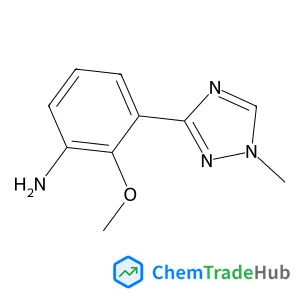
2-Methoxy-3-(1-methyl-1H-1,2,4-triazol-3-yl)aniline
CAS Number:
1609394-10-6
Molecular Formula:
C10H12N4O
![(3aS,6aS)-1-Methyloctahydropyrrolo[3,4-b]pyrrole structure](https://static.chemtradehub.com/structs/877/877212-98-1-9157.webp "(3aS,6aS)-1-Methyloctahydropyrrolo[3,4-b]pyrrole structure")
Recommended Suppliers





Disclaimer
This page provides academic journal information for reference and research purposes only. We are not affiliated with any journal publishers and do not handle publication submissions. For publication-related inquiries, please contact the respective journal publishers directly.
If you notice any inaccuracies in the information displayed, please contact us at support@chemtradehub.com. We will promptly review and address your concerns.