












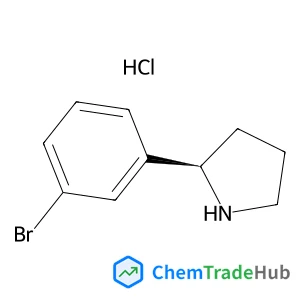
(2R)-2-(3-Bromophenyl)pyrrolidine hydrochloride (1:1)
CAS Number:
1391550-13-2
Molecular Formula:
C10H13BrClN
Chandrima Jash, Pritha Basu, Pavan V. Payghan, Nanda Ghoshal, Gopinatha Suresh Kumar
The binding of the iminium and alkanolamine forms of chelerythrine to lysozyme (Lyz) was investigated by spectroscopy and docking studies. The thermodynamics of the binding was studied by calorimetry. Spectroscopic evidence suggested that Trp-62 and Trp-63 in the β-domain of the protein are closer to the binding site; moreover, the binding site was at a distance of 2.27 and 2.00 nm from the iminium and alkanolamine forms, respectively, according to the Forster theory of non-radiation energy transfer. The equilibrium binding constants for the iminium and alkanolamine forms at 298 K were evaluated to be 1.29 × 10⁵ and 7.79 × 10⁵ M−1, respectively. The binding resulted in an alteration of the secondary structure of the protein with a distinct reduction of the helical organization. The binding of iminium was endothermic, involving electrostatic and hydrophobic interactions, while that of alkanolamine form was exothermic and dominated by hydrogen bonding interactions. Docking studies provided the atomistic details pertaining to the binding of both forms of chelerythrine and supported the higher binding in favour of the alkanolamine over the iminium. Furthermore, molecular dynamics study provided accurate insights regarding the binding of both chelerythrine forms in accordance with the experimental results obtained. Chelerythrine binding pocket involves the catalytic region and aggregation prone K-peptide region, which are sandwiched between one another. Overall, these results suggest that both the forms of the alkaloid bind to the protein but the neutral form has higher affinity than the cationic form.
Ryuta Shioi, Lu Xiao, Sayantan Chatterjee
DOI: 10.1039/D3SC03067A
Sungwoon Lee, Liyan Bi, Hao Chen, Dong Lin, Rongchao Mei, Yixuan Wu, Sang-Woo Joo, Jaebum Choo
DOI: 10.1039/D3CS00709J
Hong Zhang, Lin Fu, Wenli Zhang, Yupeng Yuan
DOI: 10.1039/D3SC04853E
Huashuai Hu, Xiaoli Wang, J. Paul Attfield, Minghui Yang
DOI: 10.1039/D3CS00717K
Vincent Ming-Yau Leung, Hong-Chai Fabio Wong, Chun-Man Pook, Ying-Lung Steve Tse, Ying-Yeung Yeung
DOI: 10.1039/D3SC03081D
Xinke Kong, Lin Ru, Junjun Ge, Yalei Deng, Pan-ke Zhang, Yuanyuan Wang
DOI: 10.1039/D3SC04296K
Yonghua Liu
DOI: 10.1039/D3SC04688E
Waste containing 6-Chloro-5-(2'-hydroxy-3'-methoxy-4-biphenylyl)-3-(3-methoxyphe...
(3alpha,5alpha)-3-Hydroxypregnane-11,20-dione is primarily used in the pharmaceu...
The market for 4-Amino-6-chloro-2-pyridinecarboxylic acid (CAS: 546141-56-4) is ...
Alternatives to (2-Benzoylethyl)trimethylammonium chloride (CAS: 24472-88-6) in ...
N-[4-Nitro-3-(trifluoromethyl)phenyl]acetamide (CAS: 393-12-4) is generally safe...
Alternative reagents such as other phosphates or similar functional groups can b...
There are alternatives to N,N'-Bis(3-aminopropyl)-1,3-propanediamine (CAS: 4605-...
When handling Aluminium trihexadecanoate, it is important to use appropriate per...
(1,1-Dioxido-3-oxo-1,2-benzothiazol-2(3H)-yl)acetic acid is a chemical compound ...
Several alternatives to 5,5-dimethyloxolan-2-one (CAS: 3123-97-5) can be used in...

Physical Chemistry Chemical Physics (PCCP) is an international journal co-owned by 19 physical chemistry and physics societies from around the world. This journal publishes original, cutting-edge research in physical chemistry, chemical physics and biophysical chemistry. To be suitable for publication in PCCP, articles must include significant innovation and/or insight into physical chemistry; this is the most important criterion that reviewers and Editors will judge against when evaluating submissions. The journal has a broad scope and welcomes contributions spanning experiment, theory, computation and data science. Topical coverage includes spectroscopy, dynamics, kinetics, statistical mechanics, thermodynamics, electrochemistry, catalysis, surface science, quantum mechanics, quantum computing and machine learning. Interdisciplinary research areas such as polymers and soft matter, materials, nanoscience, energy, surfaces/interfaces, and biophysical chemistry are welcomed if they demonstrate significant innovation and/or insight into physical chemistry. Joined experimental/theoretical studies are particularly appreciated when complementary and based on up-to-date approaches.
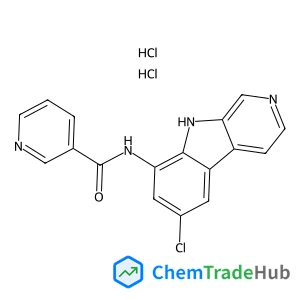
![5'-Fluoro-[2,3'-biindolinylidene]-2',3-dione structure](https://static.chemtradehub.com/structs/251/251903-00-1-9cb1.webp "5'-Fluoro-[2,3'-biindolinylidene]-2',3-dione structure")
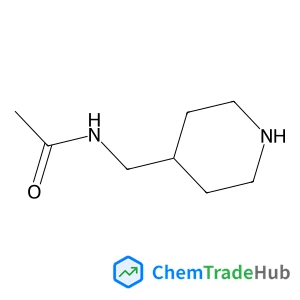
![1-(1-Benzyl-1,2,3,6-tetrahydropyridin-4-yl)-1H-benzo[d]imidazol-2(3H)-one structure](https://static.chemtradehub.com/structs/603/60373-71-9-7dfb.webp "1-(1-Benzyl-1,2,3,6-tetrahydropyridin-4-yl)-1H-benzo[d]imidazol-2(3H)-one structure")



