












Twice as smart behavior of tert-butylthiacalix[4]arene derivative in glassy and crystalline form
Literature Information
Publication Date
2015-05-12
DOI
10.1039/C5CP02042E
Impact Factor
3.676
Authors
K. V. Gataullina, M. A. Ziganshin, I. I. Stoikov, A. T. Gubaidullin, V. V. Gorbatchuk
View Original
Abstract
A studied tert-butylthiacalix[4]arene derivative with four N-(2-acetoxyethyl)carbamoylmethoxy substituents on its lower rim in partial-cone configuration (calixarene 1) can remember its previous treatment in three essentially different ways by the formation either of a molecular glass or two metastable polymorphs after heating or the removal of an included guest molecule. Guest-induced memory is very selective with a polymorph created only after the release of a few included guests among a large series of those studied and is detected via an exothermic transition. Along with ordinary properties, like glass transition, curing and cold crystallization, the molecular glass from 1 is selective due to its ability to crystallize in solvent vapors and vapor mixtures over a well-defined concentration range. Being cooperative, this property may be used for the visual detection of ethanol content in water solution when it reaches a threshold value.
Related Literature
Cyclic voltammetry and chronoamperometry: mechanistic tools for organic electrosynthesis
Mohammad Rafiee, Dylan J. Abrams, Luana Cardinale, Zachary Goss, Shannon S. Stahl
2023-12-05
Tutorial Review
DOI: 10.1039/D2CS00706A
Photoinduced asymmetric charge trapping in a symmetric tetraazapyrene-fused bis(tetrathiafulvalene) conjugate
Ping Zhou, Maryam Nazari Haghighi Pashaki, Hans-Martin Frey, Andreas Hauser, Silvio Decurtins, Andrea Cannizzo, Thomas Feurer, Robert Häner, Shi-Xia Liu
2023-10-25
Edge Article
DOI: 10.1039/D3SC03184E
A proxy for oxygen storage capacity from high-throughput screening and automated data analysis
Jack J. Quayle, Alexandros P. Katsoulidis, John B. Claridge, Andrew P. E. York, David Thompsett, Matthew J. Rosseinsky
2023-10-23
Edge Article
DOI: 10.1039/D3SC03558A
Hybrid classical/machine-learning force fields for the accurate description of molecular condensed-phase systems
Moritz Thürlemann, Sereina Riniker
2023-10-31
Edge Article
DOI: 10.1039/D3SC04317G
Photoswitchable and long-lived seven-membered cyclic singlet diradicals for the bioorthogonal photoclick reaction
Fuqiang Hu, Cefei Zhang, Zhihao Liu, Xinyu Xie, Xiaohu Zhao, Yanju Luo, Jielin Fu, Baolin Li, Changwei Hu, Zhishan Su, Zhipeng Yu
2023-11-02
Edge Article
DOI: 10.1039/D3SC03675H
Benzoyldiisopropylchlorosilane: a visible light photocleavable alcohol protecting group
Florian Lind, Kirill Markelov, Armido Studer
2023-10-25
Edge Article
DOI: 10.1039/D3SC04975B
You might also like
Compound Q&A
How should waste containing 6-Chloro-5-(2'-hydroxy-3'-methoxy-4-biphenylyl)-3-(3-methoxyphenyl)-1H-pyrrolo[3,2-d]pyrimidine-2,4(3H,5H)-dione (CAS: 1346607-05-3) be handled?
Waste containing 6-Chloro-5-(2'-hydroxy-3'-methoxy-4-biphenylyl)-3-(3-methoxyphe...
1346607-05-36-Chloro-5-(2'-hydro...
Compound Q&A
What are the main uses of (3alpha,5alpha)-3-Hydroxypregnane-11,20-dione (CAS: 23930-19-0)?
(3alpha,5alpha)-3-Hydroxypregnane-11,20-dione is primarily used in the pharmaceu...
23930-19-0(3alpha,5alpha)-3-Hy...
Compound Q&A
What is the market or research trend for 4-Amino-6-chloro-2-pyridinecarboxylic acid (CAS: 546141-56-4)?
The market for 4-Amino-6-chloro-2-pyridinecarboxylic acid (CAS: 546141-56-4) is ...
546141-56-44-Amino-6-chloro-2-p...
Compound Q&A
Are there alternatives to (2-Benzoylethyl)trimethylammonium chloride (CAS: 24472-88-6) in synthesis?
Alternatives to (2-Benzoylethyl)trimethylammonium chloride (CAS: 24472-88-6) in ...
24472-88-6(2-Benzoylethyl)trim...
Compound Q&A
Is N-[4-Nitro-3-(trifluoromethyl)phenyl]acetamide (CAS: 393-12-4) safe?
N-[4-Nitro-3-(trifluoromethyl)phenyl]acetamide (CAS: 393-12-4) is generally safe...
393-12-4N-[4-Nitro-3-(triflu...
Compound Q&A
Are there alternatives to [(4R,5R,6S)-5-hydroxy-10-imino-3,7-dioxa-1,9-diazatricyclo[6.4.0.02,6]dodeca-8,11-dien-4-yl]methyl dihydrogen phosphate (CAS: 39679-56-6) in synthesis?
Alternative reagents such as other phosphates or similar functional groups can b...
39679-56-6[(4R,5R,6S)-5-hydrox...
Compound Q&A
Are there alternatives to N,N'-Bis(3-aminopropyl)-1,3-propanediamine (CAS: 4605-14-5) in synthesis?
There are alternatives to N,N'-Bis(3-aminopropyl)-1,3-propanediamine (CAS: 4605-...
4605-14-5N,N'-Bis(3-aminoprop...
Compound Q&A
What precautions should be taken when handling Aluminium trihexadecanoate (CAS: 555-35-1)?
When handling Aluminium trihexadecanoate, it is important to use appropriate per...
555-35-1Aluminium trihexadec...
Compound Q&A
What is (1,1-Dioxido-3-oxo-1,2-benzothiazol-2(3H)-yl)acetic acid (CAS: 52188-11-1)?
(1,1-Dioxido-3-oxo-1,2-benzothiazol-2(3H)-yl)acetic acid is a chemical compound ...
52188-11-1(1,1-Dioxido-3-oxo-1...
Compound Q&A
Are there alternatives to 5,5-dimethyloxolan-2-one (CAS: 3123-97-5) in synthesis?
Several alternatives to 5,5-dimethyloxolan-2-one (CAS: 3123-97-5) can be used in...
3123-97-55,5-dimethyloxolan-2...
Source Journal
Physical Chemistry Chemical Physics

CiteScore:
5.5
Self-citation Rate:
10.3%
Articles per Year:
3036
Physical Chemistry Chemical Physics (PCCP) is an international journal co-owned by 19 physical chemistry and physics societies from around the world. This journal publishes original, cutting-edge research in physical chemistry, chemical physics and biophysical chemistry. To be suitable for publication in PCCP, articles must include significant innovation and/or insight into physical chemistry; this is the most important criterion that reviewers and Editors will judge against when evaluating submissions. The journal has a broad scope and welcomes contributions spanning experiment, theory, computation and data science. Topical coverage includes spectroscopy, dynamics, kinetics, statistical mechanics, thermodynamics, electrochemistry, catalysis, surface science, quantum mechanics, quantum computing and machine learning. Interdisciplinary research areas such as polymers and soft matter, materials, nanoscience, energy, surfaces/interfaces, and biophysical chemistry are welcomed if they demonstrate significant innovation and/or insight into physical chemistry. Joined experimental/theoretical studies are particularly appreciated when complementary and based on up-to-date approaches.
Recommended Compounds
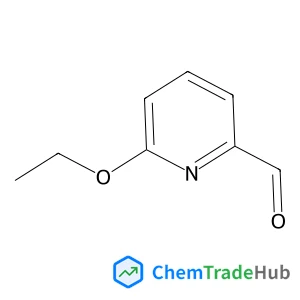
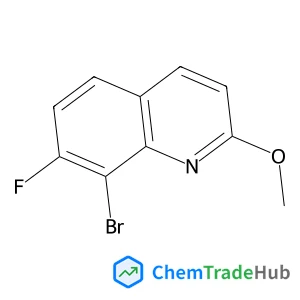
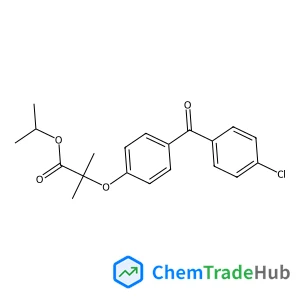

Recommended Suppliers







Disclaimer
This page provides academic journal information for reference and research purposes only. We are not affiliated with any journal publishers and do not handle publication submissions. For publication-related inquiries, please contact the respective journal publishers directly.
If you notice any inaccuracies in the information displayed, please contact us at support@chemtradehub.com. We will promptly review and address your concerns.