












Direct force measurements between silica particles in aqueous solutions of ionic liquids containing 1-butyl-3-methylimidazolium (BMIM)
Literature Information
Publication Date
2015-06-01
DOI
10.1039/C5CP02292D
Impact Factor
3.676
Authors
Valentina Valmacco, Gregor Trefalt, Plinio Maroni, Michal Borkovec
View Original
Abstract
Direct force measurements between silica particles were carried out using the colloidal probe technique, which is based on an atomic force microscope (AFM). The forces were investigated in aqueous solutions of ionic liquids (ILs) containing 1-butyl-3-methylimidazolium (BMIM) cations and chloride, dicyanamide, and thiocyanate as anions up to concentrations of about 1 M. The results were compared with the simple electrolyte KCl. ILs behave similar to the simple electrolyte at low concentrations, as the ILs dissociate fully into ions, and they lead to repulsive double layer forces. At higher concentrations, attractive van der Waals forces set in, but they are enhanced in the presence of ILs by additional attractive force, whose strength depends on the type of IL. This additional attraction probably originates from the interaction of adsorbed IL layers.
Recommended Journals
Related Literature
A proxy for oxygen storage capacity from high-throughput screening and automated data analysis
Jack J. Quayle, Alexandros P. Katsoulidis, John B. Claridge, Andrew P. E. York, David Thompsett, Matthew J. Rosseinsky
2023-10-23
Edge Article
DOI: 10.1039/D3SC03558A
Nanoscale engineering of solid-state materials for boosting hydrogen storage
Yudong Xue
2023-12-19
Review Article
DOI: 10.1039/D3CS00706E
Covalent inorganic complexes enabled zinc blende to wurtzite phase changes in CdSe nanoplatelets
Xinke Kong, Lin Ru, Junjun Ge, Yalei Deng, Pan-ke Zhang, Yuanyuan Wang
2023-11-08
Edge Article
DOI: 10.1039/D3SC04296K
Bioorthogonal chemistry for prodrug activation in vivo
Siyong Shen, Pengwei Sun, Zhi Gu, Yifei Bai, Xianglin Wang
2023-10-31
Review Article
DOI: 10.1039/D2CS00889K
Single atom catalyst-mediated generation of reactive species in water treatment
Virender K. Sharma, Xingmao Ma
2023-10-19
Tutorial Review
DOI: 10.1039/D3CS00627A
Template-assisted synthesis of isomeric copper(i) clusters with tunable structures showing photophysical and electrochemical properties
Jun-Jie Fang, Zheng Liu, Yang-Lin Shen, Yun-Peng Xie, Xing Lu
2023-10-13
Edge Article
DOI: 10.1039/D3SC04682F
Benzoyldiisopropylchlorosilane: a visible light photocleavable alcohol protecting group
Florian Lind, Kirill Markelov, Armido Studer
2023-10-25
Edge Article
DOI: 10.1039/D3SC04975B
Nucleic acid degradation as barrier to gene delivery: a guide to understand and overcome nuclease activity
2023-12-11
Review Article
DOI: 10.1039/D3CS00194F
Trialkylphosphonium oxoborates as C(sp3)–H oxyanion holes and their application in catalytic chemoselective acetalization
Vincent Ming-Yau Leung, Hong-Chai Fabio Wong, Chun-Man Pook, Ying-Lung Steve Tse, Ying-Yeung Yeung
2023-10-20
Edge Article
DOI: 10.1039/D3SC03081D
You might also like
Compound Q&A
How should waste containing 6-Chloro-5-(2'-hydroxy-3'-methoxy-4-biphenylyl)-3-(3-methoxyphenyl)-1H-pyrrolo[3,2-d]pyrimidine-2,4(3H,5H)-dione (CAS: 1346607-05-3) be handled?
Waste containing 6-Chloro-5-(2'-hydroxy-3'-methoxy-4-biphenylyl)-3-(3-methoxyphe...
1346607-05-36-Chloro-5-(2'-hydro...
Compound Q&A
What are the main uses of (3alpha,5alpha)-3-Hydroxypregnane-11,20-dione (CAS: 23930-19-0)?
(3alpha,5alpha)-3-Hydroxypregnane-11,20-dione is primarily used in the pharmaceu...
23930-19-0(3alpha,5alpha)-3-Hy...
Compound Q&A
What is the market or research trend for 4-Amino-6-chloro-2-pyridinecarboxylic acid (CAS: 546141-56-4)?
The market for 4-Amino-6-chloro-2-pyridinecarboxylic acid (CAS: 546141-56-4) is ...
546141-56-44-Amino-6-chloro-2-p...
Compound Q&A
Are there alternatives to (2-Benzoylethyl)trimethylammonium chloride (CAS: 24472-88-6) in synthesis?
Alternatives to (2-Benzoylethyl)trimethylammonium chloride (CAS: 24472-88-6) in ...
24472-88-6(2-Benzoylethyl)trim...
Compound Q&A
Is N-[4-Nitro-3-(trifluoromethyl)phenyl]acetamide (CAS: 393-12-4) safe?
N-[4-Nitro-3-(trifluoromethyl)phenyl]acetamide (CAS: 393-12-4) is generally safe...
393-12-4N-[4-Nitro-3-(triflu...
Compound Q&A
Are there alternatives to [(4R,5R,6S)-5-hydroxy-10-imino-3,7-dioxa-1,9-diazatricyclo[6.4.0.02,6]dodeca-8,11-dien-4-yl]methyl dihydrogen phosphate (CAS: 39679-56-6) in synthesis?
Alternative reagents such as other phosphates or similar functional groups can b...
39679-56-6[(4R,5R,6S)-5-hydrox...
Compound Q&A
Are there alternatives to N,N'-Bis(3-aminopropyl)-1,3-propanediamine (CAS: 4605-14-5) in synthesis?
There are alternatives to N,N'-Bis(3-aminopropyl)-1,3-propanediamine (CAS: 4605-...
4605-14-5N,N'-Bis(3-aminoprop...
Compound Q&A
What precautions should be taken when handling Aluminium trihexadecanoate (CAS: 555-35-1)?
When handling Aluminium trihexadecanoate, it is important to use appropriate per...
555-35-1Aluminium trihexadec...
Compound Q&A
What is (1,1-Dioxido-3-oxo-1,2-benzothiazol-2(3H)-yl)acetic acid (CAS: 52188-11-1)?
(1,1-Dioxido-3-oxo-1,2-benzothiazol-2(3H)-yl)acetic acid is a chemical compound ...
52188-11-1(1,1-Dioxido-3-oxo-1...
Compound Q&A
Are there alternatives to 5,5-dimethyloxolan-2-one (CAS: 3123-97-5) in synthesis?
Several alternatives to 5,5-dimethyloxolan-2-one (CAS: 3123-97-5) can be used in...
3123-97-55,5-dimethyloxolan-2...
Source Journal
Physical Chemistry Chemical Physics

CiteScore:
5.5
Self-citation Rate:
10.3%
Articles per Year:
3036
Physical Chemistry Chemical Physics (PCCP) is an international journal co-owned by 19 physical chemistry and physics societies from around the world. This journal publishes original, cutting-edge research in physical chemistry, chemical physics and biophysical chemistry. To be suitable for publication in PCCP, articles must include significant innovation and/or insight into physical chemistry; this is the most important criterion that reviewers and Editors will judge against when evaluating submissions. The journal has a broad scope and welcomes contributions spanning experiment, theory, computation and data science. Topical coverage includes spectroscopy, dynamics, kinetics, statistical mechanics, thermodynamics, electrochemistry, catalysis, surface science, quantum mechanics, quantum computing and machine learning. Interdisciplinary research areas such as polymers and soft matter, materials, nanoscience, energy, surfaces/interfaces, and biophysical chemistry are welcomed if they demonstrate significant innovation and/or insight into physical chemistry. Joined experimental/theoretical studies are particularly appreciated when complementary and based on up-to-date approaches.
Recommended Compounds
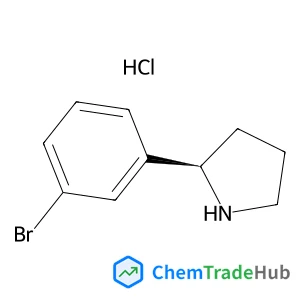
(2R)-2-(3-Bromophenyl)pyrrolidine hydrochloride (1:1)
CAS Number:
1391550-13-2
Molecular Formula:
C10H13BrClN
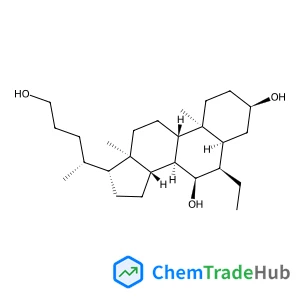
(3alpha,5beta,6alpha,7alpha)-6-Ethylcholane-3,7,24-triol
CAS Number:
1537866-49-1
Molecular Formula:
C26H46O3
Recommended Suppliers





Disclaimer
This page provides academic journal information for reference and research purposes only. We are not affiliated with any journal publishers and do not handle publication submissions. For publication-related inquiries, please contact the respective journal publishers directly.
If you notice any inaccuracies in the information displayed, please contact us at support@chemtradehub.com. We will promptly review and address your concerns.