












A simple strategy to overcome concentration dependence of photoswitching properties in donor–acceptor Stenhouse adducts
Literature Information
Publication Date
2021-01-13
DOI
10.1039/D0CP06312F
Impact Factor
3.676
Authors
Sean W. Connolly, Simon J. Holder, Helena J. Shepherd
View Original
Abstract
Photoswitchable donor–acceptor Stenhouse adducts (DASAs) have been reported to exhibit an undesirable concentration dependence, where photoswitching is greatly inhibited with increasing photochrome concentration. Here we show that the use of piperazine-based donor moieties eliminates this concentration dependence and results in complete, rapid and reversible photoswitching behaviour for first generation DASAs, even in chlorinated solvents. Structural data and computational studies reveal proton transfer during isomerisation to the terminal amine rather than the donor amine. The improvement in photoswitching efficiency is attributed to resultant differences in supramolecular association.
Related Literature
Reversible photochromism of a ferrocenylazobenzene monolayer controllable by a single green light source
Kosuke Namiki, Aiko Sakamoto, Masaki Murata, Shoko Kume, Hiroshi Nishihara
2007-10-16
Communication
DOI: 10.1039/B713107K
Regioselectivity and enantioselectivity in nickel-catalysed reductive coupling reactions of alkynes
Ryan M. Moslin, Karen Miller-Moslin, Timothy F. Jamison
2007-07-03
Feature Article
DOI: 10.1039/B707737H
Low-temperature PROX (preferential oxidation) on novel CeO2-supported Cu-cluster catalysts under fuel-cell operating conditions
Mizuki Tada, Rajaram Bal, Xindong Mu, Rudy Coquet, Seitaro Namba, Yasuhiro Iwasawa
2007-08-31
Communication
DOI: 10.1039/B709176A
Controlling energy and charge transfer in linear chlorophyll dimers
Richard F. Kelley, Michael J. Tauber, Thea M. Wilson, Michael R. Wasielewski
2007-08-14
Communication
DOI: 10.1039/B708318A
Formation of cage-like hollow spherical silicavia a mesoporous structure by calcination of lysozyme–silica hybrid particles
Tatsuo Tsunoda, Akiko Kawai, Fujio Mizukami, Kengo Sakaguchi
2007-08-21
Communication
DOI: 10.1039/B709534A
Fluorescent CXCR4 chemokine receptor antagonists: metal activated binding
Abid Khan, Jon D. Silversides, Leigh Madden, John Greenman, Stephen J. Archibald
2006-12-04
Communication
DOI: 10.1039/B614557D
Cobalt-catalyzed intermolecular C–H amination with bromamine-T as nitrene source
Jeremiah D. Harden, Joshua V. Ruppel, Guang-Yao Gao, X. Peter Zhang
2007-09-03
Communication
DOI: 10.1039/B710677G
Protein micropatterning based on electrochemically switched immobilization of bioligand on electropolymerized film of a dually electroactive monomer
Kyuwon Kim, Jaeyang Hwang, Inwoong Seo, Tae Hwan Youn, Juhyoun Kwak
2006-09-28
Communication
DOI: 10.1039/B609491K
Preparation and photoactivity of nanostructured anatase, rutile and brookite TiO2 thin films
Maurizio Addamo, Marianna Bellardita, Agatino Di Paola, Leonardo Palmisano
2006-10-06
Communication
DOI: 10.1039/B612172A
Parallel sheet structure in cyclopropane γ-peptides stabilized by C–H⋯O hydrogen bonds
M. Khurram N. Qureshi, Martin D. Smith
2006-11-06
Communication
DOI: 10.1039/B611882H
You might also like
Compound Q&A
How is Ethyl 4-chlorothieno[2,3-b]pyridine-5-carboxylate (CAS: 59713-58-5) typically synthesized?
Ethyl 4-chlorothieno[2,3-b]pyridine-5-carboxylate (CAS: 59713-58-5) can be synth...
59713-58-5Ethyl 4-chlorothieno...
Compound Q&A
What regulatory guidelines apply to 5-Methyl-1H-indole-3-carbaldehyde (CAS: 52562-50-2)?
5-Methyl-1H-indole-3-carbaldehyde (CAS: 52562-50-2) is subject to various regula...
52562-50-25-Methyl-1H-indole-3...
Compound Q&A
What are the physical and chemical properties of (1,3-Dimethyl-2,4-dioxo-1,2,3,4-tetrahydro-5-pyrimidinyl)boronic acid (CAS: 223418-73-3)?
(1,3-Dimethyl-2,4-dioxo-1,2,3,4-tetrahydro-5-pyrimidinyl)boronic acid is a white...
223418-73-3(1,3-Dimethyl-2,4-di...
Compound Q&A
How should waste containing Sulfocostunolide A (CAS: 1016983-51-9) be handled?
Waste containing Sulfocostunolide A (CAS: 1016983-51-9) should be handled with c...
1016983-51-9Sulfocostunolide A
Compound Q&A
What precautions should be taken when handling Murraxocin (CAS: 88478-44-8)?
When handling Murraxocin (CAS: 88478-44-8), ensure proper personal protective eq...
88478-44-8Murraxocin
Compound Q&A
What are the physical and chemical properties of Formvar (CAS: 63148-64-1)?
Formvar (CAS: 63148-64-1) is an alkyd resin characterized by a high molecular we...
63148-64-1Formvar(R)
Compound Q&A
Is (S)-4-benzyl-2-((benzyloxy)methyl)morpholine (CAS: 205242-66-6) safe?
(S)-4-benzyl-2-((benzyloxy)methyl)morpholine is generally safe when handled with...
205242-66-6(S)-4-benzyl-2-((ben...
Compound Q&A
What industries use Methyl 1-(5-bromo-2-pyrimidinyl)cyclopropanecarboxylate (CAS: 1447607-69-3)?
Methyl 1-(5-bromo-2-pyrimidinyl)cyclopropanecarboxylate (CAS: 1447607-69-3) is p...
1447607-69-3Methyl 1-(5-bromo-2-...
Compound Q&A
Is 2-Methyl-1-phenyl-1-propanamine hydrochloride (CAS: 24290-47-9) safe?
2-Methyl-1-phenyl-1-propanamine hydrochloride (CAS: 24290-47-9) is generally con...
24290-47-92-Methyl-1-phenyl-1-...
Compound Q&A
How is 3-(4-Bromophenyl)-2-methylpropanoic acid (CAS: 66735-01-1) typically synthesized?
3-(4-Bromophenyl)-2-methylpropanoic acid is synthesized through a multi-step pro...
66735-01-13-(4-Bromophenyl)-2-...
Source Journal
Physical Chemistry Chemical Physics

CiteScore:
5.5
Self-citation Rate:
10.3%
Articles per Year:
3036
Physical Chemistry Chemical Physics (PCCP) is an international journal co-owned by 19 physical chemistry and physics societies from around the world. This journal publishes original, cutting-edge research in physical chemistry, chemical physics and biophysical chemistry. To be suitable for publication in PCCP, articles must include significant innovation and/or insight into physical chemistry; this is the most important criterion that reviewers and Editors will judge against when evaluating submissions. The journal has a broad scope and welcomes contributions spanning experiment, theory, computation and data science. Topical coverage includes spectroscopy, dynamics, kinetics, statistical mechanics, thermodynamics, electrochemistry, catalysis, surface science, quantum mechanics, quantum computing and machine learning. Interdisciplinary research areas such as polymers and soft matter, materials, nanoscience, energy, surfaces/interfaces, and biophysical chemistry are welcomed if they demonstrate significant innovation and/or insight into physical chemistry. Joined experimental/theoretical studies are particularly appreciated when complementary and based on up-to-date approaches.
Recommended Compounds
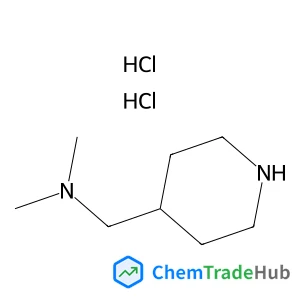
N,N-dimethyl(piperidin-4-yl)methanamine hydrochloride
CAS Number:
172281-72-0
Molecular Formula:
C8H20Cl2N2
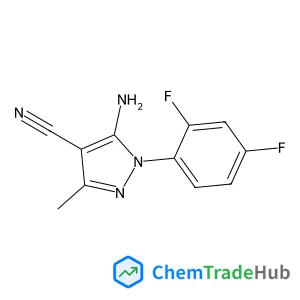
5-Amino-1-(2,4-difluorophenyl)-3-methyl-1H-pyrazole-4-carbonitrile
CAS Number:
1020057-92-4
Molecular Formula:
C11H8F2N4
Recommended Suppliers





Disclaimer
This page provides academic journal information for reference and research purposes only. We are not affiliated with any journal publishers and do not handle publication submissions. For publication-related inquiries, please contact the respective journal publishers directly.
If you notice any inaccuracies in the information displayed, please contact us at support@chemtradehub.com. We will promptly review and address your concerns.