












Aqueous-phase fates of α-alkoxyalkyl-hydroperoxides derived from the reactions of Criegee intermediates with alcohols
Literature Information
Publication Date
2021-02-03
DOI
10.1039/D0CP06308H
Impact Factor
3.676
Authors
Mingxi Hu, Junting Qiu, Kenichi Tonokura, Shinichi Enami
View Original
Abstract
In the atmosphere, carbonyl oxides known as Criegee intermediates are produced mainly by ozonolysis of volatile organic compounds containing CC double bonds, such as biogenic terpenoids. Criegee intermediates can react with OH-containing species to produce labile organic hydroperoxides (ROOHs) that are taken up into atmospheric condensed phases. Besides water, alcohols are an important reaction partner of Criegee intermediates and can convert them into α-alkoxyalkyl-hydroperoxides (α-AHs), R1R2C(–OOH)(–OR′). Here, we report a study on the aqueous-phase fates of α-AHs derived from ozonolysis of α-terpineol in the presence of methanol, ethanol, 1-propanol, and 2-propanol. The α-terpineol α-AHs and the decomposition products were detected as their chloride adducts by electrospray mass spectrometry as a function of reaction time. Our discovery that the rate of decomposition of α-AHs increased as the pH decreased from 5.9 to 3.8 implied that the decomposition mechanism was catalyzed by H+. The use of isotope solvent experiments revealed that a primary decomposition product of α-AHs in an acidic aqueous solution was a hemiacetal R1R2C(–OH)(–OR′) species that was further transformed into other products such as lactols. The proposed H+-catalyzed decomposition of α-AHs, which provides H2O2 and multifunctional species in ambient aerosol particles, may be faster than other degradation processes (e.g., photolysis by solar radiation).
Related Literature
Inside-outside self-assembly of light-activated fast-release liposomes
Natalie Forbes, Jeong Eun Shin, Maria Ogunyankin, Joseph A. Zasadzinski
2015-02-23
Paper
DOI: 10.1039/C4CP05881J
Towards an accurate and computationally-efficient modelling of Fe(ii)-based spin crossover materials
Maria Fumanal, Jordi Ribas-Arino, Vincent Robert
2015-05-21
Paper
DOI: 10.1039/C5CP02502H
Visible room-temperature phosphorescence of pure organic crystals via a radical-ion-pair mechanism
Shinichi Kuno, Hiroshi Akeno, Hiroyuki Ohtani, Hideya Yuasa
2015-05-13
Paper
DOI: 10.1039/C5CP01203A
Porous one-dimensional Mo2C–amorphous carbon composites: high-efficient and durable electrocatalysts for hydrogen generation
Kai Zhang, Chunyan Li, Yang Zhao, Xianbo Yu, Yujin Chen
2015-05-29
Paper
DOI: 10.1039/C5CP02028J
Anomalous doping effect in black phosphorene using first-principles calculations
Zhili Zhu, Chun-Yao Niu, Chong Li, Yu Jia
2015-05-19
Paper
DOI: 10.1039/C5CP01732G
Photocatalytic reduction of triclosan on Au–Cu2O nanowire arrays as plasmonic photocatalysts under visible light irradiation
Junfeng Niu, Yunrong Dai, Lifeng Yin, Jianying Shang, John C. Crittenden
2015-06-02
Paper
DOI: 10.1039/C5CP02244D
Twice as smart behavior of tert-butylthiacalix[4]arene derivative in glassy and crystalline form
K. V. Gataullina, M. A. Ziganshin, I. I. Stoikov, A. T. Gubaidullin, V. V. Gorbatchuk
2015-05-12
Paper
DOI: 10.1039/C5CP02042E
Correction: Intermolecular network analysis of the liquid and vapor interfaces of pentane and water: microsolvation does not trend with interfacial properties
Yasaman Ghadar, Aurora E. Clark
2015-06-08
Correction
DOI: 10.1039/C5CP90093J
Nanodusty plasma chemistry: a mechanistic and variational transition state theory study of the initial steps of silyl anion–silane and silylene anion–silane polymerization reactions
Junwei Lucas Bao, Prasenjit Seal, Donald G. Truhlar
2015-05-18
Paper
DOI: 10.1039/C5CP01979F
Can inorganic salts tune electronic properties of graphene quantum dots?
Guilherme Colherinhas, Eudes Eterno Fileti, Vitaly V. Chaban
2015-05-29
Paper
DOI: 10.1039/C5CP02083B
You might also like
Compound Q&A
How should waste containing 6-Chloro-5-(2'-hydroxy-3'-methoxy-4-biphenylyl)-3-(3-methoxyphenyl)-1H-pyrrolo[3,2-d]pyrimidine-2,4(3H,5H)-dione (CAS: 1346607-05-3) be handled?
Waste containing 6-Chloro-5-(2'-hydroxy-3'-methoxy-4-biphenylyl)-3-(3-methoxyphe...
1346607-05-36-Chloro-5-(2'-hydro...
Compound Q&A
What are the main uses of (3alpha,5alpha)-3-Hydroxypregnane-11,20-dione (CAS: 23930-19-0)?
(3alpha,5alpha)-3-Hydroxypregnane-11,20-dione is primarily used in the pharmaceu...
23930-19-0(3alpha,5alpha)-3-Hy...
Compound Q&A
What is the market or research trend for 4-Amino-6-chloro-2-pyridinecarboxylic acid (CAS: 546141-56-4)?
The market for 4-Amino-6-chloro-2-pyridinecarboxylic acid (CAS: 546141-56-4) is ...
546141-56-44-Amino-6-chloro-2-p...
Compound Q&A
Are there alternatives to (2-Benzoylethyl)trimethylammonium chloride (CAS: 24472-88-6) in synthesis?
Alternatives to (2-Benzoylethyl)trimethylammonium chloride (CAS: 24472-88-6) in ...
24472-88-6(2-Benzoylethyl)trim...
Compound Q&A
Is N-[4-Nitro-3-(trifluoromethyl)phenyl]acetamide (CAS: 393-12-4) safe?
N-[4-Nitro-3-(trifluoromethyl)phenyl]acetamide (CAS: 393-12-4) is generally safe...
393-12-4N-[4-Nitro-3-(triflu...
Compound Q&A
Are there alternatives to [(4R,5R,6S)-5-hydroxy-10-imino-3,7-dioxa-1,9-diazatricyclo[6.4.0.02,6]dodeca-8,11-dien-4-yl]methyl dihydrogen phosphate (CAS: 39679-56-6) in synthesis?
Alternative reagents such as other phosphates or similar functional groups can b...
39679-56-6[(4R,5R,6S)-5-hydrox...
Compound Q&A
Are there alternatives to N,N'-Bis(3-aminopropyl)-1,3-propanediamine (CAS: 4605-14-5) in synthesis?
There are alternatives to N,N'-Bis(3-aminopropyl)-1,3-propanediamine (CAS: 4605-...
4605-14-5N,N'-Bis(3-aminoprop...
Compound Q&A
What precautions should be taken when handling Aluminium trihexadecanoate (CAS: 555-35-1)?
When handling Aluminium trihexadecanoate, it is important to use appropriate per...
555-35-1Aluminium trihexadec...
Compound Q&A
What is (1,1-Dioxido-3-oxo-1,2-benzothiazol-2(3H)-yl)acetic acid (CAS: 52188-11-1)?
(1,1-Dioxido-3-oxo-1,2-benzothiazol-2(3H)-yl)acetic acid is a chemical compound ...
52188-11-1(1,1-Dioxido-3-oxo-1...
Compound Q&A
Are there alternatives to 5,5-dimethyloxolan-2-one (CAS: 3123-97-5) in synthesis?
Several alternatives to 5,5-dimethyloxolan-2-one (CAS: 3123-97-5) can be used in...
3123-97-55,5-dimethyloxolan-2...
Source Journal
Physical Chemistry Chemical Physics

CiteScore:
5.5
Self-citation Rate:
10.3%
Articles per Year:
3036
Physical Chemistry Chemical Physics (PCCP) is an international journal co-owned by 19 physical chemistry and physics societies from around the world. This journal publishes original, cutting-edge research in physical chemistry, chemical physics and biophysical chemistry. To be suitable for publication in PCCP, articles must include significant innovation and/or insight into physical chemistry; this is the most important criterion that reviewers and Editors will judge against when evaluating submissions. The journal has a broad scope and welcomes contributions spanning experiment, theory, computation and data science. Topical coverage includes spectroscopy, dynamics, kinetics, statistical mechanics, thermodynamics, electrochemistry, catalysis, surface science, quantum mechanics, quantum computing and machine learning. Interdisciplinary research areas such as polymers and soft matter, materials, nanoscience, energy, surfaces/interfaces, and biophysical chemistry are welcomed if they demonstrate significant innovation and/or insight into physical chemistry. Joined experimental/theoretical studies are particularly appreciated when complementary and based on up-to-date approaches.
Recommended Compounds

(3alpha,5beta,6alpha,7alpha)-6-Ethylcholane-3,7,24-triol
CAS Number:
1537866-49-1
Molecular Formula:
C26H46O3
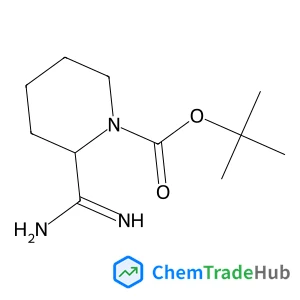
2-Methyl-2-propanyl 2-carbamimidoyl-1-piperidinecarboxylate
CAS Number:
1258640-98-0
Molecular Formula:
C11H21N3O2
Recommended Suppliers




Disclaimer
This page provides academic journal information for reference and research purposes only. We are not affiliated with any journal publishers and do not handle publication submissions. For publication-related inquiries, please contact the respective journal publishers directly.
If you notice any inaccuracies in the information displayed, please contact us at support@chemtradehub.com. We will promptly review and address your concerns.