












Unique properties of silver cations in solid-acid catalysis by zeolites and heteropolyacids
Literature Information
Publication Date
2015-05-19
DOI
10.1039/C5CP01839K
Impact Factor
3.676
Authors
Yoshio Ono, Toshihide Baba
View Original
Abstract
Ag+-exchanged zeolites exhibit unique catalytic properties caused by the combination of their redox and acidic properties. Partial reduction of Ag+ ions in zeolites with hydrogen leads to the formation of acidic protons and silver metal particles, which can be observed using X-ray powder diffraction patterns (XRD). By simply evacuating hydrogen from the system, the silver metal particles are returned back to Ag+ ions and at the same time, acidic protons are eliminated. This interconversion of Ag+ ions and silver metal or gaseous hydrogen and surface protons is reflexed in the catalytic activities of Ag+-exchanged zeolites for acid-catalyzed reactions: the activity of Ag+-exchanged Y zeolite (Ag-Y) reversibly changes with the partial pressure of hydrogen. Furthermore, the activity of Ag-Y in the presence of hydrogen is higher than that of H+-exchanged Y zeolite (H-Y). Similar phenomena are also observed for the silver salt of dodecatungstophosphoric acid (Ag3PW12O40). Ag+-exchanged ZSM-5 zeolite (Ag-ZSM-5) is a very selective catalyst for aromatization of alkanes, alkenes and methanol. Examination of the activation step of lower alkanes revealed that Ag+ ions dramatically enhance the dehydrogenation of the alkanes via heterolytic dissociation of the alkanes into carbenium ions and hydride species. Ag+-exchanged zeolites can also activate methane. The reaction of methane with ethene and benzene gives propene and toluene, respectively. Ag-ZSM-5 is a very stable catalyst under hydrothermal conditions because of the interconversion properties of Ag+ ions and silver metal in the zeolite.
Related Literature
Steering competitive N2 and CO adsorption toward efficient urea production with a confined dual site
Yonghua Liu
2023-10-23
Edge Article
DOI: 10.1039/D3SC04688E
Stereoselective RNA reaction with chiral 2′-OH acylating agents
Ryuta Shioi, Lu Xiao, Sayantan Chatterjee
2023-11-07
Edge Article
DOI: 10.1039/D3SC03067A
Cyclic voltammetry and chronoamperometry: mechanistic tools for organic electrosynthesis
Mohammad Rafiee, Dylan J. Abrams, Luana Cardinale, Zachary Goss, Shannon S. Stahl
2023-12-05
Tutorial Review
DOI: 10.1039/D2CS00706A
Photocatalysis with atomically thin sheets
Yingying Fan, Jinguang Hu, Hyeon Suk Shin, Damien Voiry, Qingye Lu, Jimmy C. Yu
2023-10-25
Tutorial Review
DOI: 10.1039/D2CS00205A
Single atom catalyst-mediated generation of reactive species in water treatment
Virender K. Sharma, Xingmao Ma
2023-10-19
Tutorial Review
DOI: 10.1039/D3CS00627A
Metallosupramolecular polymers: current status and future prospects
Rahul Dev Mukhopadhyay
2023-11-14
Review Article
DOI: 10.1039/D3CS00692A
Discovery of a selective TC-PTP degrader for cancer immunotherapy
Jinmin Miao, Jiajun Dong, Yiming Miao, Yunpeng Bai, Zihan Qu, Brenson A. Jassim, Bo Huang, Quyen Nguyen, Yuan Ma, Allison A. Murray, Jinyue Li
2023-10-24
Edge Article
DOI: 10.1039/D3SC04541B
Visible light-mediated halogenation of organic compounds
Alexey A. Festa, Olga A. Storozhenko, Leonid G. Voskressensky
2023-11-17
Review Article
DOI: 10.1039/D3CS00366C
You might also like
Compound Q&A
How should waste containing 6-Chloro-5-(2'-hydroxy-3'-methoxy-4-biphenylyl)-3-(3-methoxyphenyl)-1H-pyrrolo[3,2-d]pyrimidine-2,4(3H,5H)-dione (CAS: 1346607-05-3) be handled?
Waste containing 6-Chloro-5-(2'-hydroxy-3'-methoxy-4-biphenylyl)-3-(3-methoxyphe...
1346607-05-36-Chloro-5-(2'-hydro...
Compound Q&A
What are the main uses of (3alpha,5alpha)-3-Hydroxypregnane-11,20-dione (CAS: 23930-19-0)?
(3alpha,5alpha)-3-Hydroxypregnane-11,20-dione is primarily used in the pharmaceu...
23930-19-0(3alpha,5alpha)-3-Hy...
Compound Q&A
What is the market or research trend for 4-Amino-6-chloro-2-pyridinecarboxylic acid (CAS: 546141-56-4)?
The market for 4-Amino-6-chloro-2-pyridinecarboxylic acid (CAS: 546141-56-4) is ...
546141-56-44-Amino-6-chloro-2-p...
Compound Q&A
Are there alternatives to (2-Benzoylethyl)trimethylammonium chloride (CAS: 24472-88-6) in synthesis?
Alternatives to (2-Benzoylethyl)trimethylammonium chloride (CAS: 24472-88-6) in ...
24472-88-6(2-Benzoylethyl)trim...
Compound Q&A
Is N-[4-Nitro-3-(trifluoromethyl)phenyl]acetamide (CAS: 393-12-4) safe?
N-[4-Nitro-3-(trifluoromethyl)phenyl]acetamide (CAS: 393-12-4) is generally safe...
393-12-4N-[4-Nitro-3-(triflu...
Compound Q&A
Are there alternatives to [(4R,5R,6S)-5-hydroxy-10-imino-3,7-dioxa-1,9-diazatricyclo[6.4.0.02,6]dodeca-8,11-dien-4-yl]methyl dihydrogen phosphate (CAS: 39679-56-6) in synthesis?
Alternative reagents such as other phosphates or similar functional groups can b...
39679-56-6[(4R,5R,6S)-5-hydrox...
Compound Q&A
Are there alternatives to N,N'-Bis(3-aminopropyl)-1,3-propanediamine (CAS: 4605-14-5) in synthesis?
There are alternatives to N,N'-Bis(3-aminopropyl)-1,3-propanediamine (CAS: 4605-...
4605-14-5N,N'-Bis(3-aminoprop...
Compound Q&A
What precautions should be taken when handling Aluminium trihexadecanoate (CAS: 555-35-1)?
When handling Aluminium trihexadecanoate, it is important to use appropriate per...
555-35-1Aluminium trihexadec...
Compound Q&A
What is (1,1-Dioxido-3-oxo-1,2-benzothiazol-2(3H)-yl)acetic acid (CAS: 52188-11-1)?
(1,1-Dioxido-3-oxo-1,2-benzothiazol-2(3H)-yl)acetic acid is a chemical compound ...
52188-11-1(1,1-Dioxido-3-oxo-1...
Compound Q&A
Are there alternatives to 5,5-dimethyloxolan-2-one (CAS: 3123-97-5) in synthesis?
Several alternatives to 5,5-dimethyloxolan-2-one (CAS: 3123-97-5) can be used in...
3123-97-55,5-dimethyloxolan-2...
Source Journal
Physical Chemistry Chemical Physics

CiteScore:
5.5
Self-citation Rate:
10.3%
Articles per Year:
3036
Physical Chemistry Chemical Physics (PCCP) is an international journal co-owned by 19 physical chemistry and physics societies from around the world. This journal publishes original, cutting-edge research in physical chemistry, chemical physics and biophysical chemistry. To be suitable for publication in PCCP, articles must include significant innovation and/or insight into physical chemistry; this is the most important criterion that reviewers and Editors will judge against when evaluating submissions. The journal has a broad scope and welcomes contributions spanning experiment, theory, computation and data science. Topical coverage includes spectroscopy, dynamics, kinetics, statistical mechanics, thermodynamics, electrochemistry, catalysis, surface science, quantum mechanics, quantum computing and machine learning. Interdisciplinary research areas such as polymers and soft matter, materials, nanoscience, energy, surfaces/interfaces, and biophysical chemistry are welcomed if they demonstrate significant innovation and/or insight into physical chemistry. Joined experimental/theoretical studies are particularly appreciated when complementary and based on up-to-date approaches.
Recommended Compounds
![N-{[(2-Methyl-2-propanyl)oxy]carbonyl}-L-methionylglycine structure](https://static.chemtradehub.com/structs/234/23446-03-9-e1e5.webp "N-{[(2-Methyl-2-propanyl)oxy]carbonyl}-L-methionylglycine structure")
N-{[(2-Methyl-2-propanyl)oxy]carbonyl}-L-methionylglycine
CAS Number:
23446-03-9
Molecular Formula:
C12H22N2O5S
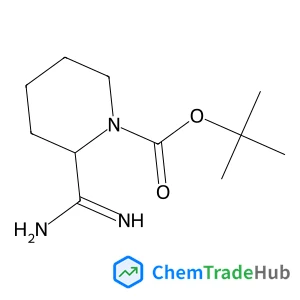
2-Methyl-2-propanyl 2-carbamimidoyl-1-piperidinecarboxylate
CAS Number:
1258640-98-0
Molecular Formula:
C11H21N3O2
Recommended Suppliers





Disclaimer
This page provides academic journal information for reference and research purposes only. We are not affiliated with any journal publishers and do not handle publication submissions. For publication-related inquiries, please contact the respective journal publishers directly.
If you notice any inaccuracies in the information displayed, please contact us at support@chemtradehub.com. We will promptly review and address your concerns.