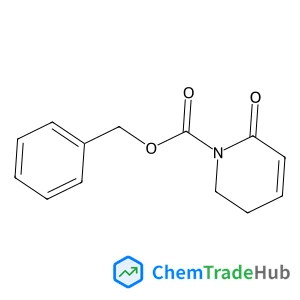
Benzyl 6-oxo-3,6-dihydro-1(2H)-pyridinecarboxylate
CAS Number:
725746-35-0
Molecular Formula:
C13H13NO3
O. Shindell, N. Mica, M. Ritzer, V. D. Gordon
Membrane adhesion is a vital component of many biological processes. Heterogeneities in lipid and protein composition are often associated with the adhesion site. These heterogeneities are thought to play functional roles in facilitating signalling. Here we experimentally examine this phenomenon using model membranes made of a mixture of lipids that is near a phase boundary at room temperature. Non-adherent model membranes are in a well-mixed, disordered-fluid lipid phase indicated by homogeneous distribution of a fluorescent dye that is a marker for the fluid-disordered (Ld) phase. We specifically adhere membranes to a flat substrate bilayer using biotin–avidin binding. Adhesion produces two types of coexisting heterogeneities: an ordered lipid phase that excludes binding proteins and the fluorescent membrane dye, and a disordered lipid phase that is enriched in both binding proteins and membrane dye compared with the non-adhered portion of the same membrane. Thus, a single type of adhesion interaction (biotin–avidin binding), in an initially-homogeneous system, simultaneously stabilizes both ordered-phase and disordered-phase heterogeneities that are compositionally distinct from the non-adhered portion of the vesicle. These heterogeneities are long-lived and unchanged upon increased temperature.
Julia Jökel, Esma Birsen Boydas, Joël Wellauer, Oliver S. Wenger, Michael Römelt
DOI: 10.1039/D3SC02679E
Ritabrita Goswami, Aarohi Gupta, Olga Bednova, Gaël Coulombe, Dipika Patel, Vincent M. Rotello
DOI: 10.1039/D1CS00269D
Jun-Jie Fang, Zheng Liu, Yang-Lin Shen, Yun-Peng Xie, Xing Lu
DOI: 10.1039/D3SC04682F
Albert Poater
DOI: 10.1039/D3CS00725A
Moritz Thürlemann, Sereina Riniker
DOI: 10.1039/D3SC04317G
Fuqiang Hu, Cefei Zhang, Zhihao Liu, Xinyu Xie, Xiaohu Zhao, Yanju Luo, Jielin Fu, Baolin Li, Changwei Hu, Zhishan Su, Zhipeng Yu
DOI: 10.1039/D3SC03675H
Zhi-Mao Zhang, Junliang Zhang, Quan Cai
DOI: 10.1039/D3SC04335E
Yonghua Liu
DOI: 10.1039/D3SC04688E
Enzo Brack, Marc-Georg Willinger, Christophe Copéret
DOI: 10.1039/D3SC04711C
Waste containing 6-Chloro-5-(2'-hydroxy-3'-methoxy-4-biphenylyl)-3-(3-methoxyphe...
(3alpha,5alpha)-3-Hydroxypregnane-11,20-dione is primarily used in the pharmaceu...
The market for 4-Amino-6-chloro-2-pyridinecarboxylic acid (CAS: 546141-56-4) is ...
Alternatives to (2-Benzoylethyl)trimethylammonium chloride (CAS: 24472-88-6) in ...
N-[4-Nitro-3-(trifluoromethyl)phenyl]acetamide (CAS: 393-12-4) is generally safe...
Alternative reagents such as other phosphates or similar functional groups can b...
There are alternatives to N,N'-Bis(3-aminopropyl)-1,3-propanediamine (CAS: 4605-...
When handling Aluminium trihexadecanoate, it is important to use appropriate per...
(1,1-Dioxido-3-oxo-1,2-benzothiazol-2(3H)-yl)acetic acid is a chemical compound ...
Several alternatives to 5,5-dimethyloxolan-2-one (CAS: 3123-97-5) can be used in...

Physical Chemistry Chemical Physics (PCCP) is an international journal co-owned by 19 physical chemistry and physics societies from around the world. This journal publishes original, cutting-edge research in physical chemistry, chemical physics and biophysical chemistry. To be suitable for publication in PCCP, articles must include significant innovation and/or insight into physical chemistry; this is the most important criterion that reviewers and Editors will judge against when evaluating submissions. The journal has a broad scope and welcomes contributions spanning experiment, theory, computation and data science. Topical coverage includes spectroscopy, dynamics, kinetics, statistical mechanics, thermodynamics, electrochemistry, catalysis, surface science, quantum mechanics, quantum computing and machine learning. Interdisciplinary research areas such as polymers and soft matter, materials, nanoscience, energy, surfaces/interfaces, and biophysical chemistry are welcomed if they demonstrate significant innovation and/or insight into physical chemistry. Joined experimental/theoretical studies are particularly appreciated when complementary and based on up-to-date approaches.