


Predissociation spectra of the 35Cl−(H2) complex and its isotopologue 35Cl−(D2)
Literature Information
Publication Date
2020-10-28
DOI
10.1039/D0CP05015F
Impact Factor
3.676
Authors
Miguel Lara-Moreno, Philippe Halvick, Thierry Stoecklin
View Original
Abstract
The predissociation spectra of the 35Cl−(H2) and 35Cl−(D2) complexes are determined within an accurate quantum approach and compared to those recently measured in an ionic trap at 8 K and 22 K. The calculations are performed using an existing three-dimensional potential energy surface. A variational approach is used for the accurate quantum calculations of the rovibrational bound states. Several methods are compared for the search and the characterization of the resonant states. A good agreement between the calculated and measured spectra is obtained, despite a slight shift to the red of the calculated spectra. The comparison shows that only the ortho or para contribution is observed in the measured 35Cl−(H2) or 35Cl−(D2) spectrum, respectively. Quantum numbers are assigned to the rovibrational resonant states. It demonstrates that the main features observed in the measured predissociation spectra correspond to a progression in the intermonomer vibrational stretching mode.
Recommended Journals

Russian Journal of General Chemistry

Nature Medicine

Russian Journal of Coordination Chemistry

Saudi Pharmaceutical Journal

Chemical Communications

Journal of Saudi Chemical Society

Drug Discovery Today

Current Opinion in Colloid & Interface Science

Russian Journal of Bioorganic Chemistry

Russian Journal of Applied Chemistry
Related Literature
Influence of a diene impurity on the molecular structure of phosphate-containing polymers with medical applications
Lisbeth Grøndahl, Edeline Wentrup-Byrne
2008-05-13
Communication
DOI: 10.1039/B803223H
Observation of an unprecedented body centered cubic micellar mesophase from rod–coil molecules
Eunji Lee, Ja-Hyoung Ryu, Myoung-Hwan Park, Myongsoo Lee, Kyung-Hee Han, Yeon-Wook Chung, Byoung-Ki Cho
2007-06-21
Communication
DOI: 10.1039/B706989H
Substrate mediated reduction of copper-amyloid-β complex in Alzheimer’s disease
Victor A. Streltsov, Joseph N. Varghese
2008-05-14
Communication
DOI: 10.1039/B803911A
The relationships between oxidase and synthase activities of flavin dependent thymidylate synthase (FDTS)
Anatoly Chernyshev, Todd Fleischmann, Eric M. Koehn, Scott A. Lesley, Amnon Kohen
2007-04-25
Communication
DOI: 10.1039/B700977A
O-Dihaloarenes as aryne precursors for nickel-catalyzed [2 + 2 + 2] cycloaddition with alkynes and nitriles
Jen-Chieh Hsieh, Chien-Hong Cheng
2008-05-06
Communication
DOI: 10.1039/B801870G
1,3-Diindolylureas: high affinity dihydrogen phosphate receptors
Claudia Caltagirone, Philip A. Gale, Jennifer R. Hiscock, Simon J. Brooks, Michael B. Hursthouse, Mark E. Light
2008-05-29
Communication
DOI: 10.1039/B806238B
A simple strategy for quantum dot assisted selective detection of cadmium ions
Subhash Banerjee, Soumitra Kar
2008-04-22
Communication
DOI: 10.1039/B803166E
Tetrameric molecular bowl assembled from glycoluril building blocks
Neng-Fang She, Xiang-Gao Meng, Meng Gao, An-Xin Wu, Lyle Isaacs
2008-04-04
Communication
DOI: 10.1039/B800785C
Stereocontrolled synthesis of carbocyclesvia four successive pericyclic reactions
Roxanne Clément, Christiane M. Grisé, Louis Barriault
2008-06-06
Communication
DOI: 10.1039/B803898H
Synthesis of α-keto esters by the rhodium-catalysed reaction of cyanoformate with arylboronic acids
Hiroshi Shimizu, Masahiro Murakami
2007-04-26
Communication
DOI: 10.1039/B704105E
You might also like
Compound Q&A
Are there alternatives to 1-(4-Chlorophenyl)-N-hydroxymethanimine (CAS: 3848-36-0) in synthesis?
When considering alternatives to 1-(4-Chlorophenyl)-N-hydroxymethanimine (CAS: 3...
3848-36-01-(4-Chlorophenyl)-N...
Compound Q&A
How should (1R,9S,10S,12S,14E,16S,19R,20R,21S,22R)-3,9,21-Trihydroxy-5,10,12,14,16,20,22-heptamethyl-23,24-dioxatetracyclo[17.3.1.1~6,9~.0~2,7~]tetracosa-2,5,7,14-tetraen-4-one (CAS: 183202-73-5) be stored?
This compound should be stored in a cool, dry place away from direct sunlight. I...
183202-73-5(1R,9S,10S,12S,14E,1...
Compound Q&A
How is 3-(4-Bromophenyl)-5-(2-fluorophenyl)-1,2,4-oxadiazole (CAS: 419553-16-5) typically synthesized?
3-(4-Bromophenyl)-5-(2-fluorophenyl)-1,2,4-oxadiazole is synthesized through a m...
419553-16-53-(4-Bromophenyl)-5-...
Compound Q&A
How is 5-Chloro-2-(4-chlorophenyl)-4-methyl-6-[3-(1-piperidinyl)propoxy]pyrimidine (CAS: 1639220-19-1) typically synthesized?
5-Chloro-2-(4-chlorophenyl)-4-methyl-6-[3-(1-piperidinyl)propoxy]pyrimidine (CAS...
1639220-19-15-Chloro-2-(4-chloro...
Compound Q&A
What industries use 2-Chloro-4-(difluoromethoxy)pyridine (CAS: 1206978-15-5)?
2-Chloro-4-(difluoromethoxy)pyridine is used in the pharmaceutical industry for ...
1206978-15-52-Chloro-4-(difluoro...
Compound Q&A
What regulatory guidelines apply to 3-Chloro-6-methylpyridazine (CAS: 1121-79-5)?
3-Chloro-6-methylpyridazine (CAS: 1121-79-5) is classified under the Globally Ha...
1121-79-53-Chloro-6-methylpyr...
Compound Q&A
Are there alternatives to Methyl 4,5-dimethyl-2-nitrobenzoate in synthesis?
Several alternatives can be used in the synthesis of Methyl 4,5-dimethyl-2-nitro...
90922-74-0Methyl 4,5-dimethyl-...
Compound Q&A
Are there alternatives to (2E,2'E)-3,3'-(1,4-Phenylene)bisacrylaldehyde in synthesis?
Alternatives to (2E,2'E)-3,3'-(1,4-Phenylene)bisacrylaldehyde include other acry...
63405-68-5(2E,2'E)-3,3'-(1,4-P...
Compound Q&A
What is 3-Amino-5-chloropyridin-2-ol hydrochloride (CAS: 1261906-29-9)?
3-Amino-5-chloropyridin-2-ol hydrochloride is an organic compound with the CAS n...
1261906-29-93-Amino-5-chloropyri...
Compound Q&A
What precautions should be taken when handling 6,7-Difluoro-2,3-dihydro-4H-chromen-4-one (CAS: 1092349-93-3)?
When handling 6,7-Difluoro-2,3-dihydro-4H-chromen-4-one, it is essential to wear...
1092349-93-36,7-Difluoro-2,3-dih...
Source Journal
Physical Chemistry Chemical Physics

CiteScore:
5.5
Self-citation Rate:
10.3%
Articles per Year:
3036
Physical Chemistry Chemical Physics (PCCP) is an international journal co-owned by 19 physical chemistry and physics societies from around the world. This journal publishes original, cutting-edge research in physical chemistry, chemical physics and biophysical chemistry. To be suitable for publication in PCCP, articles must include significant innovation and/or insight into physical chemistry; this is the most important criterion that reviewers and Editors will judge against when evaluating submissions. The journal has a broad scope and welcomes contributions spanning experiment, theory, computation and data science. Topical coverage includes spectroscopy, dynamics, kinetics, statistical mechanics, thermodynamics, electrochemistry, catalysis, surface science, quantum mechanics, quantum computing and machine learning. Interdisciplinary research areas such as polymers and soft matter, materials, nanoscience, energy, surfaces/interfaces, and biophysical chemistry are welcomed if they demonstrate significant innovation and/or insight into physical chemistry. Joined experimental/theoretical studies are particularly appreciated when complementary and based on up-to-date approaches.
Recommended Compounds
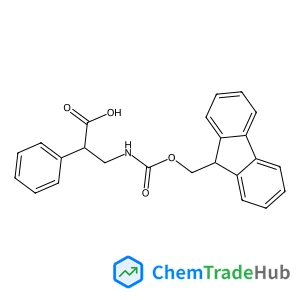
(S)-3-((((9H-Fluoren-9-yl)methoxy)carbonyl)amino)-2-phenylpropanoic acid
CAS Number:
1217663-60-9
Molecular Formula:
C24H21NO4
![6-Bromo-2,3-dihydro-1H-pyrido[2,3-b][1,4]oxazine structure](https://static.chemtradehub.com/structs/120/1203499-17-5-b4d1.webp "6-Bromo-2,3-dihydro-1H-pyrido[2,3-b][1,4]oxazine structure")
6-Bromo-2,3-dihydro-1H-pyrido[2,3-b][1,4]oxazine
CAS Number:
1203499-17-5
Molecular Formula:
C7H7BrN2O
![[4-(Isobutyrylamino)phenyl]boronic acid structure](https://static.chemtradehub.com/structs/874/874219-50-8-6ab5.webp "[4-(Isobutyrylamino)phenyl]boronic acid structure")
Recommended Suppliers






Disclaimer
This page provides academic journal information for reference and research purposes only. We are not affiliated with any journal publishers and do not handle publication submissions. For publication-related inquiries, please contact the respective journal publishers directly.
If you notice any inaccuracies in the information displayed, please contact us at support@chemtradehub.com. We will promptly review and address your concerns.