













A photoenhanced oxidation of amino acids and the cross-linking of lysozyme mediated by tetrazolium salts
Literature Information
Publication Date
2021-01-21
DOI
10.1039/D0CP04887A
Impact Factor
3.676
Authors
Xiting Zhang, Yancheng Liu, Yuanchun Li, David Lee Phillips
View Original
Abstract
Tetrazolium salts (TZs) are pervasively utilized as precursors in the dye industry, colorimetric probes in enzyme assays and for exploring nanomaterial toxicity, but its own toxicity is not investigated enough so far. Using femtosecond transient absorption spectroscopy, nanosecond pulse radiolysis (ns-PRL), western blotting and UV-vis absorption spectroscopy, here we characterized a neutral tetrazolinyl radical (with the same maximum absorption at 420 nm and different lifetimes of 5.0 and 9.0 μs for two selected TZs), the key intermediate of TZs reduction, and noticed TZs-formazan production under UV light irradiation accompanied by 41% increase in the cross-linking of lysozyme (Lyso, model protein) compared to TZs-free sample, which uncovered the photoenhanced oxidation of TZs towards Lyso. The ns-PRL in a reductive atmosphere simulated the electron/proton donors of amino acid residues in Lyso upon photoexcitation and revealed the reduction mechanism of TZs, as that first followed one-electron-transfer and then probably proton-coupled electron transfer. This is the first time to report on the photoenhanced oxidation mechanism of TZs, which would provide new insights into the applications of TZs in cell biology, “click” chemistry and nanotoxicology.
Recommended Journals
Related Literature
Multidimensional OH local mode calculations for OH−(H2O)3—Importance of intermode anharmonicity
Masato Morita, Kaito Takahashi
2012-10-23
Paper
DOI: 10.1039/C2CP42501G
Other origins for the fluorescence modulation of single dye molecules in open-circuit and short-circuit devices
Jefri S. Teguh, Michael Kurniawan, Xiangyang Wu, Tze Chien Sum, Edwin K. L. Yeow
2012-11-08
Communication
DOI: 10.1039/C2CP43284F
Electronic and EPR spectra of the species involved in [W10O32]4− photocatalysis. A relativistic DFT investigation
Davide Ravelli, Daniele Dondi, Maurizio Fagnoni, Angelo Albini, Alessandro Bagno
2012-12-18
Paper
DOI: 10.1039/C2CP43950F
Electrochemistry of nickel nanoparticles is controlled by surface oxide layers
Yi-Ge Zhou, Neil V. Rees, Richard G. Compton
2012-11-16
Communication
DOI: 10.1039/C2CP43618C
Influence of catalyst choices on transport behaviors of InAs NWs for high-performance nanoscale transistors
Szu-Ying Chen, Chiu-Yen Wang, Alexandra C. Ford, Jen-Chun Chou, Yi-Chung Wang, Feng-Yun Wang, Johnny C. Ho, Hsiang-Chen Wang, Ali Javey, Jon-Yiew Gan, Lih-Juann Chen, Yu-Lun Chueh
2012-12-21
Communication
DOI: 10.1039/C2CP44213B
Formation energy and photoelectrochemical properties of BiVO4 after doping at Bi3+ or V5+ sites with higher valence metal ions
Wenjun Luo, Jiajia Wang, Xin Zhao, Zongyan Zhao, Zhigang Zou
2012-11-14
Paper
DOI: 10.1039/C2CP43408C
Dissociative electron attachment to acetaldehyde, CH3CHO. A laboratory study using the velocity map imaging technique
Vaibhav S. Prabhudesai, E. Krishnakumar
2012-11-14
Paper
DOI: 10.1039/C2CP42966G
A comparative VCD study of methyl mandelate in methanol, dimethyl sulfoxide, and chloroform: explicit and implicit solvation models
Mohammad Reza Poopari, Zahra Dezhahang, Yunjie Xu
2012-11-30
Paper
DOI: 10.1039/C2CP42722B
Assessment of permethylated transition-metal sandwich complexes as internal reference redox systems in ionic liquids
Angel A. J. Torriero, Jaka Sunarso, Maria Forsyth, Cristina Pozo-Gonzalo
2013-01-03
Paper
DOI: 10.1039/C2CP43177G
Electrochemical-surface enhanced Raman spectroscopy (E-SERS) of uric acid: a potential rapid diagnostic method for early preeclampsia detection
Barbara L. Goodall, Ashley M. Robinson, Christa L. Brosseau
2012-11-12
Paper
DOI: 10.1039/C2CP42596C
You might also like
Compound Q&A
Is 6-(3-Fluorophenyl)picolinic acid (CAS: 887982-40-3) safe?
6-(3-Fluorophenyl)picolinic acid is generally considered safe for laboratory use...
887982-40-36-(3-Fluorophenyl)pi...
Compound Q&A
What industries use (3R)-3-Pyrrolidinol (CAS: 2799-21-5)?
(3R)-3-Pyrrolidinol is used in the pharmaceutical industry as a precursor for dr...
2799-21-5(3R)-3-Pyrrolidinol
Compound Q&A
What precautions should be taken when handling (4R,5R)-4,5-Diethoxycarbonyl-2,2-dimethyldioxolane (CAS: 59779-75-8)?
When handling (4R,5R)-4,5-Diethoxycarbonyl-2,2-dimethyldioxolane (CAS: 59779-75-...
59779-75-8(4R,5R)-4,5-Diethoxy...
Compound Q&A
How is 1-(6-Chloroimidazo[1,2-b]pyridazin-3-yl)ethanone (CAS: 90734-71-7) typically synthesized?
1-(6-Chloroimidazo[1,2-b]pyridazin-3-yl)ethanone is often synthesized via a mult...
90734-71-71-(6-Chloroimidazo[1...
Compound Q&A
What is the market or research trend for N-Ethyl-3,4-dimethylbenzylamine (CAS: 39180-83-1)?
The market for N-Ethyl-3,4-dimethylbenzylamine (CAS: 39180-83-1) remains steady,...
39180-83-1N-Ethyl-3,4-dimethyl...
Compound Q&A
What is Tert-butyl 3-(pyrrolidin-1-yl)azetidine-1-carboxylate (CAS: 1019008-21-9)?
Tert-butyl 3-(pyrrolidin-1-yl)azetidine-1-carboxylate is a chemical compound wit...
1019008-21-9Tert-butyl 3-(pyrrol...
Compound Q&A
What regulatory guidelines apply to 1-Bromo-3-chloro-2,4-dimethoxybenzene (CAS: 1228956-93-1)?
1-Bromo-3-chloro-2,4-dimethoxybenzene (CAS: 1228956-93-1) falls under the classi...
1228956-93-11-Bromo-3-chloro-2,4...
Compound Q&A
Is 8-Bromo-2-methyl-3,4-dihydroisoquinolin-1(2H)-one (CAS: 1368622-07-4) safe?
The safety of 8-Bromo-2-methyl-3,4-dihydroisoquinolin-1(2H)-one (CAS: 1368622-07...
1368622-07-48-Bromo-2-methyl-3,4...
Compound Q&A
Is Benzyl [(3S)-2,6-dioxo-3-piperidinyl]carbamate (CAS: 22785-43-9) safe?
Benzyl [(3S)-2,6-dioxo-3-piperidinyl]carbamate is generally safe when handled wi...
22785-43-9Benzyl [(3S)-2,6-dio...
Compound Q&A
How should 1-{[4-(4,4,5,5-Tetramethyl-1,3,2-dioxaborolan-2-yl)phenyl]sulfonyl}pyrrolidine (CAS: 928657-21-0) be stored?
1-{[4-(4,4,5,5-Tetramethyl-1,3,2-dioxaborolan-2-yl)phenyl]sulfonyl}pyrrolidine s...
928657-21-01-{[4-(4,4,5,5-Tetra...
Source Journal
Physical Chemistry Chemical Physics

CiteScore:
5.5
Self-citation Rate:
10.3%
Articles per Year:
3036
Physical Chemistry Chemical Physics (PCCP) is an international journal co-owned by 19 physical chemistry and physics societies from around the world. This journal publishes original, cutting-edge research in physical chemistry, chemical physics and biophysical chemistry. To be suitable for publication in PCCP, articles must include significant innovation and/or insight into physical chemistry; this is the most important criterion that reviewers and Editors will judge against when evaluating submissions. The journal has a broad scope and welcomes contributions spanning experiment, theory, computation and data science. Topical coverage includes spectroscopy, dynamics, kinetics, statistical mechanics, thermodynamics, electrochemistry, catalysis, surface science, quantum mechanics, quantum computing and machine learning. Interdisciplinary research areas such as polymers and soft matter, materials, nanoscience, energy, surfaces/interfaces, and biophysical chemistry are welcomed if they demonstrate significant innovation and/or insight into physical chemistry. Joined experimental/theoretical studies are particularly appreciated when complementary and based on up-to-date approaches.
Recommended Compounds
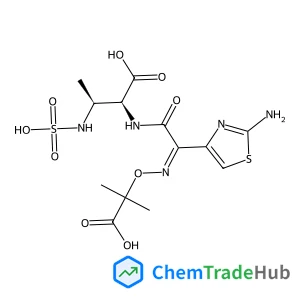
Aztreonam USP Related Compound A (Open-ring Aztreonam)
CAS Number:
87500-74-1
Molecular Formula:
C13H19N5O9S2
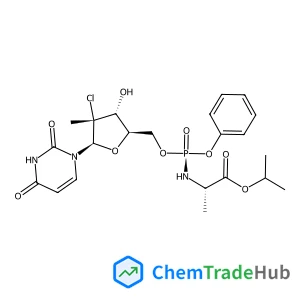
![2-[({[(2-Methyl-2-propanyl)oxy]carbonyl}amino)methyl]isonicotinic acid structure](https://static.chemtradehub.com/structs/473/473924-63-9-973b.webp "2-[({[(2-Methyl-2-propanyl)oxy]carbonyl}amino)methyl]isonicotinic acid structure")
2-[({[(2-Methyl-2-propanyl)oxy]carbonyl}amino)methyl]isonicotinic acid
CAS Number:
473924-63-9
Molecular Formula:
C12H16N2O4
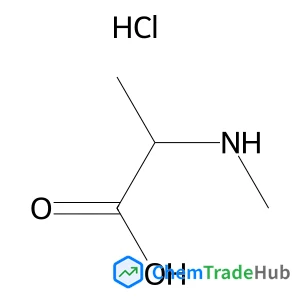
(R)-2-(Methylamino)propanoic acid hydrochloride
CAS Number:
1155878-14-0
Molecular Formula:
C4H10ClNO2
Recommended Suppliers




Disclaimer
This page provides academic journal information for reference and research purposes only. We are not affiliated with any journal publishers and do not handle publication submissions. For publication-related inquiries, please contact the respective journal publishers directly.
If you notice any inaccuracies in the information displayed, please contact us at support@chemtradehub.com. We will promptly review and address your concerns.