


Metallic and anti-metallic properties of hydrogen adsorbed AnO2 (An = Th, U, and Pu) surfaces
Literature Information
Publication Date
2020-12-15
DOI
10.1039/D0CP04824K
Impact Factor
3.676
Authors
Ruizhi Qiu, Jun Tang, Jinfan Chen, Bingyun Ao
View Original
Abstract
The effect of atomic hydrogen adsorption on AnO2 (An = Th, U, and Pu) surfaces is studied in the framework of density functional theory and Hubbard-corrected density functional theory. Several adsorption coverages (1/3, 1/2, 2/3, and 1 monolayer) are considered. For the band insulator ThO2, surface metallicity induced by hydrogen adsorption is observed due to the electron donation of the hydrogen to the surface. But this effect is found to be strongly suppressed by electronic correlation for the Mott insulators UO2 and PuO2 because the electrons from the adsorbed hydrogen atoms occupy the localized 5f orbitals of the surface U/Pu atoms.
Recommended Journals

Current Opinion in Solid State & Materials Science

New Journal of Chemistry

Russian Journal of Organic Chemistry

Russian Journal of Coordination Chemistry

Nature Medicine

Journal of Natural Medicines

Saudi Pharmaceutical Journal

Russian Journal of Bioorganic Chemistry

Russian Journal of General Chemistry

Organic Process Research & Development
Related Literature
Isolation of an [SNS]Pd(ii) pincer with a water ladder and its Suzuki coupling activity in water
Shi-Qiang Bai, T. S. Andy Hor
2008-04-29
Communication
DOI: 10.1039/B802043D
Zwitterionicphosphorylcholine as a better ligand for stabilizing large biocompatible gold nanoparticles
Qiao Jin, Jian-Ping Xu, Jian Ji, Jia-Cong Shen
2008-04-22
Communication
DOI: 10.1039/B801959B
Tetraplatinum precursors for supramolecular assemblies: syntheses, crystal structures, and stereoselective self-assemblies of [Pt4(μ-OCOCH3)6(κ4-N4-DArBp)] (DArBp = 1,3-bis(arylbenzamidinate)propane)
Masato Ohashi, Akihiro Yagyu, Tsuneaki Yamagata, Kazushi Mashima
2007-05-22
Communication
DOI: 10.1039/B703730A
A simple strategy for quantum dot assisted selective detection of cadmium ions
Subhash Banerjee, Soumitra Kar
2008-04-22
Communication
DOI: 10.1039/B803166E
Gold nanoparticles become stable to cyanide etch when coated with hybrid lipid bilayers
Sarita Sitaula, Marilyn R. Mackiewicz, Scott M. Reed
2008-05-15
Communication
DOI: 10.1039/B801525B
1,3-Diindolylureas: high affinity dihydrogen phosphate receptors
Claudia Caltagirone, Philip A. Gale, Jennifer R. Hiscock, Simon J. Brooks, Michael B. Hursthouse, Mark E. Light
2008-05-29
Communication
DOI: 10.1039/B806238B
Fluorination reactions in microreactors
Tomas Gustafsson, Ryan Gilmour, Peter H. Seeberger
2008-04-29
Communication
DOI: 10.1039/B803695K
Solubilisation of multi walled carbon nanotubes by α-pyrene functionalised PMMA and their liquid crystalline self-organisation
Stefan Meuer, Lydia Braun, Rudolf Zentel
2008-05-07
Communication
DOI: 10.1039/B803099E
Light-fluorous safety-catch arylgermanes – exceptionally robust, photochemically activated precursors for biaryl synthesis by Pd(0) catalysed cross-coupling
Alan C. Spivey, Chih-Chung Tseng, Joseph P. Hannah, Christopher J. G. Gripton, Paul de Fraine, Nigel J. Parr, Jan J. Scicinski
2007-06-21
Communication
DOI: 10.1039/B707517K
Transition metal-catalyzed three-component coupling of allenes and the related allylation reactions
Masilamani Jeganmohan, Chien-Hong Cheng
2008-05-15
Feature Article
DOI: 10.1039/B800440D
You might also like
Compound Q&A
Are there alternatives to 1-(4-Chlorophenyl)-N-hydroxymethanimine (CAS: 3848-36-0) in synthesis?
When considering alternatives to 1-(4-Chlorophenyl)-N-hydroxymethanimine (CAS: 3...
3848-36-01-(4-Chlorophenyl)-N...
Compound Q&A
How should (1R,9S,10S,12S,14E,16S,19R,20R,21S,22R)-3,9,21-Trihydroxy-5,10,12,14,16,20,22-heptamethyl-23,24-dioxatetracyclo[17.3.1.1~6,9~.0~2,7~]tetracosa-2,5,7,14-tetraen-4-one (CAS: 183202-73-5) be stored?
This compound should be stored in a cool, dry place away from direct sunlight. I...
183202-73-5(1R,9S,10S,12S,14E,1...
Compound Q&A
How is 3-(4-Bromophenyl)-5-(2-fluorophenyl)-1,2,4-oxadiazole (CAS: 419553-16-5) typically synthesized?
3-(4-Bromophenyl)-5-(2-fluorophenyl)-1,2,4-oxadiazole is synthesized through a m...
419553-16-53-(4-Bromophenyl)-5-...
Compound Q&A
How is 5-Chloro-2-(4-chlorophenyl)-4-methyl-6-[3-(1-piperidinyl)propoxy]pyrimidine (CAS: 1639220-19-1) typically synthesized?
5-Chloro-2-(4-chlorophenyl)-4-methyl-6-[3-(1-piperidinyl)propoxy]pyrimidine (CAS...
1639220-19-15-Chloro-2-(4-chloro...
Compound Q&A
What industries use 2-Chloro-4-(difluoromethoxy)pyridine (CAS: 1206978-15-5)?
2-Chloro-4-(difluoromethoxy)pyridine is used in the pharmaceutical industry for ...
1206978-15-52-Chloro-4-(difluoro...
Compound Q&A
What regulatory guidelines apply to 3-Chloro-6-methylpyridazine (CAS: 1121-79-5)?
3-Chloro-6-methylpyridazine (CAS: 1121-79-5) is classified under the Globally Ha...
1121-79-53-Chloro-6-methylpyr...
Compound Q&A
Are there alternatives to Methyl 4,5-dimethyl-2-nitrobenzoate in synthesis?
Several alternatives can be used in the synthesis of Methyl 4,5-dimethyl-2-nitro...
90922-74-0Methyl 4,5-dimethyl-...
Compound Q&A
Are there alternatives to (2E,2'E)-3,3'-(1,4-Phenylene)bisacrylaldehyde in synthesis?
Alternatives to (2E,2'E)-3,3'-(1,4-Phenylene)bisacrylaldehyde include other acry...
63405-68-5(2E,2'E)-3,3'-(1,4-P...
Compound Q&A
What is 3-Amino-5-chloropyridin-2-ol hydrochloride (CAS: 1261906-29-9)?
3-Amino-5-chloropyridin-2-ol hydrochloride is an organic compound with the CAS n...
1261906-29-93-Amino-5-chloropyri...
Compound Q&A
What precautions should be taken when handling 6,7-Difluoro-2,3-dihydro-4H-chromen-4-one (CAS: 1092349-93-3)?
When handling 6,7-Difluoro-2,3-dihydro-4H-chromen-4-one, it is essential to wear...
1092349-93-36,7-Difluoro-2,3-dih...
Source Journal
Physical Chemistry Chemical Physics

CiteScore:
5.5
Self-citation Rate:
10.3%
Articles per Year:
3036
Physical Chemistry Chemical Physics (PCCP) is an international journal co-owned by 19 physical chemistry and physics societies from around the world. This journal publishes original, cutting-edge research in physical chemistry, chemical physics and biophysical chemistry. To be suitable for publication in PCCP, articles must include significant innovation and/or insight into physical chemistry; this is the most important criterion that reviewers and Editors will judge against when evaluating submissions. The journal has a broad scope and welcomes contributions spanning experiment, theory, computation and data science. Topical coverage includes spectroscopy, dynamics, kinetics, statistical mechanics, thermodynamics, electrochemistry, catalysis, surface science, quantum mechanics, quantum computing and machine learning. Interdisciplinary research areas such as polymers and soft matter, materials, nanoscience, energy, surfaces/interfaces, and biophysical chemistry are welcomed if they demonstrate significant innovation and/or insight into physical chemistry. Joined experimental/theoretical studies are particularly appreciated when complementary and based on up-to-date approaches.
Recommended Compounds
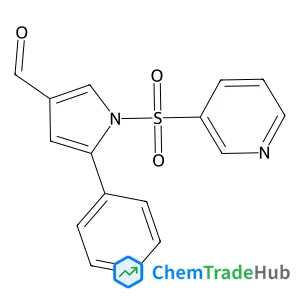
5-Phenyl-1-(pyridin-3-ylsulfonyl)-1H-pyrrole-3-carbaldehyde
CAS Number:
881676-90-0
Molecular Formula:
C16H12N2O3S
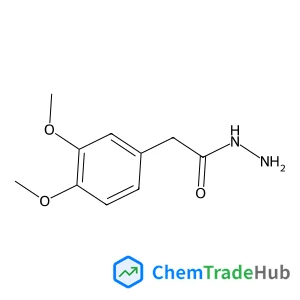
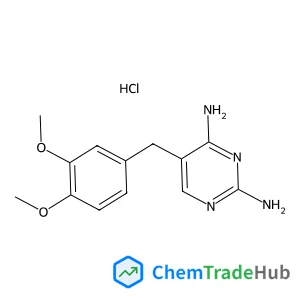
5-(3,4-Dimethoxybenzyl)-2,4-pyrimidinediamine hydrochloride (1:1)
CAS Number:
2507-23-5
Molecular Formula:
C13H17ClN4O2
Recommended Suppliers









Disclaimer
This page provides academic journal information for reference and research purposes only. We are not affiliated with any journal publishers and do not handle publication submissions. For publication-related inquiries, please contact the respective journal publishers directly.
If you notice any inaccuracies in the information displayed, please contact us at support@chemtradehub.com. We will promptly review and address your concerns.