












Quantum dynamics of the ππ*/nπ* decay of the epigenetic nucleobase 1,5-dimethyl-cytosine in the gas phase
Literature Information
Publication Date
2020-10-21
DOI
10.1039/D0CP04123H
Impact Factor
3.676
Authors
Martha Yaghoubi Jouybari, Yanli Liu, Roberto Improta, Fabrizio Santoro
View Original
Abstract
We study the ultrafast dynamics of 1,5-dimethyl-cytosine, a model for 5-methyl-cytidine, after photoexcitation to the first two bright ππ* states, focusing on the possible population transfer to dark nπ* states. To that end we propagate the initial wave packets on the coupled potential energy surfaces of the seven lowest energy excited states modelled with a diabatic linear vibronic coupling (LVC) model, considering all the vibrational coordinates. Time-evolution is computed by the multilayer version of the multiconfigurational time dependent Hartree (ML-MCTDH) method. The LVC Hamiltonian is parametrized with time-dependent density functional theory (TD-DFT) calculations adopting PBE0 and CAM-B3LYP functionals, which provide a different energy gap between the lowest energy nπ* states and the spectroscopic ππ* state. Population of the lowest ππ* flows to a dark nπ* state which involves a lone pair (LP) of the carbonyl oxygen (nOπ*), but the extent of such transfer is much larger according to PBE0 than to CAM-B3LYP. Photoexcitation to the second bright state gives rise to much richer dynamics with an ultrafast (50 fs) complete decay to the lowest ππ*, to nOπ* and to another nπ* in which the excited electron comes from the LP of the ring nitrogen. We perform a detailed analysis of the vibronic dynamics both in terms of normal modes and valence coordinates (bond lengths and angles). The comparison with the analogous dynamics in 1-methyl-cytosine, a model for cytidine, provides insights into the effect of methylation at carbon 5 on the electronic and nuclear dynamics.
Recommended Journals
Related Literature
2-Phenallyl as a versatile protecting group for the asymmetric one-pot three-component synthesis of propargylamines
Nina Gommermann, Paul Knochel
2005-07-26
Communication
DOI: 10.1039/B507810E
Precise synthesis of poly(macromonomer)s containing sugars by repetitive ring-opening metathesis polymerisation
James J. Murphy, Kotohiro Nomura
2005-07-13
Communication
DOI: 10.1039/B506877K
The synthesis of enantiomerically pure 4-substituted [2.2]paracyclophane derivatives by sulfoxide–metal exchange
Peter B. Hitchcock, Gareth J. Rowlands, Rakesh Parmar
2005-07-25
Communication
DOI: 10.1039/B507394D
Highly luminescent water-soluble CdTe nanowires as fluorescent probe to detect copper(ii)
Bo Tang, Jinye Niu, Chengguang Yu, Linhai Zhuo, Jiechao Ge
2005-07-19
Communication
DOI: 10.1039/B502978C
Facile synthetic approach to novel core-extended perylene carboximide dyes
Sibylle Müller, Klaus Müllen
2005-07-19
Communication
DOI: 10.1039/B509220E
Enantioselective organocatalytic Michael addition of malonate esters to nitroolefins using bifunctional cinchonine derivatives‡
Jinxing Ye, Darren J. Dixon, Peter S. Hynes
2005-08-08
Communication
DOI: 10.1039/B508833J
Novel HEXOL-type cyclometallated iridium(iii) complexes: stereoselective synthesis and structure elucidation
Liangru Yang, Alex von Zelewsky, Helen Stoeckli-Evans
2005-07-28
Communication
DOI: 10.1039/B507769A
Total synthesis of buergerinin F via effective construction of the asymmetric quaternary carbons using an enantioselective aldol reaction
Isamu Shiina, Yo-ichi Kawakita, Ryoutarou Ibuka, Kazutoshi Yokoyama, Yu-suke Yamai
2005-07-14
Communication
DOI: 10.1039/B507401K
You might also like
Compound Q&A
How should waste containing N-Methoxy-N-methyl-1,3-thiazole-5-carboxamide (CAS: 898825-89-3) be handled?
Waste containing N-Methoxy-N-methyl-1,3-thiazole-5-carboxamide (CAS: 898825-89-3...
898825-89-3N-Methoxy-N-methyl-1...
Compound Q&A
How should N-(4-Biphenylyl)dibenzo[b,d]furan-4-amine (CAS: 1318338-47-4) be stored?
N-(4-Biphenylyl)dibenzo[b,d]furan-4-amine should be stored in a tightly sealed c...
1318338-47-4N-(4-Biphenylyl)dibe...
Compound Q&A
What is the market or research trend for 3-Acetamido-5-amino-2,4,6-triiodobenzoic acid (CAS: 1713-07-1)?
The market for 3-Acetamido-5-amino-2,4,6-triiodobenzoic acid (CAS: 1713-07-1) is...
1713-07-13-Acetamido-5-amino-...
Compound Q&A
How should Benzyl 2-O-acetyl-3,4,6-tri-O-benzyl-beta-D-galactopyranoside (CAS: 61820-03-9) be stored?
Benzyl 2-O-acetyl-3,4,6-tri-O-benzyl-beta-D-galactopyranoside (CAS: 61820-03-9) ...
61820-03-9Benzyl 2-O-acetyl-3,...
Compound Q&A
What regulatory guidelines apply to 2-Ethylpiperazine dihydrochloride (CAS: 438050-52-3)?
2-Ethylpiperazine dihydrochloride (CAS: 438050-52-3) is regulated under the Glob...
438050-52-32-Ethylpiperazine di...
Compound Q&A
What regulatory guidelines apply to 1,1'-[1,3-Phenylenebis(methylene)]bis(3-methyl-1H-pyrrole-2,5-dione) (CAS: 119462-56-5)?
1,1'-[1,3-Phenylenebis(methylene)]bis(3-methyl-1H-pyrrole-2,5-dione) (CAS: 11946...
119462-56-51,1'-[1,3-Phenyleneb...
Compound Q&A
Are there alternatives to 5-Fluoro-2-(1-pyrrolidinyl)pyridine (CAS: 1287217-79-1) in synthesis?
Several alternatives can be used in the synthesis of 5-Fluoro-2-(1-pyrrolidinyl)...
1287217-79-15-Fluoro-2-(1-pyrrol...
Compound Q&A
What precautions should be taken when handling 1-((2R,3R,4R,5R)-5-((bis(4-methoxyphenyl)(phenyl)methoxy)methyl)-4-hydroxy-3-methoxytetrahydrofuran-2-yl)-5-methylpyrimidine-2,4(1H,3H)-dione (CAS: 153631-19-7)?
Proper personal protective equipment (PPE) must be worn when handling this compo...
153631-19-71-((2R,3R,4R,5R)-5-(...
Compound Q&A
What precautions should be taken when handling 6-Bromoimidazo[1,2-a]pyridin-8-amine (CAS: 676371-00-9)?
When handling 6-Bromoimidazo[1,2-a]pyridin-8-amine, it is important to wear appr...
676371-00-96-Bromoimidazo[1,2-a...
Compound Q&A
Are there alternatives to (2S,4R)-4-(4-Nitrobenzyl)pyrrolidine-2-carboxylic acid hydrochloride (CAS: 1049740-22-8) in synthesis?
Alternatives to (2S,4R)-4-(4-Nitrobenzyl)pyrrolidine-2-carboxylic acid hydrochlo...
1049740-22-8(2S,4R)-4-(4-Nitrobe...
Source Journal
Physical Chemistry Chemical Physics

CiteScore:
5.5
Self-citation Rate:
10.3%
Articles per Year:
3036
Physical Chemistry Chemical Physics (PCCP) is an international journal co-owned by 19 physical chemistry and physics societies from around the world. This journal publishes original, cutting-edge research in physical chemistry, chemical physics and biophysical chemistry. To be suitable for publication in PCCP, articles must include significant innovation and/or insight into physical chemistry; this is the most important criterion that reviewers and Editors will judge against when evaluating submissions. The journal has a broad scope and welcomes contributions spanning experiment, theory, computation and data science. Topical coverage includes spectroscopy, dynamics, kinetics, statistical mechanics, thermodynamics, electrochemistry, catalysis, surface science, quantum mechanics, quantum computing and machine learning. Interdisciplinary research areas such as polymers and soft matter, materials, nanoscience, energy, surfaces/interfaces, and biophysical chemistry are welcomed if they demonstrate significant innovation and/or insight into physical chemistry. Joined experimental/theoretical studies are particularly appreciated when complementary and based on up-to-date approaches.
Recommended Compounds
![4-Chloro-2-{[(2-chlorophenoxy)acetyl]amino}benzoic acid structure](https://static.chemtradehub.com/structs/351/351424-20-9-9467.webp "4-Chloro-2-{[(2-chlorophenoxy)acetyl]amino}benzoic acid structure")
4-Chloro-2-{[(2-chlorophenoxy)acetyl]amino}benzoic acid
CAS Number:
351424-20-9
Molecular Formula:
C15H11Cl2NO4
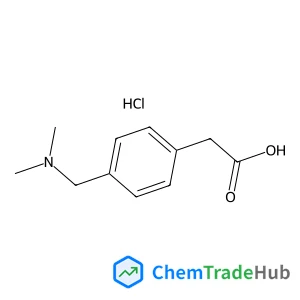
4-(Dimethylaminomethyl)phenylacetic acid hydrochloride
CAS Number:
99985-52-1
Molecular Formula:
C11H16ClNO2
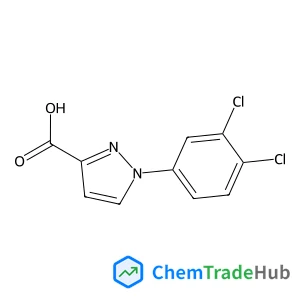
1-(3,4-Dichlorophenyl)-1H-pyrazole-3-carboxylic acid
CAS Number:
1152949-12-6
Molecular Formula:
C10H6Cl2N2O2
Recommended Suppliers





Disclaimer
This page provides academic journal information for reference and research purposes only. We are not affiliated with any journal publishers and do not handle publication submissions. For publication-related inquiries, please contact the respective journal publishers directly.
If you notice any inaccuracies in the information displayed, please contact us at support@chemtradehub.com. We will promptly review and address your concerns.