












![[4-(Isobutyrylamino)phenyl]boronic acid structure](https://static.chemtradehub.com/structs/874/874219-50-8-6ab5.webp "[4-(Isobutyrylamino)phenyl]boronic acid structure")
Vacancies in graphene: an application of adiabatic quantum optimization
Literature Information
Publication Date
2020-10-30
DOI
10.1039/D0CP04037A
Impact Factor
3.676
Authors
Virginia Carnevali, Ilaria Siloi, Marco Fornari
View Original
Abstract
Quantum annealers have grown in complexity to the point that quantum computations involving a few thousand qubits are now possible. In this paper, with the intentions to show the feasibility of quantum annealing to tackle problems of physical relevance, we used a simple model, compatible with the capability of current quantum annealers, to study the relative stability of graphene vacancy defects. By mapping the crucial interactions that dominate carbon-vacancy interchange onto a quadratic unconstrained binary optimization problem, our approach exploits the ground state as well as the excited states found by the quantum annealer to extract all the possible arrangements of multiple defects on the graphene sheet together with their relative formation energies. This approach reproduces known results and provides a stepping stone towards applications of quantum annealing to problems of physical–chemical interest.
Recommended Journals
Related Literature
Highly selective 30% hydrogen peroxideoxidation of sulfides to sulfoxides using micromixing
Yoshiro Hirai, Masayuki Kirihara
2008-04-22
Communication
DOI: 10.1039/B802502A
Solubilisation of multi walled carbon nanotubes by α-pyrene functionalised PMMA and their liquid crystalline self-organisation
Stefan Meuer, Lydia Braun, Rudolf Zentel
2008-05-07
Communication
DOI: 10.1039/B803099E
Isolation of an [SNS]Pd(ii) pincer with a water ladder and its Suzuki coupling activity in water
Shi-Qiang Bai, T. S. Andy Hor
2008-04-29
Communication
DOI: 10.1039/B802043D
Elaboration of nanohybrid materials by photopolymerisation of 3,4-ethylenedioxythiophene on TiO2
Fabrice Goubard, Pierre-Henri Aubert, Kada Boukerma, Emmanuel Pauthe, Claude Chevrot
2008-05-09
Communication
DOI: 10.1039/B800754C
Polycarbide nickel clusters containing interstitial Ni(η2-C2)4 and Ni2(μ-η2-C2)4 acetylide moieties: mimicking the supersaturated Ni–C solutions preceding the catalytic growth of CNTs with the structures of [HNi25(C2)4(CO)32]3− and [Ni22(C2)4(CO)28Cl]3−
Cristina Femoni, Maria Carmela Iapalucci, Giuliano Longoni, Stefano Zacchini
2008-05-08
Communication
DOI: 10.1039/B803992E
Gold nanoparticles become stable to cyanide etch when coated with hybrid lipid bilayers
Sarita Sitaula, Marilyn R. Mackiewicz, Scott M. Reed
2008-05-15
Communication
DOI: 10.1039/B801525B
Ammonium salts as an inexpensive and convenient nitrogen source in the Cu-catalyzed amination of aryl halides at room temperature
Jinho Kim, Sukbok Chang
2008-05-23
Communication
DOI: 10.1039/B804637A
A simple strategy for quantum dot assisted selective detection of cadmium ions
Subhash Banerjee, Soumitra Kar
2008-04-22
Communication
DOI: 10.1039/B803166E
Novel neutral imidazole-lipophosphoramides for transfection assays
Mathieu Mével, Cécile Neveu, Cristine Gonçalves, Jean-Jacques Yaouanc, Chantal Pichon, Paul-Alain Jaffrès, Patrick Midoux
2008-06-16
Communication
DOI: 10.1039/B805226C
Tetrameric molecular bowl assembled from glycoluril building blocks
Neng-Fang She, Xiang-Gao Meng, Meng Gao, An-Xin Wu, Lyle Isaacs
2008-04-04
Communication
DOI: 10.1039/B800785C
You might also like
Compound Q&A
Are there alternatives to 1-(4-Chlorophenyl)-N-hydroxymethanimine (CAS: 3848-36-0) in synthesis?
When considering alternatives to 1-(4-Chlorophenyl)-N-hydroxymethanimine (CAS: 3...
3848-36-01-(4-Chlorophenyl)-N...
Compound Q&A
How should (1R,9S,10S,12S,14E,16S,19R,20R,21S,22R)-3,9,21-Trihydroxy-5,10,12,14,16,20,22-heptamethyl-23,24-dioxatetracyclo[17.3.1.1~6,9~.0~2,7~]tetracosa-2,5,7,14-tetraen-4-one (CAS: 183202-73-5) be stored?
This compound should be stored in a cool, dry place away from direct sunlight. I...
183202-73-5(1R,9S,10S,12S,14E,1...
Compound Q&A
How is 3-(4-Bromophenyl)-5-(2-fluorophenyl)-1,2,4-oxadiazole (CAS: 419553-16-5) typically synthesized?
3-(4-Bromophenyl)-5-(2-fluorophenyl)-1,2,4-oxadiazole is synthesized through a m...
419553-16-53-(4-Bromophenyl)-5-...
Compound Q&A
How is 5-Chloro-2-(4-chlorophenyl)-4-methyl-6-[3-(1-piperidinyl)propoxy]pyrimidine (CAS: 1639220-19-1) typically synthesized?
5-Chloro-2-(4-chlorophenyl)-4-methyl-6-[3-(1-piperidinyl)propoxy]pyrimidine (CAS...
1639220-19-15-Chloro-2-(4-chloro...
Compound Q&A
What industries use 2-Chloro-4-(difluoromethoxy)pyridine (CAS: 1206978-15-5)?
2-Chloro-4-(difluoromethoxy)pyridine is used in the pharmaceutical industry for ...
1206978-15-52-Chloro-4-(difluoro...
Compound Q&A
What regulatory guidelines apply to 3-Chloro-6-methylpyridazine (CAS: 1121-79-5)?
3-Chloro-6-methylpyridazine (CAS: 1121-79-5) is classified under the Globally Ha...
1121-79-53-Chloro-6-methylpyr...
Compound Q&A
Are there alternatives to Methyl 4,5-dimethyl-2-nitrobenzoate in synthesis?
Several alternatives can be used in the synthesis of Methyl 4,5-dimethyl-2-nitro...
90922-74-0Methyl 4,5-dimethyl-...
Compound Q&A
Are there alternatives to (2E,2'E)-3,3'-(1,4-Phenylene)bisacrylaldehyde in synthesis?
Alternatives to (2E,2'E)-3,3'-(1,4-Phenylene)bisacrylaldehyde include other acry...
63405-68-5(2E,2'E)-3,3'-(1,4-P...
Compound Q&A
What is 3-Amino-5-chloropyridin-2-ol hydrochloride (CAS: 1261906-29-9)?
3-Amino-5-chloropyridin-2-ol hydrochloride is an organic compound with the CAS n...
1261906-29-93-Amino-5-chloropyri...
Compound Q&A
What precautions should be taken when handling 6,7-Difluoro-2,3-dihydro-4H-chromen-4-one (CAS: 1092349-93-3)?
When handling 6,7-Difluoro-2,3-dihydro-4H-chromen-4-one, it is essential to wear...
1092349-93-36,7-Difluoro-2,3-dih...
Source Journal
Physical Chemistry Chemical Physics

CiteScore:
5.5
Self-citation Rate:
10.3%
Articles per Year:
3036
Physical Chemistry Chemical Physics (PCCP) is an international journal co-owned by 19 physical chemistry and physics societies from around the world. This journal publishes original, cutting-edge research in physical chemistry, chemical physics and biophysical chemistry. To be suitable for publication in PCCP, articles must include significant innovation and/or insight into physical chemistry; this is the most important criterion that reviewers and Editors will judge against when evaluating submissions. The journal has a broad scope and welcomes contributions spanning experiment, theory, computation and data science. Topical coverage includes spectroscopy, dynamics, kinetics, statistical mechanics, thermodynamics, electrochemistry, catalysis, surface science, quantum mechanics, quantum computing and machine learning. Interdisciplinary research areas such as polymers and soft matter, materials, nanoscience, energy, surfaces/interfaces, and biophysical chemistry are welcomed if they demonstrate significant innovation and/or insight into physical chemistry. Joined experimental/theoretical studies are particularly appreciated when complementary and based on up-to-date approaches.
Recommended Compounds
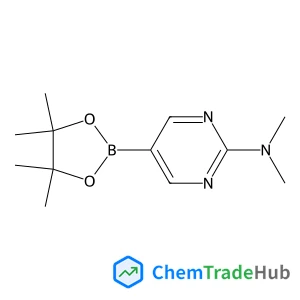
N,N-Dimethyl-5-(4,4,5,5-tetramethyl-1,3,2-dioxaborolan-2-yl)-2-pyrimidinamine
CAS Number:
1032759-30-0
Molecular Formula:
C12H20BN3O2
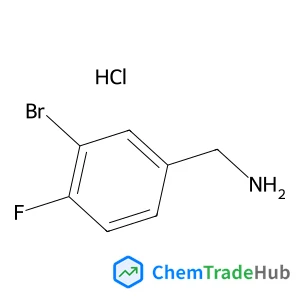
1-(3-Bromo-4-fluorophenyl)methanamine hydrochloride (1:1)
CAS Number:
202865-68-7
Molecular Formula:
C7H8BrClFN
Recommended Suppliers





Disclaimer
This page provides academic journal information for reference and research purposes only. We are not affiliated with any journal publishers and do not handle publication submissions. For publication-related inquiries, please contact the respective journal publishers directly.
If you notice any inaccuracies in the information displayed, please contact us at support@chemtradehub.com. We will promptly review and address your concerns.