












Assessing cluster models of solvation for the description of vibrational circular dichroism spectra: synergy between static and dynamic approaches
Literature Information
Publication Date
2020-10-28
DOI
10.1039/D0CP03869E
Impact Factor
3.676
Authors
Katia Le Barbu-Debus, Jessica Bowles, Sascha Jähnigen, Carine Clavaguéra, Florent Calvo, Rodolphe Vuilleumier, Anne Zehnacker
View Original
Abstract
Solvation effects are essential for defining the shape of vibrational circular dichroism (VCD) spectra. Several approaches have been proposed to include them into computational models for calculating VCD signals, in particular those resting on the “cluster-in-a-liquid” model. Here we examine the capabilities of this ansatz on the example of flexible (1S,2S)-trans-1-amino-2-indanol solvated in dimethyl sulfoxide (DMSO). We compare cluster sets obtained from static calculations with results from explicit molecular dynamics (MD) trajectories based on either force field (FF) or first-principles (FP) methods. While the FFMD approach provides a broader sampling of configurational space, FPMD and time-correlation functions of dipole moments account for anharmonicity and entropy effects in the VCD calculation. They provide a means to evaluate the immediate effect of the solvent on the spectrum. This survey singles out several challenges associated with the use of clusters to describe solvation effects in systems showing shallow potential energy surfaces and non-covalent interactions. Static structures of clusters involving a limited number of solvent molecules satisfactorily capture the main effects of solvation in the bulk limit on the VCD spectra, if these structures are correctly weighted. The importance of taking into consideration their fluxionality, i.e. different solvent conformations sharing a same hydrogen bond pattern, and the limitations of small clusters for describing the solvent dynamics are discussed.
Recommended Journals
Related Literature
Controlling the formation of 1 out of 64 stereoisomers using organocatalysis
Søren Bertelsen, Rasmus L. Johansen, Karl Anker Jørgensen
2008-06-09
Communication
DOI: 10.1039/B806418K
Asymmetric multifunctional organocatalytic Michael addition of nitroalkanes to α,β-unsaturated ketones
Pengfei Li, Yongcan Wang, Jinxing Ye
2008-05-16
Communication
DOI: 10.1039/B804540B
Isolation of an [SNS]Pd(ii) pincer with a water ladder and its Suzuki coupling activity in water
Shi-Qiang Bai, T. S. Andy Hor
2008-04-29
Communication
DOI: 10.1039/B802043D
Highly selective 30% hydrogen peroxideoxidation of sulfides to sulfoxides using micromixing
Yoshiro Hirai, Masayuki Kirihara
2008-04-22
Communication
DOI: 10.1039/B802502A
Oxygen-assisted reduction of Au species on Au/SiO2catalyst in room temperature CO oxidation
Zili Wu, Shenghu Zhou, Haoguo Zhu, Sheng Dai, Steven H. Overbury
2008-06-05
Communication
DOI: 10.1039/B803834A
A multi-stage growth model leading to high-yield production of carbon nanotubes
Yajun Tian, Huaixin Yang, Shuanglin Zhan, Yunfa Chen
2008-05-16
Communication
DOI: 10.1039/B801966E
Exploiting domino enyne metathesismechanisms for skeletal diversity generation‡
Richard J. Spandl, Hèléne Rudyk, David R. Spring
2008-06-03
Communication
DOI: 10.1039/B807278G
One-step synthesis of ordered mesoporous carbonaceous spheres by an aerosol-assisted self-assembly
Yan Yan, Fuqiang Zhang, Yan Meng, Bo Tu, Dongyuan Zhao
2007-04-25
Communication
DOI: 10.1039/B702232H
You might also like
Compound Q&A
Are there alternatives to 1-(4-Chlorophenyl)-N-hydroxymethanimine (CAS: 3848-36-0) in synthesis?
When considering alternatives to 1-(4-Chlorophenyl)-N-hydroxymethanimine (CAS: 3...
3848-36-01-(4-Chlorophenyl)-N...
Compound Q&A
How should (1R,9S,10S,12S,14E,16S,19R,20R,21S,22R)-3,9,21-Trihydroxy-5,10,12,14,16,20,22-heptamethyl-23,24-dioxatetracyclo[17.3.1.1~6,9~.0~2,7~]tetracosa-2,5,7,14-tetraen-4-one (CAS: 183202-73-5) be stored?
This compound should be stored in a cool, dry place away from direct sunlight. I...
183202-73-5(1R,9S,10S,12S,14E,1...
Compound Q&A
How is 3-(4-Bromophenyl)-5-(2-fluorophenyl)-1,2,4-oxadiazole (CAS: 419553-16-5) typically synthesized?
3-(4-Bromophenyl)-5-(2-fluorophenyl)-1,2,4-oxadiazole is synthesized through a m...
419553-16-53-(4-Bromophenyl)-5-...
Compound Q&A
How is 5-Chloro-2-(4-chlorophenyl)-4-methyl-6-[3-(1-piperidinyl)propoxy]pyrimidine (CAS: 1639220-19-1) typically synthesized?
5-Chloro-2-(4-chlorophenyl)-4-methyl-6-[3-(1-piperidinyl)propoxy]pyrimidine (CAS...
1639220-19-15-Chloro-2-(4-chloro...
Compound Q&A
What industries use 2-Chloro-4-(difluoromethoxy)pyridine (CAS: 1206978-15-5)?
2-Chloro-4-(difluoromethoxy)pyridine is used in the pharmaceutical industry for ...
1206978-15-52-Chloro-4-(difluoro...
Compound Q&A
What regulatory guidelines apply to 3-Chloro-6-methylpyridazine (CAS: 1121-79-5)?
3-Chloro-6-methylpyridazine (CAS: 1121-79-5) is classified under the Globally Ha...
1121-79-53-Chloro-6-methylpyr...
Compound Q&A
Are there alternatives to Methyl 4,5-dimethyl-2-nitrobenzoate in synthesis?
Several alternatives can be used in the synthesis of Methyl 4,5-dimethyl-2-nitro...
90922-74-0Methyl 4,5-dimethyl-...
Compound Q&A
Are there alternatives to (2E,2'E)-3,3'-(1,4-Phenylene)bisacrylaldehyde in synthesis?
Alternatives to (2E,2'E)-3,3'-(1,4-Phenylene)bisacrylaldehyde include other acry...
63405-68-5(2E,2'E)-3,3'-(1,4-P...
Compound Q&A
What is 3-Amino-5-chloropyridin-2-ol hydrochloride (CAS: 1261906-29-9)?
3-Amino-5-chloropyridin-2-ol hydrochloride is an organic compound with the CAS n...
1261906-29-93-Amino-5-chloropyri...
Compound Q&A
What precautions should be taken when handling 6,7-Difluoro-2,3-dihydro-4H-chromen-4-one (CAS: 1092349-93-3)?
When handling 6,7-Difluoro-2,3-dihydro-4H-chromen-4-one, it is essential to wear...
1092349-93-36,7-Difluoro-2,3-dih...
Source Journal
Physical Chemistry Chemical Physics

CiteScore:
5.5
Self-citation Rate:
10.3%
Articles per Year:
3036
Physical Chemistry Chemical Physics (PCCP) is an international journal co-owned by 19 physical chemistry and physics societies from around the world. This journal publishes original, cutting-edge research in physical chemistry, chemical physics and biophysical chemistry. To be suitable for publication in PCCP, articles must include significant innovation and/or insight into physical chemistry; this is the most important criterion that reviewers and Editors will judge against when evaluating submissions. The journal has a broad scope and welcomes contributions spanning experiment, theory, computation and data science. Topical coverage includes spectroscopy, dynamics, kinetics, statistical mechanics, thermodynamics, electrochemistry, catalysis, surface science, quantum mechanics, quantum computing and machine learning. Interdisciplinary research areas such as polymers and soft matter, materials, nanoscience, energy, surfaces/interfaces, and biophysical chemistry are welcomed if they demonstrate significant innovation and/or insight into physical chemistry. Joined experimental/theoretical studies are particularly appreciated when complementary and based on up-to-date approaches.
Recommended Compounds
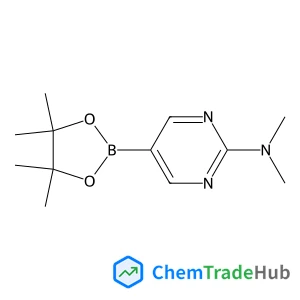
N,N-Dimethyl-5-(4,4,5,5-tetramethyl-1,3,2-dioxaborolan-2-yl)-2-pyrimidinamine
CAS Number:
1032759-30-0
Molecular Formula:
C12H20BN3O2
Recommended Suppliers




Disclaimer
This page provides academic journal information for reference and research purposes only. We are not affiliated with any journal publishers and do not handle publication submissions. For publication-related inquiries, please contact the respective journal publishers directly.
If you notice any inaccuracies in the information displayed, please contact us at support@chemtradehub.com. We will promptly review and address your concerns.