












![Ethyl thieno[3,2-f]quinoline-2-carboxylate structure](https://static.chemtradehub.com/structs/299/29948-26-3-f62b.webp "Ethyl thieno[3,2-f]quinoline-2-carboxylate structure")
Deep learning enabled inorganic material generator
Literature Information
Publication Date
2020-11-02
DOI
10.1039/D0CP03508D
Impact Factor
3.676
Authors
Yashaswi Pathak, Karandeep Singh Juneja, Girish Varma, Masahiro Ehara, U. Deva Priyakumar
View Original
Abstract
Recent years have witnessed utilization of modern machine learning approaches for predicting the properties of materials using available datasets. However, to identify potential candidates for material discovery, one has to systematically scan through a large chemical space and subsequently calculate the properties of all such samples. On the other hand, generative methods are capable of efficiently sampling the chemical space and can generate molecules/materials with desired properties. In this study, we report a deep learning based inorganic material generator (DING) framework consisting of a generator module and a predictor module. The generator module is developed based on conditional variational autoencoders (CVAEs) and the predictor module consists of three deep neural networks trained for predicting the enthalpy of formation, volume per atom and energy per atom chosen to demonstrate the proposed method. The predictor and generator modules have been developed using a one-hot key representation of the material composition. A series of tests were done to examine the robustness of the predictor models, to demonstrate the continuity of the latent material space, and its ability to generate materials exhibiting target property values. The DING architecture proposed in this paper can be extended to other properties based on which the chemical space can be efficiently explored for interesting materials/molecules.
Related Literature
Interfacial assembly structures and nanotribological properties of saccharic acids
Hongyu Shi, Yuhong Liu, Qingdao Zeng, Yanlian Yang, Chen Wang, Xinchun Lu
2016-11-29
Paper
DOI: 10.1039/C6CP06759J
Reactions driving conformational movements (molecular motors) in gels: conformational and structural chemical kinetics
2016-12-06
Perspective
DOI: 10.1039/C6CP06735B
Ferromagnetism in nitrogen-doped BaO: a self-interaction corrected DFT study
Elisa Albanese, Gianfranco Pacchioni
2016-12-22
Paper
DOI: 10.1039/C6CP07535E
Oxidation, defunctionalization and catalyst life cycle of carbon nanotubes: a Raman spectroscopy view
Anton S. Ivanov, Konstantin I. Maslakov, Alexander V. Egorov, Zexiang Shen
2016-12-12
Paper
DOI: 10.1039/C6CP04657F
Liberation of three dihydrogens from two ethene molecules as mediated by the tantalum nitride anion cluster Ta3N2− at room temperature
Ji-Chuang Hu, Lin-Lin Xu, Hai-Fang Li, David Yubero Valdivielso, André Fielicke, Sheng-Gui He, Jia-Bi Ma
2016-11-29
Paper
DOI: 10.1039/C6CP06896K
Polar solvent fluctuations drive proton transfer in hydrogen bonded complexes of carboxylic acid with pyridines: NMR, IR and ab initio MD study
B. Koeppe, S. A. Pylaeva, C. Allolio, D. Sebastiani, E. T. J. Nibbering, G. S. Denisov, H.-H. Limbach, P. M. Tolstoy
2016-12-02
Paper
DOI: 10.1039/C6CP06677A
Unravelling the early photochemical behavior of (8-substituted-7-hydroxyquinolinyl)methyl acetates through electronic structure theory and ultrafast transient absorption spectroscopy
Jan-Michael Mewes, Kyle T. Harris, David Lee Phillips, Andreas Dreuw
2016-11-30
Paper
DOI: 10.1039/C6CP05499D
Controlling photophysics of styrylnaphthalimides through TICT, fluorescence and E,Z-photoisomerization interplay
Antonina N. Arkhipova, Yuri V. Fedorov, Marina A. Zakharko, Dmitry E. Arkhipov, Gediminas Jonusauskas
2016-11-30
Paper
DOI: 10.1039/C6CP07255K
Structural phase transitions of (Bi1−xSbx)2(Te1−ySey)3 compounds under high pressure and the influence of the atomic radius on the compression processes of tetradymites
Zhenhai Yu, Yong Wang, John Schneeloch, Chunyu Li, Ruidan Zhong, Zhiguo Liu, Genda Gu
2016-12-14
Paper
DOI: 10.1039/C6CP07324G
On the ionophoric selectivity of nonactin and related macrotetrolide derivatives
Bruno Martínez-Haya, Juan Ramón Avilés-Moreno, Said Hamad, José Elguero
2016-12-06
Paper
DOI: 10.1039/C6CP05324F
You might also like
Compound Q&A
Is 2-(2-chloroacetamido)-3-phenylpropanoic acid (CAS: 7765-11-9) safe?
2-(2-Chloroacetamido)-3-phenylpropanoic acid (CAS: 7765-11-9) is generally consi...
7765-11-92-(2-chloroacetamido...
Compound Q&A
Is 2-(Benzyloxy)-5-bromobenzoic acid (CAS: 62176-31-2) safe?
2-(Benzyloxy)-5-bromobenzoic acid can be handled safely if appropriate precautio...
62176-31-22-(Benzyloxy)-5-brom...
Compound Q&A
What is (4-Methyl-1,2,5-oxadiazol-3-yl)methanamine hydrochloride (CAS: 1159825-48-5)?
(4-Methyl-1,2,5-oxadiazol-3-yl)methanamine hydrochloride is a chemical compound ...
1159825-48-5(4-Methyl-1,2,5-oxad...
Compound Q&A
What is 2-(5-Hexylthiophen-2-yl)-4,4,5,5-tetramethyl-1,3,2-dioxaborolane (CAS: 917985-54-7)?
2-(5-Hexylthiophen-2-yl)-4,4,5,5-tetramethyl-1,3,2-dioxaborolane (CAS: 917985-54...
917985-54-72-(5-Hexylthiophen-2...
Compound Q&A
Are there alternatives to 4-(8-Methyl-9H-1,3-dioxolo[4,5-h][2,3]benzodiazepin-5-yl)benzenamine (CAS: 102771-26-6) in synthesis?
While 4-(8-Methyl-9H-1,3-dioxolo[4,5-h][2,3]benzodiazepin-5-yl)benzenamine (CAS:...
102771-26-64-(8-Methyl-9H-1,3-d...
Compound Q&A
What is the market or research trend for tert-butyl 3-hydroxy-4,5,7,8-tetrahydro-2H-pyrazolo[3,4-d]azepine-6-carboxylate (CAS: 851376-80-2)?
The market for tert-butyl 3-hydroxy-4,5,7,8-tetrahydro-2H-pyrazolo[3,4-d]azepine...
851376-80-2tert-butyl 3-hydroxy...
Compound Q&A
How should waste containing 3,5-Diamino-1H-pyrazole-4-carbonitrile (CAS: 6844-58-2) be handled?
Waste containing 3,5-Diamino-1H-pyrazole-4-carbonitrile (CAS: 6844-58-2) should ...
6844-58-23,5-Diamino-1H-pyraz...
Compound Q&A
How is (6-Fluoro-3-pyridinyl)boronic acid (CAS: 351019-18-6) typically synthesized?
(6-Fluoro-3-pyridinyl)boronic acid can be synthesized through the reaction of 6-...
351019-18-6(6-Fluoro-3-pyridiny...
Compound Q&A
What industries use Dibenzyl carbonimidoylbiscarbamate (CAS: 10065-79-9)?
Dibenzyl carbonimidoylbiscarbamate (CAS: 10065-79-9) finds applications in vario...
10065-79-9Dibenzyl carbonimido...
Compound Q&A
What is the market or research trend for (beta,beta,2,3,4,5,6-~2~H_7_)Phenylalanine (CAS: 74228-83-4)?
The market for (beta,beta,2,3,4,5,6-~2~H_7_)Phenylalanine (CAS: 74228-83-4) is g...
74228-83-4(beta,beta,2,3,4,5,6...
Source Journal
Physical Chemistry Chemical Physics

CiteScore:
5.5
Self-citation Rate:
10.3%
Articles per Year:
3036
Physical Chemistry Chemical Physics (PCCP) is an international journal co-owned by 19 physical chemistry and physics societies from around the world. This journal publishes original, cutting-edge research in physical chemistry, chemical physics and biophysical chemistry. To be suitable for publication in PCCP, articles must include significant innovation and/or insight into physical chemistry; this is the most important criterion that reviewers and Editors will judge against when evaluating submissions. The journal has a broad scope and welcomes contributions spanning experiment, theory, computation and data science. Topical coverage includes spectroscopy, dynamics, kinetics, statistical mechanics, thermodynamics, electrochemistry, catalysis, surface science, quantum mechanics, quantum computing and machine learning. Interdisciplinary research areas such as polymers and soft matter, materials, nanoscience, energy, surfaces/interfaces, and biophysical chemistry are welcomed if they demonstrate significant innovation and/or insight into physical chemistry. Joined experimental/theoretical studies are particularly appreciated when complementary and based on up-to-date approaches.
Recommended Compounds
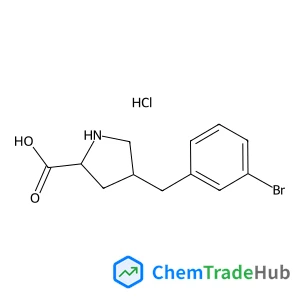
(2S,4R)-4-(3-Bromobenzyl)pyrrolidine-2-carboxylic acid hydrochloride
CAS Number:
1049734-10-2
Molecular Formula:
C12H15BrClNO2
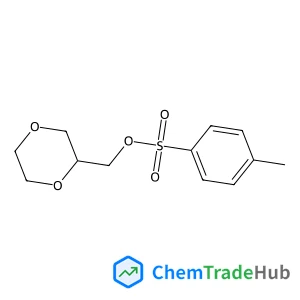
(S)-(1,4-Dioxan-2-yl)methyl 4-methylbenzenesulfonate
CAS Number:
917882-64-5
Molecular Formula:
C12H16O5S
Recommended Suppliers




Disclaimer
This page provides academic journal information for reference and research purposes only. We are not affiliated with any journal publishers and do not handle publication submissions. For publication-related inquiries, please contact the respective journal publishers directly.
If you notice any inaccuracies in the information displayed, please contact us at support@chemtradehub.com. We will promptly review and address your concerns.