


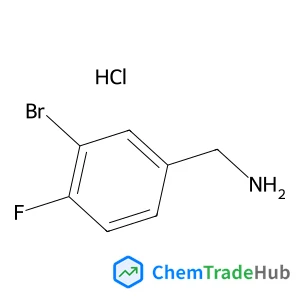
1-(3-Bromo-4-fluorophenyl)methanamine hydrochloride (1:1)
CAS Number:
202865-68-7
Molecular Formula:
C7H8BrClFN
Q. D. Chen, S. F. Yuan, J. H. Dai, Y. Song
First-principles calculations were performed to study the electrochemical performance of M2TiC2 (M = Cr or Mo) and M2TiC2Tx (T = O, F or OH) used as anode materials for sodium ion batteries (SIBs). The O functionalized MXenes (Cr2TiC2O2 and Mo2TiC2O2) are found to be more stable than F and OH terminated systems. The diffusion performance of sodium in MXene materials is mainly affected by the functional groups. The lowest diffusion barrier of functionalized MXenes is about one order larger in magnitude than that of bare MXenes. Although the introduction of O-groups hinders the diffusion of sodium, it can greatly improve the theoretical storage capacities. Meanwhile, the diffusion paths and diffusion energy barriers of Na are affected by Na concentration effects, while the interactions between terminations have little effect. Furthermore, multiple layers of sodium atoms are found to be adsorbed between the layers of M2TiC2O2, thus significantly increasing the theoretical capacities. The theoretical sodium storage capacities of M2TiC2O2 monolayers reach 515.70 mA h g−1 (M = Cr) and 362.46 mA h g−1 (M = Mo) and the OCVs can approach 0.034 V (M = Cr) and 0.042 V (M = Mo). Therefore, Cr2TiC2O2 and Mo2TiC2O2 are expected to be promising anode materials for SIBs due to their excellent properties, such as good electronic conductivity, low sodium diffusion barrier, and high theoretical sodium storage capacity.

Russian Journal of General Chemistry

Nature Medicine

Chemistry Education Research and Practice

Russian Journal of Coordination Chemistry

New Journal of Chemistry

Russian Journal of Applied Chemistry

Journal of Saudi Chemical Society

Russian Journal of Bioorganic Chemistry

Crystallography Reports

Drug Discovery Today
Xing Fan, Jianliang Sun, Fuzhi Wang, Zengze Chu, Ping Wang, Yongqiang Dong, Rongrong Hu, Ben Zhong Tang, Dechun Zou
DOI: 10.1039/B803539C
Chris D. Bailey, Chris E. Houlden, Grégory L. J. Bar, Guy C. Lloyd-Jones, Kevin I. Booker-Milburn
DOI: 10.1039/B707361E
Chih-Hung Sun, Wei-Lun Min, Peng Jiang
DOI: 10.1039/B804182B
Jong Won Chung, Byeong-Kwan An, Ji Whan Kim, Jang-Joo Kim, Soo Young Park
DOI: 10.1039/B802749H
Lucy E. Bowen, Manutsavin Charernsuk, Duncan F. Wass
DOI: 10.1039/B702331F
Amit Basak, Debarati Mitra, Moumita Kar, Kumar Biradha
DOI: 10.1039/B801644E
Michał J. Chmielewski, Liyun Zhao, Asha Brown, David Curiel, Mark R. Sambrook, Amber L. Thompson, Sergio M. Santos, Vitor Felix, Jason J. Davis, Paul D. Beer
DOI: 10.1039/B804941F
Yan Liu, Xiao-Li Yang, Jun Zhang, Yi-Zhi Li, You Song, Hong-Bin Du, Xiao-Zeng You
DOI: 10.1039/B801542B
Cristina Femoni, Maria Carmela Iapalucci, Giuliano Longoni, Stefano Zacchini
DOI: 10.1039/B803992E
When considering alternatives to 1-(4-Chlorophenyl)-N-hydroxymethanimine (CAS: 3...
This compound should be stored in a cool, dry place away from direct sunlight. I...
3-(4-Bromophenyl)-5-(2-fluorophenyl)-1,2,4-oxadiazole is synthesized through a m...
5-Chloro-2-(4-chlorophenyl)-4-methyl-6-[3-(1-piperidinyl)propoxy]pyrimidine (CAS...
2-Chloro-4-(difluoromethoxy)pyridine is used in the pharmaceutical industry for ...
3-Chloro-6-methylpyridazine (CAS: 1121-79-5) is classified under the Globally Ha...
Several alternatives can be used in the synthesis of Methyl 4,5-dimethyl-2-nitro...
Alternatives to (2E,2'E)-3,3'-(1,4-Phenylene)bisacrylaldehyde include other acry...
3-Amino-5-chloropyridin-2-ol hydrochloride is an organic compound with the CAS n...
When handling 6,7-Difluoro-2,3-dihydro-4H-chromen-4-one, it is essential to wear...

Physical Chemistry Chemical Physics (PCCP) is an international journal co-owned by 19 physical chemistry and physics societies from around the world. This journal publishes original, cutting-edge research in physical chemistry, chemical physics and biophysical chemistry. To be suitable for publication in PCCP, articles must include significant innovation and/or insight into physical chemistry; this is the most important criterion that reviewers and Editors will judge against when evaluating submissions. The journal has a broad scope and welcomes contributions spanning experiment, theory, computation and data science. Topical coverage includes spectroscopy, dynamics, kinetics, statistical mechanics, thermodynamics, electrochemistry, catalysis, surface science, quantum mechanics, quantum computing and machine learning. Interdisciplinary research areas such as polymers and soft matter, materials, nanoscience, energy, surfaces/interfaces, and biophysical chemistry are welcomed if they demonstrate significant innovation and/or insight into physical chemistry. Joined experimental/theoretical studies are particularly appreciated when complementary and based on up-to-date approaches.


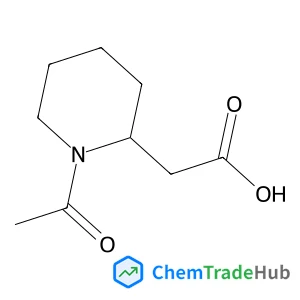
![[4-(Isobutyrylamino)phenyl]boronic acid structure](https://static.chemtradehub.com/structs/874/874219-50-8-6ab5.webp "[4-(Isobutyrylamino)phenyl]boronic acid structure")





