


Immobilization of arrestin-3 on different biosensor platforms for evaluating GPCR binding
Literature Information
Publication Date
2020-09-29
DOI
10.1039/D0CP01464H
Impact Factor
3.676
Authors
Saziye Yorulmaz Avsar, Larisa E. Kapinos, Cora-Ann Schoenenberger, Jonas Mühle, Benoit Meger, Roderick Y. H. Lim, Martin K. Ostermaier, Cornelia G. Palivan
View Original
Abstract
G protein-coupled receptors (GPCRs) are a large and ubiquitous family of membrane receptors of great pharmacological interest. Cell-based assays are the primary tool for assessing GPCR interactions and activation but their design and intrinsic complexity limit their application. Biosensor-based assays that directly and specifically report GPCR-protein binding (e.g. arrestin or G protein) could provide a good alternative. We present an approach based on the stable immobilization of different arrestin-3 proteins (wild type, and two mutants, mutant X (arrestin-3 I386A) and mutant Y (arrestin-3 R393E)) via histidine tags on NTA(Ni2+)-coated sensors in a defined orientation. Using biolayer interferometry (BLI), surface plasmon resonance (SPR), and quartz crystal microbalance with dissipation (QCM-D), we were able to follow the interaction between the different arrestin-3 proteins and a representative GPCR, jumping spider rhodopsin-1 (JSR1), in a label-free manner in real-time. The interactions were quantified as binding affinity, association and dissociation rate constants. The combination of surface-based biosensing methods indicated that JSR1 showed the strongest binding to arrestin mutant Y. Taken together, this work introduces direct label-free, biosensor-based screening approaches that can be easily adapted for testing interactions of proteins and other compounds with different GPCRs.
Recommended Journals

Bioorganic & Medicinal Chemistry Letters

Acta Metallurgica Sinica-English Letters

Medicinal Chemistry Research

Biocatalysis and Biotransformation

Cellulose

Polycyclic Aromatic Compounds

Topics in Catalysis

Journal of Asian Natural Products Research

Journal of the Indian Institute of Science

Critical Reviews in Solid State and Materials Sciences
Related Literature
Templates for wax deposition?
Miguel A. San-Miguel, P. Mark Rodger
2010-02-24
Paper
DOI: 10.1039/B920945J
Quantification of the adhesion strength of fibroblastcells on ethylene glycol terminated self-assembled monolayers by a microfluidic shear force assay
Christof Christophis
2010-03-03
Paper
DOI: 10.1039/B924304F
The photophysics of selectively metallated arrays of quinoxaline-fused tetraarylporphyrins
James A. Hutchison, Paul J. Sintic, Maxwell J. Crossley, Toshihiko Nagamura, Kenneth P. Ghiggino
2009-03-03
Paper
DOI: 10.1039/B820969C
Observation of oscillatory behavior during the dissolution of a pharmaceutical compound and evidence for the existence of an inverse Ostwald rule
2010-02-23
Paper
DOI: 10.1039/B917966F
Structural diversity of dimers of the Alzheimer amyloid-β(25–35) peptide and polymorphism of the resulting fibrils
Guanghong Wei, Andrew I. Jewett, Joan-Emma Shea
2010-03-11
Paper
DOI: 10.1039/C000755M
A LEEM/μ-LEED investigation of phase transformations in TiOx/Pt(111) ultrathin films
Stefano Agnoli, T. Onur Menteş, Miguel A. Niño, Andrea Locatelli, Gaetano Granozzi
2009-03-11
Paper
DOI: 10.1039/B821339A
Growth of solid conical structures during multistage drying of sessile poly(ethylene oxide) droplets‡
David Willmer, Kyle Anthony Baldwin, David John Fairhurst
2010-03-03
Paper
DOI: 10.1039/B922727J
Analysis of isotope effects in NMR one-bond indirect nuclear spin–spin coupling constants in terms of localized molecular orbitals
Patricio F. Provasi, Stephan P. A. Sauer
2009-03-03
Paper
DOI: 10.1039/B819376B
You might also like
Compound Q&A
How should waste containing 2-Ethyl-4-Methyl-1H-Imidazole-5-Carbaldehyde (CAS: 88634-80-4) be handled?
Waste containing 2-Ethyl-4-Methyl-1H-Imidazole-5-Carbaldehyde (CAS: 88634-80-4) ...
88634-80-42-Ethyl-4-Methyl-1H-...
Compound Q&A
What industries use Triethoxy(octyl)silane (CAS: 1385031-14-0)?
Triethoxy(octyl)silane (CAS: 1385031-14-0) is widely used in the pharmaceuticals...
1385031-14-0Triethoxy(octyl)sila...
Compound Q&A
Are there alternatives to 3-iodo-7-nitro-1H-indazole (CAS: 864724-64-1) in synthesis?
Several alternatives to 3-iodo-7-nitro-1H-indazole (CAS: 864724-64-1) exist in t...
864724-64-13-iodo-7-nitro-1H-in...
Compound Q&A
Are there alternatives to Benzene, bis[(trimethoxysilyl)ethyl] (CAS: 266317-71-9) in synthesis?
Yes, there are alternatives to Benzene, bis[(trimethoxysilyl)ethyl] (CAS: 266317...
266317-71-9Benzene, bis[(trimet...
Compound Q&A
Is Isothiazole-3-carbonitrile (CAS: 1452-17-1) safe?
Isothiazole-3-carbonitrile (CAS: 1452-17-1) is generally considered safe when us...
1452-17-1Isothiazole-3-carbon...
Compound Q&A
Is (3-Chlorophenyl)methanol (CAS: 873-63-2) safe?
(3-Chlorophenyl)methanol (CAS: 873-63-2) is considered low to moderately toxic. ...
873-63-2(3-Chlorophenyl)meth...
Compound Q&A
How is (2S,3S)-2-Hydroxy-3-({[(2-methyl-2-propanyl)oxy]carbonyl}amino)-3-(2-naphthyl)propanoic acid (CAS: 959583-98-3) typically synthesized?
(2S,3S)-2-Hydroxy-3-({[(2-methyl-2-propanyl)oxy]carbonyl}amino)-3-(2-naphthyl)pr...
959583-98-3(2S,3S)-2-Hydroxy-3-...
Compound Q&A
What precautions should be taken when handling Methyl 2-(bromomethyl)-5-methoxybenzoate (CAS: 788081-99-2)?
Proper handling of methyl 2-(bromomethyl)-5-methoxybenzoate requires the use of ...
788081-99-2Methyl 2-(bromomethy...
Compound Q&A
What is 6,8-Dibromoimidazo[1,2-a]pyridine-2-carboxylic acid (CAS: 904805-36-3)?
6,8-Dibromoimidazo[1,2-a]pyridine-2-carboxylic acid (CAS: 904805-36-3) is an aro...
904805-36-36,8-Dibromoimidazo[1...
Compound Q&A
Is 3-Amino-5-bromo-2-pyridinecarbonitrile (CAS: 573675-27-1) safe?
3-Amino-5-bromo-2-pyridinecarbonitrile is considered safe when handled under pro...
573675-27-13-Amino-5-bromo-2-py...
Source Journal
Physical Chemistry Chemical Physics

CiteScore:
5.5
Self-citation Rate:
10.3%
Articles per Year:
3036
Physical Chemistry Chemical Physics (PCCP) is an international journal co-owned by 19 physical chemistry and physics societies from around the world. This journal publishes original, cutting-edge research in physical chemistry, chemical physics and biophysical chemistry. To be suitable for publication in PCCP, articles must include significant innovation and/or insight into physical chemistry; this is the most important criterion that reviewers and Editors will judge against when evaluating submissions. The journal has a broad scope and welcomes contributions spanning experiment, theory, computation and data science. Topical coverage includes spectroscopy, dynamics, kinetics, statistical mechanics, thermodynamics, electrochemistry, catalysis, surface science, quantum mechanics, quantum computing and machine learning. Interdisciplinary research areas such as polymers and soft matter, materials, nanoscience, energy, surfaces/interfaces, and biophysical chemistry are welcomed if they demonstrate significant innovation and/or insight into physical chemistry. Joined experimental/theoretical studies are particularly appreciated when complementary and based on up-to-date approaches.
Recommended Compounds
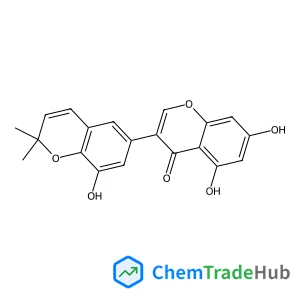
5,7,8'-Trihydroxy-2',2'-dimethyl-2'H,4H-3,6'-bichromen-4-one
CAS Number:
129280-33-7
Molecular Formula:
C20H16O6
Recommended Suppliers






Disclaimer
This page provides academic journal information for reference and research purposes only. We are not affiliated with any journal publishers and do not handle publication submissions. For publication-related inquiries, please contact the respective journal publishers directly.
If you notice any inaccuracies in the information displayed, please contact us at support@chemtradehub.com. We will promptly review and address your concerns.