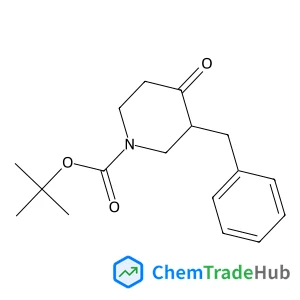
2-Methyl-2-propanyl 3-benzyl-4-oxo-1-piperidinecarboxylate
CAS Number:
193274-82-7
Molecular Formula:
C17H23NO3
Patricio F. Provasi, Stephan P. A. Sauer
We recently showed, by analyzing contributions from localized molecular orbitals, that the anomalous deuterium isotope effect in the one-bond indirect nuclear spin–spin coupling constant of methane, also called the unexpected differential sensitivity, can be explained by the transfer of s-orbital character from the stretched bond to the other unchanged bonds [ChemPhysChem, 2008, 9, 1259]. We now extend this analysis of isotope effects to the molecules BH4−, NH4+, SiH4, H2O and NH3 in order to test our conclusions on a wider rage of XH4 compounds and to investigate whether the lone-pair orbitals are really responsible for the absence of a similar effect in water and ammonia as proposed earlier [J. Chem. Phys., 2000, 113, 3121].
Gianfranco Pacchioni
DOI: 10.1039/C2CP43731G
Yicheng Wang, Jinyou Xu, Pinyun Ren, Qinglin Zhang, Xiujuan Zhuang, Xiaoli Zhu, Qiang Wan, Hong Zhou, Wei Hu, Anlian Pan
DOI: 10.1039/C2CP43718J
Xia Zhang, Chris J. Eyles, Craig A. Taatjes, Dajun Ding
DOI: 10.1039/C3CP50558H
Huipeng Chen, Raghavendra Hegde, J. Browning
DOI: 10.1039/C2CP40466D
Rewa Rai, Siddharth Pandey
DOI: 10.1039/C2CP44167E
H.-Y. Shin, J. H. Woo, M. J. Gwon, M. Barthelemy, M. Vomir, T. Muto, K. Takaishi, M. Uchiyama, D. Hashizume, T. Aoyama, D.-W. Kim, S. Yoon, J.-Y. Bigot, J. W. Wu
DOI: 10.1039/C2CP43705H
Ulises Martinez, Koichiro Asazawa, Barr Halevi, Akinbayowa Falase, Boris Kiefer, Alexey Serov, Monica Padilla, Tim Olson, Abhaya Datye, Hirohisa Tanaka, Plamen Atanassov
DOI: 10.1039/C2CP40546F
Marco Giorgetti, Lorella Guadagnini, Domenica Tonelli, Marco Minicucci, Giuliana Aquilanti
DOI: 10.1039/C2CP24109A
Eric N. Armstrong, Keith L. Duncan, Eric D. Wachsman
DOI: 10.1039/C2CP42919E
6-Bromo-2-methylimidazo[1,2-a]pyrimidine (CAS: 1111638-05-1) falls under various...
While there are no direct alternatives, similar compounds like 1-Pyrrolidineetha...
4-Methyl-2,6-bis(2-methyl-2-propanyl)phenyl methylcarbamate (CAS: 1918-11-2) is ...
2-(3-Bromo-4-fluorophenyl)-1,3-dioxolane (CAS: 77771-04-1) should be stored in a...
4,5,6,7-Tetrahydro-1H-indazole hydrochloride is a white crystalline solid with a...
(2R)-1-Methoxy-3-phenyl-2-propanamine is a chiral organic compound with the CAS ...
Ethyl 1-(1-phenylethyl)-1H-imidazole-5-carboxylate is used in various industries...
4-[(1E,3S)-1-(4-Hydroxyphenyl)-1,4-pentadien-3-yl]phenol (CAS: 17676-24-3) falls...
(S)-3-Amino-5-phenylpentanoic acid hydrochloride is primarily used in the pharma...
7-Methoxy-1-benzothiophene-2-carboxylic acid is typically synthesized by reactin...

Physical Chemistry Chemical Physics (PCCP) is an international journal co-owned by 19 physical chemistry and physics societies from around the world. This journal publishes original, cutting-edge research in physical chemistry, chemical physics and biophysical chemistry. To be suitable for publication in PCCP, articles must include significant innovation and/or insight into physical chemistry; this is the most important criterion that reviewers and Editors will judge against when evaluating submissions. The journal has a broad scope and welcomes contributions spanning experiment, theory, computation and data science. Topical coverage includes spectroscopy, dynamics, kinetics, statistical mechanics, thermodynamics, electrochemistry, catalysis, surface science, quantum mechanics, quantum computing and machine learning. Interdisciplinary research areas such as polymers and soft matter, materials, nanoscience, energy, surfaces/interfaces, and biophysical chemistry are welcomed if they demonstrate significant innovation and/or insight into physical chemistry. Joined experimental/theoretical studies are particularly appreciated when complementary and based on up-to-date approaches.