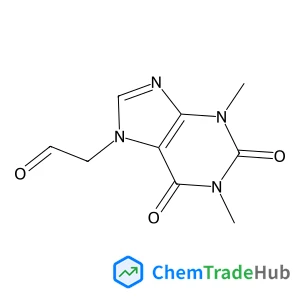
(1,3-Dimethyl-2,6-dioxo-1,2,3,6-tetrahydro-7H-purin-7-yl)acetaldehyde
CAS Number:
5614-53-9
Molecular Formula:
C9H10N4O3
Xiaolu Xiong, Guangshi Li, Hongwei Cheng, Qian Xu
Millerite (NiS) is the main source for metallurgical production of nickel worldwide. To improve the extraction rate of nickel, chlorination is usually carried out, as the resulting nickel chloride (NiCl2) can easily dissolve in water and be separated. Although molecular chlorine (Cl2) can be used as the chlorination reagent, greener reagents such as ammonium chloride (NH4Cl) are preferable from a process design perspective. However, the efficiency of NH4Cl as a chlorination reagent must be further improved for this process to be viable for industrial applications, and mechanistic understanding is imperative to this end. Here, we performed extensive density functional theory (DFT) calculations to elucidate the chlorination mechanism of NiS by exploring three possible pathways. We first considered the direct chlorination of NiS by Cl2, which was suggested to form by the reaction between NH4Cl and SO3 catalyzed by a metal oxide. Alternatively, NH4Cl was found to react favorably with the partially or fully oxidized NiS surface in the presence of oxygen (O2). During the oxidation of NiS, sulfur dioxide (SO2) may form. Furthermore, sulfur or oxygen vacancy was predicted to form during the chlorination of NiS or NiO with NH4Cl. Based on the available experimental evidence and our computational results, three possible mechanisms for the chlorination of NiS using NH4Cl as the chlorination reagent in the presence of O2 were proposed.
Mathieu Arseneault, Philippe Dufour, Isabelle Levesque, Jean-François Morin
DOI: 10.1039/C1PY00146A
Emily F. Crownover, Anthony J. Convertine, Patrick S. Stayton
DOI: 10.1039/C1PY00060H
Weiping Gao, Donghua Xu, Dong Woo Lim, Stephen L. Craig, Ashutosh Chilkoti
DOI: 10.1039/C1PY00074H
Denise Azambuja, José I. Iribarren, Carlos A. Ferreira
DOI: 10.1039/C1PY00291K
Saadyah E. Averick, Andrew J. D. Magenau, Antonina Simakova, Bradley F. Woodman, Andrew Seong, Ryan A. Mehl, Krzysztof Matyjaszewski
DOI: 10.1039/C1PY00050K
Gaojian Chen, Martina H. Stenzel
DOI: 10.1039/C1PY00048A
Natanya M. L. Hansen, David Plackett
DOI: 10.1039/C1PY00086A
Gaurav K. Mehta, Stalin Kondaveeti, A. K. Siddhanta
DOI: 10.1039/C1PY00250C
Jacob G. Ray, Jack T. Ly, Daniel A. Savin
DOI: 10.1039/C1PY00003A
Cyrille Boyer, Thomas P. Davis
DOI: 10.1039/C1PY00049G
When handling 2-Methyl-2-propanyl 5-amino-2-thiophenecarboxylate (CAS: 1498311-5...
5-Bromo-1,2-dichloro-3-fluorobenzene (CAS: 1000572-93-9) is a crystalline solid ...
(2R)-2-Amino-2-(4-bromophenyl)ethanol (CAS: 354153-64-3) should be stored in a c...
Methyl 4-(aminomethyl)tetrahydro-2H-pyran-4-carboxylate hydrochloride (CAS: 3627...
1,4-Dimethyl-1H-pyrazole-5-sulfonyl chloride is primarily used as an intermediat...
Dinaphtho[1,2-b:2',1'-d]furan is generally safe when handled with appropriate pe...
The market for 7-Methyl-7,9-dihydro-1H-purine-2,6,8(3H)-trione (CAS: 612-37-3) i...
2-(4-Chlorophenyl)malonaldehyde (CAS: 205676-17-1) is a colorless or light yello...
2-Methylchrysene (CAS: 3351-32-4) is typically synthesized via the reaction of c...
N-(6-aminopyrimidin-4-yl)acetamide (CAS: 89533-23-3) is generally considered saf...

Physical Chemistry Chemical Physics (PCCP) is an international journal co-owned by 19 physical chemistry and physics societies from around the world. This journal publishes original, cutting-edge research in physical chemistry, chemical physics and biophysical chemistry. To be suitable for publication in PCCP, articles must include significant innovation and/or insight into physical chemistry; this is the most important criterion that reviewers and Editors will judge against when evaluating submissions. The journal has a broad scope and welcomes contributions spanning experiment, theory, computation and data science. Topical coverage includes spectroscopy, dynamics, kinetics, statistical mechanics, thermodynamics, electrochemistry, catalysis, surface science, quantum mechanics, quantum computing and machine learning. Interdisciplinary research areas such as polymers and soft matter, materials, nanoscience, energy, surfaces/interfaces, and biophysical chemistry are welcomed if they demonstrate significant innovation and/or insight into physical chemistry. Joined experimental/theoretical studies are particularly appreciated when complementary and based on up-to-date approaches.
![4-Chloro-N-{[4-(dimethylamino)phenyl]carbamoyl}benzenesulfonamide structure](https://static.chemtradehub.com/structs/558/5581-42-0-7dcb.webp "4-Chloro-N-{[4-(dimethylamino)phenyl]carbamoyl}benzenesulfonamide structure")